By Patience Lunda:
In a shocking and disturbing trend, some parents of children with hearing impairments are abandoning them at special needs schools, leaving the entire responsibility of care to the school authorities.
What is even more heartbreaking is that some of these children are HIV positive and are on antiretroviral (ARV) therapy, making their abandonment a double burden.
At Bandawe School for the Hearing Impairment, for example, which opened its doors in 2005, there are eight learners on ART out of the 51 enrolled at the CCAP Synod of Livingstonia-owned school.
Seventeen-year-old Happiness (a pseudonym), who is now in Standard 7, recounts waiting for her parents to pick her up after school closed, but no one showed up.
- Advertisement -
She said the school authorities made several attempts to contact her parents, but all were in vain. This has happened on numerous occasions.
“The school headteacher decided to take me to his house, where I stayed for some time,” she narrated through the aid of a sign language interpreter.
The student is one of the eight on the ART regimen.
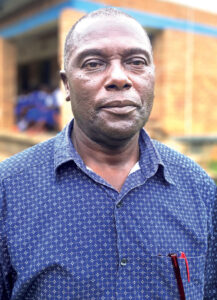
Bandawe School for the Hearing Impairment Headteacher, Stewart Chiwona, acknowledged the problem, saying, “At least for the eight years I have been here, this has been happening quite often.”
- Advertisement -
- Advertisement -
Chiwona said the school’s committee has been engaging such parents, but the efforts have not yielded the desired change.
“Most of the students on ARVs do not bring their drugs to school and the school makes its own arrangements with a nearby hospital,” he said.
He added that the problem has also been worsened by a shortage of food at the school due to delayed Other Recurrent Transactions from the government. Most parents also do not visit their children with groceries.
“We have been made permanent guardians for the students because some parents just dump them and do not care for these children, which affects them psychologically and this is detrimental to their education,” he said.
As it stands, the students’ regular menu consists of nsima with beans and, occasionally, soya pieces.
Sometimes, the students also skip breakfast when the food situation becomes critical.
The Primary Education Advisor for Bandawe Zone, Tinkhani Mphande, acknowledged the challenges, describing the status of the school as a “dump site” for learners with hearing impairments.
“Such is the case because their parents and guardians do not even provide them with the smallest of needs and they are only relying on well-wishers,” Mpande said.
She added that they have made repeated calls for engagement with parents, but to no avail, forcing the government to turn to the church for support.
“The parents do not even provide them with basic items like blankets, and although we have been calling them to meetings, they have not turned up, as some live in faraway districts,” Mphande said.
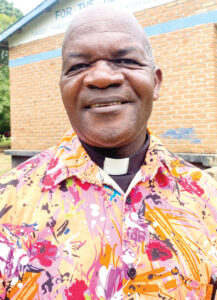
Reverend Louis Mwazembe of Tiphula CCAP under Bandawe Mission Station said they had heeded the call as a church. He explained that they regularly assign congregations to visit the learners with some basic needs.
“We encourage guilds to visit the school, and most of the time, the women’s guild responds quickly. We try to help them in whatever way we can,” he said.
However, Nkhata Bay District Social Welfare Officer, Macsencie Chagomerana, said they have not received any reports of child neglect from the school but pledged to follow up.
Chagomerana emphasised that it is an offence for parents to neglect their children.
“It is the responsibility of parents to provide care for their children and just because the school is helping take care of the learners, it does not mean that parents should completely neglect their duty.
“In this case, we will engage the school to provide us with the names of the learners facing these challenges, so that we can engage their parents and guardians on the matter,” he said.
Executive Director of the Malawi Health Equity Network, George Jobe, said that parents need to ensure their children on ART do not default, as this would compromise their immunity.
“There is a need for parents to work hand in hand with school authorities, while also providing additional groceries for them,” he said.
In Malawi, neglect is considered an offence under the Child Care, Protection and Justice Act.
Malawi’s Constitution demands that all children, particularly orphans, children with disabilities and others in disadvantaged situations, are entitled to live in safer and more secure homes and, where appropriate, receive assistance from the State.