By Steria Manda, contributor:
Civic space is an important feature of any thriving democracy because it levels the ground for civil society to play a role in the political, economic and social life of societies.
In particular, civic space allows individuals and groups to contribute to policy-making that affects their lives, including by accessing information, engaging in dialogue, expressing dissent or disagreement and coming together to express their views.
An open and pluralistic civic space that guarantees freedom of expression and opinion as well as freedom of assembly and association is a prerequisite for making development and peace sustainable.
In Malawi, as is the case in Colombia and Indonesia, civic space continues to experience intense pressure from politicians and regulatory authorities.
- Advertisement -
Repressive laws are spreading, with increased restrictions on freedoms to express, participate, assemble and associate.
Former chairperson for the Human Rights Defenders Coalition, Timothy Mtambo, once observed that the civic space in Malawi is neither favourable nor ideal for a professing democracy.
It is one where dissenting views are violently disregarded.
Mtambo cited cases where citizens were threatened, assaulted or had their offices, houses and cars torched because of expressing dissenting views against either the administration or leadership of the previous government.
- Advertisement -
- Advertisement -
“Currently, the government is shrinking civic space further through the introduction of repressive non-governmental organisation policies and laws,” he lamented.
Of course, new technologies have helped civil society networks to grow but they have also given governments excuses to control civil society movements and media freedoms, often under security pretexts.
Concerned with such trends, Hivos has initiated the Connect, Defend, Act! Project—a five-year initiative aimed at combating shrinking civic space in Colombia, Indonesia, Malawi and the occupied Palestinian
territory.
Connect, Defend, Act! is a collaborative initiative dedicated to safeguarding civic space and empowering
civil society across Malawi, Colombia, Indonesia and the occupied Palestinian territory.
Through strategic partnerships and grassroots engagement, the initiative aims to amplify the voices of marginalised groups and promote inclusive development.

Speaking in an interview this week, the project’s global manager, Tisungane Nanthoka, said it underscores the vital role of a robust civil society in promoting truly democratic governance, human rights and sustainable development.
Nanthoka added that the project aims to tackle shrinking civic space by engaging with civil society actors from the grassroots to the top and providing the strategic resources they need to respond effectively to challenges both online and on the ground.
She added that the project will work with civil society organisations in one of the most difficult contexts at present—the occupied Palestinian territory—an area where this intervention will be most critical.
“As different forms of government increasingly target activists and ramp up the pressure on civil society,
Connect, Defend, Act! aims to shore up civic resistance and continue the fight for people’s rights.
Increasing restrictions on civic space pose significant challenges to communities worldwide.
“Connect, Defend, Act! is committed to empowering local civil society actors to effectively navigate and counteract these challenges,” Nanthoka said.
The project, which kicked off in April this year and will run until 2029, is expected to support local civil society ownership, leadership and knowledge in three areas: coalition building, knowledge production and collective action.
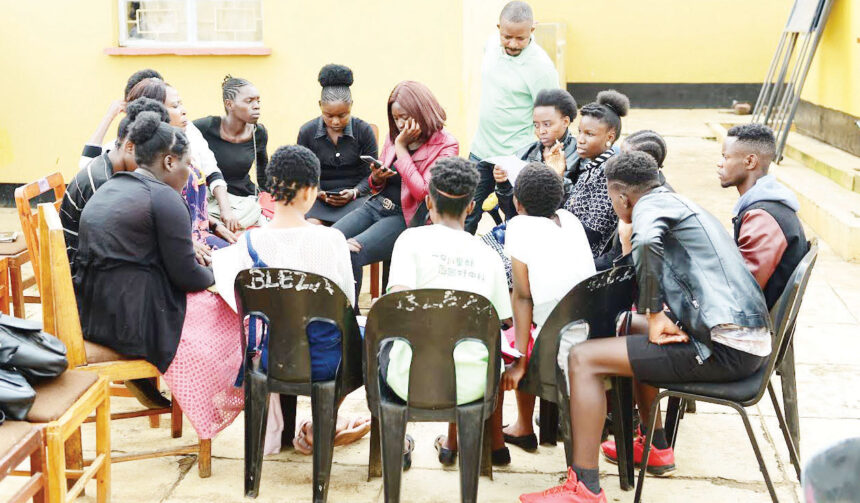
It will work particularly with marginalised groups such as women, youth, LGBTIQ+ persons, indigenous people and displaced people, empowering them to build coalitions and undertake actions that lead to freer societies.
According to Nanthoka, the initiative is rooted in the diverse and complex contexts of its implementing regions.
She said in Colombia, the project was initiated following years of conflict.
In Malawi, despite strides in democratic governance, civil society faces ongoing challenges in advocating for marginalised groups, including women and youth.
“Through collaboration and evidence-based strategies, we aim to foster an environment where civil society can thrive and drive positive change,” Nanthoka said.
Meanwhile, Nanthoka has disclosed that the project will have its official launch in September 2024,
marking the beginning of activities to strengthen civil society resilience and capacity across the four regions.
Key outputs will include forming communities of action, strengthening digital security capacities and allocating strategic funding for sustainable initiatives.