By Emmanuel Simpokolwe:
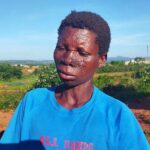
Days turned into months and months turn into years while Sofileti Mbewe lived in misery, social isolation and deepening poverty.
It all started in 2004 when Sofileti, 15, got pregnant.
As a poor village girl from Traditional Authority (TA) Kachocho in Mchinji, she was forced to marry a man who was responsible for the pregnancy.
“The pain I was experiencing reminded me that I was too young to get pregnant, let alone to be a mother,” she says.
- Advertisement -
When labour pains began and time for delivery came, Sofileti was taken to the hospital where she gave birth to a stillborn.
After being discharged from the hospital, she returned to her village where she realised her beddings and dress were always wet.
Sofileti did not only lose her child, but also developed obstetric fistula, one of the major causes of maternal deaths resulting from obstructed labour.
Fistula occurs when a mother’s pelvis is too small for the baby to be delivered without help. It oftentimes happens during a long and obstructed labour as the pressure caused by the obstructed labour damages the tissue of the internal passages of the bladder.
- Advertisement -
- Advertisement -
As a result, the girl or a woman with this condition is unable to hold urine or faeces, which leak out through her private parts.
According to United Nations (UN), in 90 percent of cases, the baby does not survive.
“I lost respect, love and dignity. People who were supposed to show me love started deserting me. My husband abandoned me,” Sofileti narrates.
She lived with fistula for 10 years.
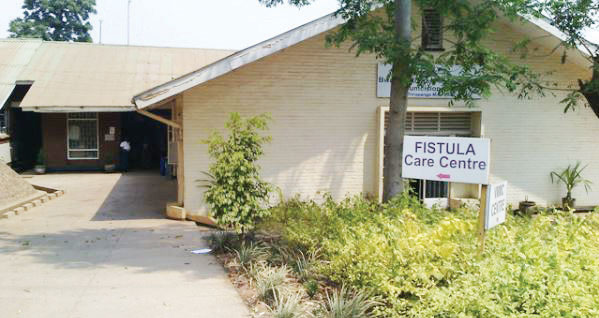
Her turning point came in 2014 when she was 25 years old. She heard on the radio that somewhere in Lilongwe at Bwaila Hospital there was a Fistula Care Centre (FCC) where women with her condition were being helped.
“Some well-wishers gave me money for transport and on arrival at Bwaila Fistula Care Centre all the hope I lost during my 10 years of suffering was restored,” Sofileti says.
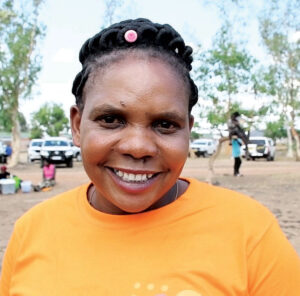
She received treatment the in March 2014. After being discharged from the FCC, Sofileti went back to her home in Mchinji not as a shy village girl but a patient ambassador with the courage and zeal to rescue other girls and women who were suffering in silence from fistula.
Between 2014 and 2016, using the skills and knowledge she gained from the FCC, she rescued about 11 patients in the district who underwent operation at the centre.
Most of the rescued survivors have also turned into patient ambassadors.
Due to her dedication and hard-work she is now fully employed by the centre as a tailor, the skill she learned while she was a patient at the facility.
Now at the age of 35 Sofileti, is economically empowered and able to look after her grandmother and relatives in the village.
“I don’t know where my ex-husband got my cell phone number, but he has been calling asking that we should reunite,” she says.
What Sofileti went through is what many other girls and women are facing across the country, especially in rural areas where health systems fail to provide essential and emergency obstetric care during pregnancy and childbirth.
Poor integration of sexual and reproductive health (SRH) services for adolescents and comprehensive SRH packages into existing national health systems contributes to fistula.
According to the Malawi Demographic Health Survey (MDHS 2015-16), child marriage is still a prevailing practice in Malawi with 38 percent of girls getting married before the age of 18.
Statistics indicate that the unmet need for family planning among married women aged 15-49 is at 15.4 percent, but is significantly high among unmarried adolescent girls aged 15-19 at 71.5 percent.
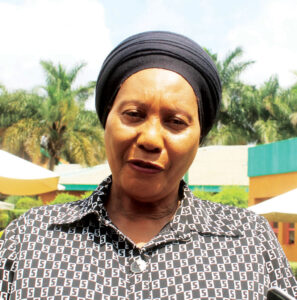
Deputy Minister of Health Halima Daud, during last year’s commemoration of World Fistula Day, where she also launched the National Obstetric Fistula Strategy 2023- 2030, reaffirmed government’s commitment to supporting obstetric fistula programmes management and rehabilitation.
Daudi said the strategy will guide the implementation of interventions towards management and control of obstetric fistula with an aim of preventing and ending fistula in Malawi by 2030.
“Fistula is not only a problem for an individual who has it but also all members of the family, because everyone is affected in one way or the other,” she said.
Daudi further noted that in Malawi, the magnitude of obstetric fistula is huge as most vulnerable groups are adolescent girls and young women.
“It is worrisome to see you g girls become mothers at a time they are supposed to be in school,” she said.