By Alick Ponje:
Lucy’s mornings do not begin with the chatter of schoolchildren or the rustle of books, but with the heavy responsibility of tending to her twin sisters.
This occurs long before the sun paints the sky with hues of orange and pink.
As the second eldest of four children in a struggling household, her parents depend on her to forgo her education and instead ensure her siblings are fed, clothed and safe while they labour in the crop fields, their lifeblood.
It is a fate that befalls many children in rural Malawi, where poverty tightens its grip and cultural norms limit opportunities for education, especially for girls.
- Advertisement -
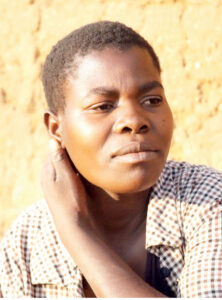
“I dream of becoming a doctor,” Lucy says, her voice barely above a whisper as she stares blankly at the desiccated house wall in front of her.
She finds deep satisfaction in observing doctors administering injections to patients in their white coats, with stethoscopes slung around their necks.
“They are very smart and neat people. I envy that,” Lucy says, her bright eyes betraying a weariness that belongs to someone twice her age.
Her flowing red dress is clean too—despite the fact that by the time we find her at home, in a rustic location in Ntchisi District, she has already completed the day’s chores.
- Advertisement -
- Advertisement -
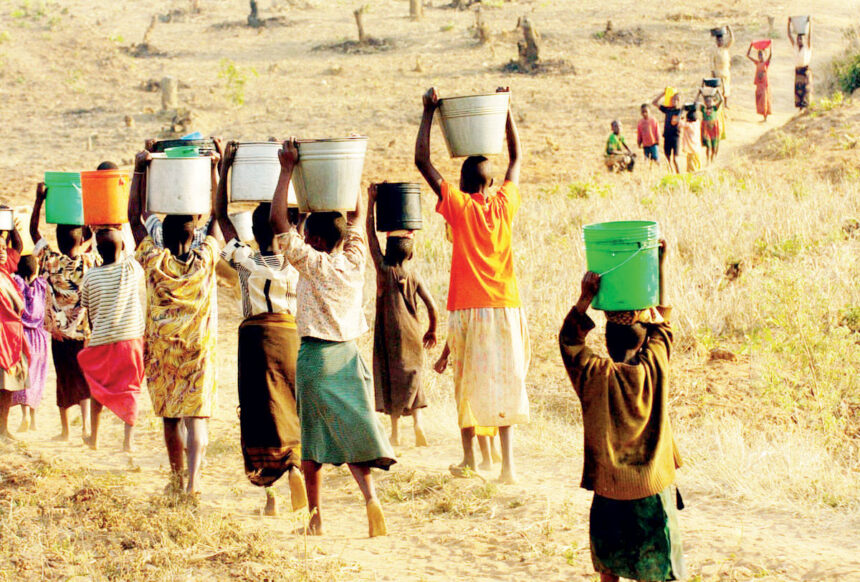
Her day is a blur of ceaseless tasks: fetching water from distant sources, preparing meals for the barely year-old twins and tidying living spaces.
Much attention is paid to the babies as she plays with them, ensuring they are fed and safe while their mother is away.
“It has become part of my daily routine. I am used to it,” Lucy says, rubbing her calloused palms together, hardened from the demanding household chores.
At the age of 10, she was supposed to be in Standard 5 at a primary school in her area, but she remains stuck in Standard 1, still longing to continue learning and growing.
Her schooling has been sporadic, as her parents compel her to stay at their home tucked away in a sparsely populated neighbourhood to undertake tasks far beyond her years.
While the laughter of her peers echoes across dry fields as they hurry to school with satchels slung over their shoulders, Lucy’s is muted by the weight of responsibility.
“I admire my friends who go to school on all school days. I admire their neatly pressed uniforms,” she says, imagining the thrill of learning new things daily.
Lucy’s days seem to unfold in a different rhythm altogether.
But in her own way, she embodies resilience amidst the harsh realities of poverty and tradition that dictate her life.
“I will make it one day. I am very sure about that,” she says.
During stolen moments when her siblings nap and the chores momentarily abate, Lucy searches for her friends to play with. They are all at school.
In this sun-drenched village, where dusty paths wind through clusters of thatched-roof houses and a few with corroding iron-sheet ones, several other girls also live lives relegated to domestic duties.
“I have an older brother, but still, I am the one who takes care of my sisters,” Lucy says innocently.
The United Nations Children’s Fund (Unicef) notes that in Malawi, particularly in rural areas, most parents keep girls at home to perform household chores while boys attend school.
Unicef reports that girls between five and 14 years old spend 40 percent more time—or 160 million more hours per day—on unpaid household errands compared to boys their age.
“The data show that the disproportionate burden of domestic work starts early, with girls aged five to nine spending 30 percent more time—or 40 million more hours per day—on household chores than boys their age,” the UN agency states.
This disparity increases as girls grow older, with those aged 10 to 14 spending 50 percent more time—or 120 million more hours each day—on such tasks.
While the actual time Lucy spends out of school to care for her siblings has not been officially measured, it is clear that her dream of becoming a doctor has been deferred.
Yet her eyes still light up as she talks about her determination to achieve her goal, refusing in her innocence to believe it impossible.
“I believe education opens several opportunities and I am sure I will not end up uneducated,” she says.
Children under 18 years old constitute about 49 percent of Malawi’s population—the largest and fastest-growing segment of the population.
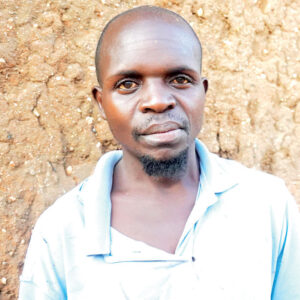
Lucy’s father, Anderson Maxwell, acknowledges that he has kept his daughter from school to manage the household while the parents work in fields, in a location where poverty is deeply embedded in daily life.
“I was the only one working in the fields, so we decided she should take care of her sisters while her mother joined me. It was a difficult choice,” he says, his weariness suggesting resignation born out of necessity.
Maxwell insists that he wants the best for his children and claims Lucy has since gone back to school, though a child protection worker states her return is not confirmed.
Lucy’s age and her current class level speak volumes about past decisions by her parents to confine her to the home while her peers went to school.
“Well, she does the household chores because she is cleverer than her older brother,” Maxwell, aged 31, remarks, his weathered face reflecting both guilt and hardship.
Sitting on a tattered palm frond mat in front of their mud-brick house, his wife declines to comment on their daughter’s situation.
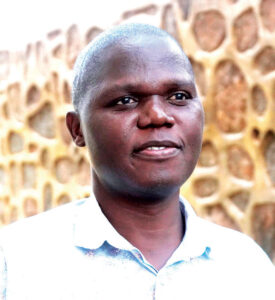
Wilson Milanzi, Ntchisi District Council Social Welfare Officer, admits that many children in the Central Region district are forced into work unsuitable for their age.
“The situation is sadly all too common,” he says, almost defeated.
With national child labour figures standing at 38 percent, Milanzi suggests this rate is even higher in Ntchisi District.
“Parents cite poverty as the reason for making their children engage in child labour. Some even resort to early marriages,” he explains.
As a solution, he states that the council collaborates with stakeholders and local structures to prevent children from being exposed to harmful environments and situations.
In Ntchisi, as elsewhere in Malawi, child labour remains a complex issue intertwined with poverty, cultural norms and inadequate social safety nets.
“Interventions include enrolling families in social cash transfer initiatives so they have income and are not forced to use their children to seek the same,” Milanzi adds, his eyes tinged with both hope and concern.
He admits that stories such as Lucy’s are common in Ntchisi’s rural areas, where economic hardships and familial obligations force many children into the labour force instead of the classroom.
Milanzi mentions an initiative by Save the Children and its partners, including Plan Malawi, which combats child labour to ensure rescued children do not return to unsafe situations.
The organisations also advocate for policy changes and community support to keep girls like Lucy in school.
They believe that educating girls not only empowers them but also uplifts entire communities, breaking the cycle of poverty one child at a time.
Their initiative, Joining Forces for Africa: Acting to End Child Labour (Jofa-Acte), advocates for promoting, respecting, protecting and fulfilling child rights.
“Our mission is to accelerate transformative action, safeguard children’s rights and end violence against them,” Jofa- Acte Programme Manager Janet Nkhoma Chagoma says.
Milanzi believes that interventions such as these will transform the lives of children like Lucy, breaking entrenched gender roles that perpetuate missed opportunities.
“Girls face immense pressure to abandon their education and assume caretaker roles at a young age,” he recounts, stressing that the fight against child labour must extend beyond courtrooms and legislative chambers to the hearts and homes of people.
Meanwhile, across Malawi, child labour—defined by the International Labour Organisation as work that deprives children of their childhood, potential and dignity—remains a persistent issue despite the legislative efforts.
The Employment Act prohibits employing children under the age of 14, yet enforcement is lacking in remote areas where traditional practices and economic hardships prevail.
As the sun dips low over distant hills, casting long shadows across Lucy’s village, she prepares for another night of chores.
The twins, bathed and fed, curl up under rough blankets, a ritual that little Lucy sustains.
Every night, she watches them sleep, her dreams for their future intertwined with her own in a village steeped in the timeless rhythms of rural life.