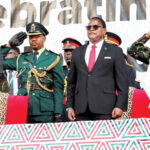
As Malawi celebrated its 61st anniversary of political independence on 6 July, economic think-thank, Economics Association of Malawi (Ecama), said the country’s economic sovereignty remains elusive.
Ecama President Bertha Bangara Chikadza noted that the country continued to struggle to achieve true economic independence, with key structural barriers such as chronic aid dependency and fiscal fragility.
“The country continues to suffer with a narrow tax base, with only 10.8 percent of gross domestic product (GDP) coming from domestic revenue, forcing reliance on donors to fund [the provision of] basic services,” Chikadza said.
Chikadza pointed out that the country was in debt distress, with public debt reaching 93 percent of GDP as at March 2024, and 42 percent of government revenue consumed by debt servicing.
“In addition, the country continues to suffer from structural adjustment legacy, where IMF [International Monetary Fund]/World Bank conditions in the 1990s-2000s like subsidy removals, worsened food insecurity without building sustainable alternatives,” Chikadza said.
- Advertisement -
Additionally, she pointed out that despite employing 80 percent of the population, agriculture contributes just 31 percent of GDP value added while remaining dangerously exposed to climate shocks.
Weighing in on the issue of economic trajectory, Chikadza said after 61 years of independence, Malawi has sustained political stability and democratic governance, registered some significant reductions in child mortality and fertility rates and development of critical infrastructure.
However, she noted that the country has not attained meaningful economic independence due to persistent aid dependence and vulnerability to external shocks.
She added that failure to diversify beyond agriculture and low-value exports, high population growth at 2.6 percent annually outpacing economic gains and recurrent climate shocks continued to undermine food security and stability.
- Advertisement -
- Advertisement -
Chikadza, therefore, stressed the need for the transformation of productive sectors for the country to advance economically.
She further called for modernisation of the agriculture sector and a sharper focus on the Agriculture, Tourism, Mining and Manufacturing (ATM-M) Strategy.
While the Malawi 2063 vision offers a potential pathway forward, Chikadza emphasised that its success depended on overcoming structural constraints that have limited progress to date.
She added that as Malawi enters its seventh decade of independence, the promise of economic self-reliance remains unfulfilled, but not unattainable.