Malawi’s exports nearly doubled in February 2026, rising by 98.3 percent to $64.6 million from $32.6 million recorded in the same month of 2025.
But imports declined, narrowing the country’s trade deficit significantly, according to provisional figures from the National Statistical Office.
Total imports fell by 5 percent from $293.7 million in February 2025 to $279.1 million in February 2026, contributing to a reduction in the trade deficit from $261.1 million to $214.5 million — a decline of 17.8 percent.
Despite the improvement, Malawi’s exports covered only 23 percent of the value of its imports, underscoring the country’s continued heavy reliance on foreign goods.
The month-on-month picture also compared to January 2026, exports grew by 19.4 percent from $54.1 million, while imports fell sharply by 28.6 percent from $390.7 million.
- Advertisement -
As a result, the trade deficit shrank by 36.3 percent between January and February 2026, from $336.6 million to $214.5 million.
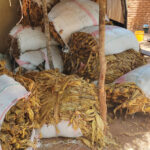
Tobacco remained the backbone of Malawi’s export earnings, accounting for 60.8 percent of the top ten export commodities at $39.3 million.
Pulses came in second at $6.3 million, representing 9.8 percent, while Tea contributed $6.2 million or 9.7 percent.
Macadamia nuts, groundnuts, natural rubber, plastics, scrap metal, beverages and skins and hides rounded off the top ten, which together accounted for 86.7 percent of total exports.
- Advertisement -
- Advertisement -
On the import side, fuel remained the largest drain on the country’s foreign exchange.
Petrol topped the import bill at $35.9 million, representing 12.9 percent of total imports, followed by boilers and machinery at $26.4 million or 9.5 percent, and diesel at $24.5 million accounting for 8.8 percent.
Vehicles, fertilizer, plastics, electrical machinery, pharmaceutical products, soaps and miscellaneous chemical products completed the top ten import commodities, which together represented 66.4 percent of total imports.
In an interview, economist Maury Siyasiya said this is a good development but it appears it is only happening by chance rather than deliberate measures or policies.
“…it may also reflect market efficiency as forex has been scarce therefore reducing the marginal propensity to import. As an example, I am in need of forex to import some electronics but I didn’t because I don’t have forex.
“I think it’s high time we resorted to import substitution, banning exportation of raw products (value addition before exportation) and get organized to start exploitation of the minerals,” Siyasiya said.
Another economist Velli Nyirongo said the underlying structure of Malawi’s trade remains largely unchanged as exports continue to be heavily concentrated in a narrow range of primary commodities, with tobacco alone accounting for a dominant share.
He said while strong performance in such commodities can boost export earnings in favourable periods, it also leaves the country exposed to price volatility and demand shifts in global markets.
“The persistent prominence of fuel and capital goods underscores structural dependencies. Malawi relies significantly on imported energy, machinery, and manufactured products, which constrains its ability to reduce the trade deficit sustainably. Even with the recent decline in imports, the fact that exports cover only 23 percent of import costs reflects a continued imbalance.