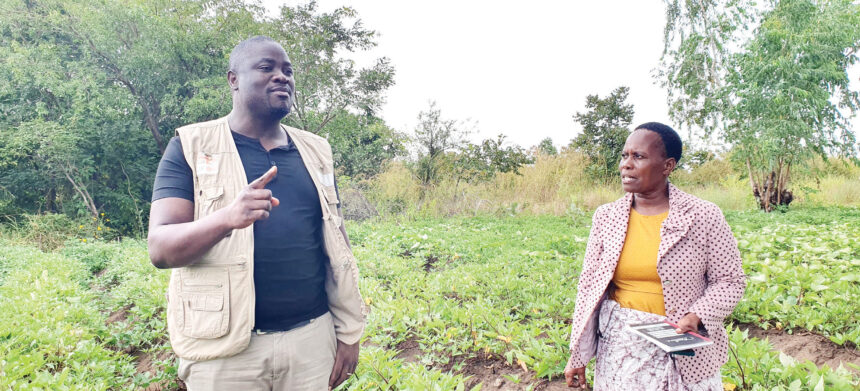
Climate change has been affecting people worldwide, and in Malawi, its impact has been severe.
Farmers are struggling with reduced or no harvests in their fields.
Balaka is one of the districts in Malawi that frequently experiences persistent drought each year, leaving thousands of farmers at risk of facing critical food insecurity.
Effective disaster response during drought episodes is crucial, especially if it focuses on quick emergency relief and mitigation activities to preserve livelihoods and build resilience.
To address the problem of food insecurity, Eagles Relief and Development Programme prioritised Balaka District in their Drought Risk Financing Project, through which it provides farmers with diverse crop seeds to enable them to cope with prolonged dry spells.
- Advertisement -
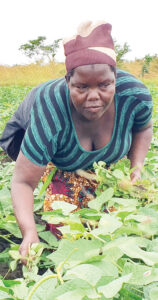
Stelia Matchado, who is from Botomani Village in the Southern Region district, is one of the beneficiaries.
She received and planted cowpeas, which the non-governmental organisation distributed to targeted community members.
“The district has been greatly affected by drought such that many families are still facing hunger.
“That said, there is hope because a number of them, like myself, benefitted from the project, which will help us have food,” she said.
- Advertisement -
- Advertisement -
Matchado hopes to get a good harvest, sell some produce and, using the funds generated, buy other necessities for her family.
“I now know that, looking at how the crop is flourishing, I’ll get enough and I am sure that some of the produce will be sold at the market so that I can generate some money for the household. The organisation did a great job by assisting us with seeds,” she said.
The project has a gender balance, with more women than men participating as lead farmers.
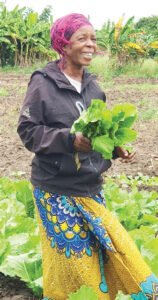
Patuma Matemba, who is from Chimatiro Village, said drought has been a major problem affecting many families, a situation that is compounded by the fact that most people there depend on rain-fed agriculture.
Matemba, who sells vegetables from her garden, said she was engaging in farming along with her husband to fight hunger and contribute to hunger eradication efforts at both household and national level.
“My family has been facing economic challenges due to drought, which has negatively affected farming.
“That is why when Eagles Relief Development Programme showed up, I was one of the beneficiaries of vegetable seeds, which I’m cultivating,” she said.
For 69-year-old Alice Twaibu, who is from Chimatilo Village, said the assistance would enable her and others to significantly reduce cases of hunger.
When we visited the area, farmers were visibly pleased with the initiative.
Amiki Amos from Chimatilo village, who has a wife and five children, has been struggling with drought triggered by climate change.
Amos, who works with his wife in the garden, said potato tubers and seeds they received have been a game changer.
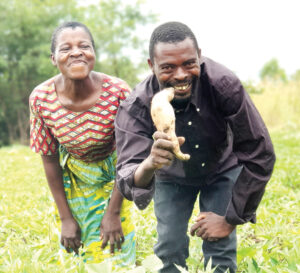
“The potatoes are doing well in my garden and I’m hoping to get a good harvest to help my family,” he said.
This year, the World Food Programme estimated that about 5.7 million people are likely to face acute food insecurity due to the effects of El Niño and poor harvests.
Programme Manager at Eagles Relief Development Programme, Trywell Khonje, explained that their support was prompted by poor harvests during the 2024-25 planting season.
“Balaka District faced a dry spell and we, as an organisation, are working with Tear Fund on drought risk financing, which is an insurance project,” he said.
The organisation distributed seeds, including sweet orange potatoes, cowpeas, onions, eggplants, Chinese vegetables and tomatoes, which are thriving and giving farmers hope for a good harvest.
Eagles Relief and Development Programme is collaborating with Tear Fund’s Drought Risk Financing, investing approximately $100,000 in the initiative to reach farmers with suitable seeds.
Khonje said prospects were good.
“After distributing the inputs, we followed up on [people who are part of] the initiative and are happy with the results. The crops are in good condition, giving them hope for a bountiful harvest, which will address the objective of the programme—[namely promoting] food security,” Khonje said.
He said the programme was aimed at addressing challenges exacerbated by climate change, focusing on the water balance index as an indicator.
So far, 1200 households from various villages have benefitted from the drought risk financing project.
The hope is that hunger could be given a red card once and for all.