
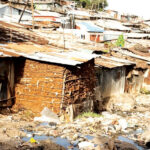




Downstream, water users treat Likangala River water as a treasured commodity, such that there is a sense of satisfaction when the water is used for drinking, washing and irrigating crops. In truth, the water is a death trap, as the high concentration of sewer materials continues to put people at risk of contracting waterborne diseases such as cholera. JARSON MALOWA writes.
It happened in 2021, when materials from the Zomba City sewer system ended up in Likangala River.
For that sheer insolence, the National Water Resources Authority (NWRA) penalised Zomba City Council (ZCC).
Three years down the line, it is back to default settings. Why? A sewer sub-plant near Agriculture Development Division offices has developed a fault again, such that sewer materials are flocking into Likangala River every passing second.
When the Friday Shaker crew visited the site of the broken system, it found workers attempting to fix it.
- Advertisement -
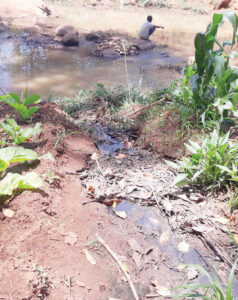
As they grappled with it, life continued as usual further down, as one heads towards the river, where we found people watering crops in gardens.
And people, mostly women, continued to use water from the river.
For instance, we found some carefree man bathing naked in the river, unperturbed by the noise of children who were fishing nearby.
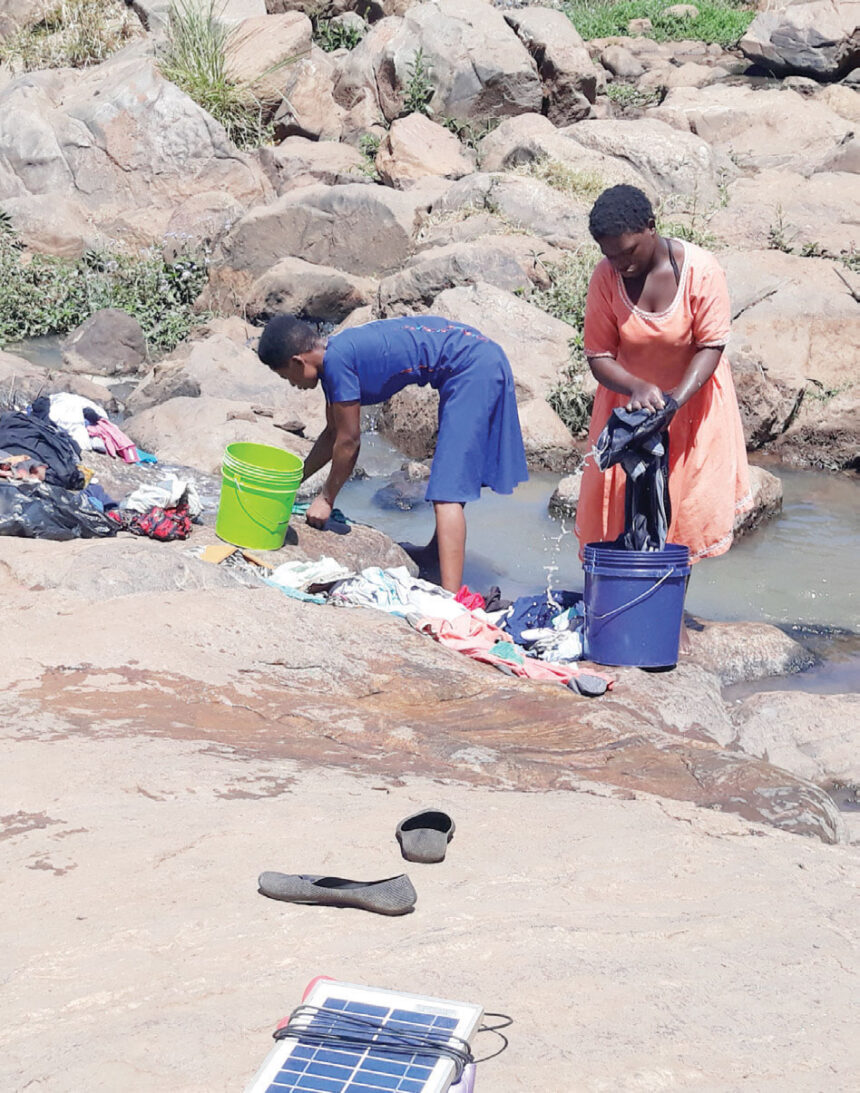
Further down the stream, we found girls washing clothes.
- Advertisement -
- Advertisement -
“This is the water we depend on when we want to wash dishes,” said a 12-year-old girl [name withheld] who was in the company of four other girls.
“Of course, we, every now and then, find the water heavy-laden with sewer materials. When the water is too opaque, contaminated by sewer materials, we shift our attention to other sources of water. But there is nothing we can do about the issue because we come from resource-poor households,” said another girl, who revealed that she was 10 years old.
The goings-on have not escaped the watchful eye of Julian Michala, a community member who feared that the broken sewer system could put community members’ lives at risk.
“Look at this! There seems to be someone who was directing the sewer material into the river. We are not safe,” Michala lamented.
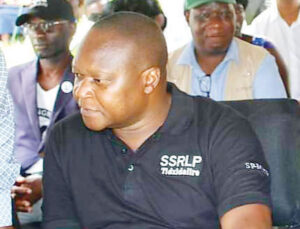
When contacted, ZCC Chief Executive Officer Archangel Bakolo acknowledged that, every now and then, the city’s sewer system becomes a headache to city fathers and mothers.
“The sewerage system, built in the early 1960s, is in a state of near-disrepair. With the many penalties we get from different authorities, it has a become almost [like] a burden [to us],” he said.
Bakolo further reminded the Friday Shaker crew that as per policy, the city council is supposed to hand over the system to Southern Region Water Board, albeit on strict condition that that should be done when it is in proper and functional state.
“The council has been making efforts to identify potential funding agencies to support rehabilitation of the system.
“Apparently, the council, together with the Environmental Affairs Department, is finalising a proposal to the Global Environment Facility,” he said.
“In the meantime, we are working on blockages and spillovers, including [at] the spot [that has] just [been] identified. We need the media to help us advocate for support. The council, on its own, cannot afford to rehabilitate the system,” Bakolo added.
Meanwhile, environment management activist Maloto Chimkombero has said that the spectacle of sewer materials flowing into Likangala River is a cause for concern.
He says this is because the materials in question pose significant environmental and health threats.
“Not only that, there are also elements of water pollution and exposure to waterborne diseases such as cholera,” he said.
Chimkombero calls upon ZCC officials to act on the issue.
He also implores them to explore innovative solutions, including the adoption of technologies that facilitate the conversion of sewerage materials into valuable products, so that it can address the challenges once and for all.
Meanwhile, some unsuspecting community member downstream is touching what, at first sight, looks like pure water. In true sense, there is death lurking in there, in the form of disease causing organisms.
No one knows for how long.