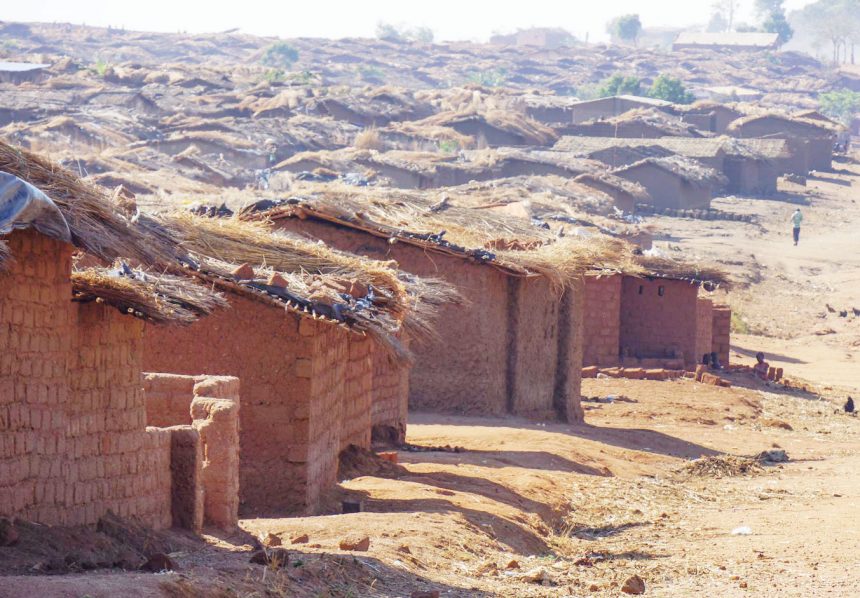
On paper, Dzaleka Refugee Camp is the official home of refugees and asylum seekers in Malawi.
In truth, it is a mantrap in the sense that once a hitherto-free individual gets in, they close the world of formal business outside the camp, payable employment and access to services in public universities out of their mind.

This, according to lawyer Temwanani Regina Mposi, is because of the Encampment Policy which Malawi adopted at the time it introduced its Refugees Act in 1989.
She is the litigation officer at Inua Advocacy, a non-governmental organisation which fights for the rights of refugees in the country.
“One of the things the current Act promotes is the Encampment Policy, which denies refugees the right to go to public universities. It even limits their freedom of movement and denies them the right to payable employment,” she indicated.
- Advertisement -
That is how Dzaleka, which is supposed to serve as shelter for those displaced from their countries by war, persecution and other factors, actually works as the frontier between freedom and entrapment.
Still, people such as Inua Advocacy founder Innocent Magambi have called such a place home since 2003.
“To me, Malawi is home,” explained Magambi, who is currently in Italy because some people in Malawi are not happy with the work he does; that is, ensuring that refugees and asylum seekers are, like everyone else in Malawi, treated as humans they are.
As at now, it is not just the Encampment Policy that is problematic; he points out that, of late, the load of mistruths coming out of some government officials’ mouths has somewhat increased, creating a false picture of the refugees’ situation in some citizens’ minds.
- Advertisement -
- Advertisement -
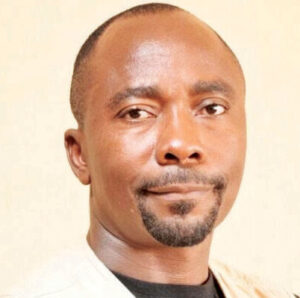
“Interrogate some of the false claims that some people make about refugees and asylum seekers. You, the media, have a key role to play in ensuring that the rights of refugees and asylum seekers are not violated,” Magambi emphasised.
Laws that relate to refugees in the country include the Republican Constitution, which outlines a litany of human freedoms under the Bill of Rights; the Refugees Act of 1989; and the Immigration Act.
Malawi is party to the 1951 United Nations Convention relating to the Status of Refugees and the 1969 Organisation of African Unity Convention.
According to the non- State actor, notwithstanding Malawi’s commitment to ensuring that refugees are treated humanely, those with the status of refugee in Malawi continue to suffer from unlawful arbitrary arrests, torture and inhumane treatment, sweeping exercises that target women and children, arbitrary deprivation of property and loss of livelihood, prolonged detention, detention without trial, unjustified and unregulated detention.
And, according to Mposi, refugees also suffer from loss of quality standard of living, overcrowding at Dzaleka Refugee Camp, inadequate resources, hard time navigating the court sector, among other challenges.
On June 20 this year, Malawi commemorated World Refugee Day, when stakeholders raised awareness on issues such as the plight of refugees while celebrating their resilience and contributions to the society.
The theme that the United Nations designated for this year’s day is ‘World Refugee Day 2024: Focusing on Solidarity with, and Solutions for, Refugees’.
However, Malawi settled for the theme ‘Solidarity in Action: Building Solutions Together with Refugees’.
The activities came at a time stakeholders have called for the review of the Refugees Act of 1989.
At that meeting, vice leader of the Rwandan community Ngendahayo Athanase expressed hope that continued dialogue would help the government understand the stand of refugees and relax some restrictions given to them.
“We hope that, through dialogue, we will be able to find a long lasting solution to the challenges facing refugees in the country,” he said.
The government is reviewing the Act.
In August last year, the government, through Home Affairs Minister Ken Zikhale Ng’oma, disclosed that the United Nations High Commissioner for Refugees (UNHCR) had committed $80 million (about K87.6 billion) to the establishment of a new refugee camp in Kayilizi, Senior Chief Mwenewenya, in Chitipa District.
It further indicated that UNHCR had committed $50,000 (about K70 million) towards the review of the Refugees Act of 1989.
Before that plan materialises, non-governmental organisations have been calling for the humane treatment of refuges, one of which being Youth and Society (Yas).

Yas Executive Director Charles Kajoloweka pointed out that refugees and asylum seekers deserve humane treatment.
“The welfare of refugees should be a priority for Malawi. The government should make sure that it creates a conducive environment for refugees and adhere to refugee treaties that are deposited at the United Nations,” Kajoloweka said.
Malawi currently hosts close to 53,000 refugees, most of whom come from the Democratic Republic of Congo, Rwanda, Burundi, Ethiopia and Somalia.
Dzaleka, located in Dowa District, approximately 50 kilometres from Lilongwe, is the largest refugee camp in the country.
It can also be said that, perhaps, it is the largest mantrap in the country.