By Isaac Salima:
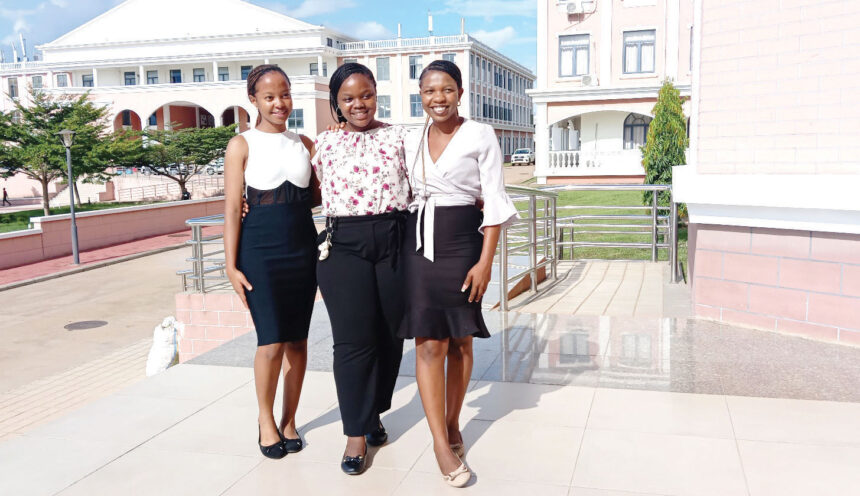
Five years ago, Tamara Msachi was just an ordinary girl who had dreams in life just like anybody else.
Her destiny then took the right direction when she was selected to Malawi University of Science and Technology (Must), where she is now in her fifth and final year of studying manufacturing engineering.
Msachi never imagined she could walk in the corridors of the university pursuing a science-related course, but later this year, she will be leaving the institution as a manufacturing engineer.
“I am, however, not happy with the number of females that do not take up science-related subjects,” she says.
- Advertisement -
Such a feeling has motivated her to be part of the solution.
Msachi partnered with her colleagues such as Madalo Banda, who is also in her fifth year studying biomedical engineering.
They came up with a Stem Quest—a method of mentoring and supporting girls to stay in school and to like science subjects so that they pursue science-related careers in their future.
The students have been engaged in several activities and are exposed to rewarding experiences associated with science subjects.
- Advertisement -
- Advertisement -
They say the project will extend access to improved learning experiences through collaborative learning and community engagement practices.
“We are trying to reach out to girls in Community Day Secondary Schools in rural areas of Malawi to encourage them to pursue Stem-related careers which include any careers in science and technology, engineering and mathematics,” Msachi says.
“First of all we had to go and interview them as to why most of them are not interested in science subjects. The other reason has been that the environment which we grew up in stigmatises women as not capable of doing other things perceived suitable for men. So we are trying to remove such perceptions and give the girls confidence so that they can do everything in life,” Banda adds.
Msachi further says they would like to see more girls being selected to universities.
“For instance, here at Must, males dominate intakes. In my class, out of 25 students, seven are females. So the question is: Is it that the girls do not know about these sciences or they are afraid?” Banda queries.
The girls are among five groups of students who recently stood out by presenting innovative ideas at Must.
Unicef Malawi has been working with universities through several initiatives to strengthen their capacities in research, evaluation and knowledge management.
Under one of the initiatives, Unicef supported Must in building research capacities of young people to bring innovative, sustainable and evidence based solutions for issues impacting children, young people and women of Malawi in their communities.
Using research as a problem solver, under the umbrella of sustainable development goals, the partnership mainly focused on providing a springboard by challenging young minds to develop local, environmentally friendly, low-cost research-based solutions to issues impacting children and women in Malawi, particularly during humanitarian situations.
The partnership has resulted in creating innovative solutions for key issues including water sanitation and hygiene and menstrual health for young girls.
Last month the university held a pitching event in which 14 groups of youths showcased their innovations where after evaluation, a panel of judges came up with the best five.
The innovations included biodegradable sanitary pads where, in an effort to help girls and young women from low-income families who struggle with menstrual hygiene management, some students came up with the innovation made from banana fibre.
“We would like to create a better world for every girl to keep learning regardless of monthly periods,” Ellanive Njelenje, who came up with the innovations together with her two male colleagues, said.
Some students also pitched the water capsule aimed at increasing access to clean water by filtering borehole water using a locally made water purifier.
The other innovation which stood out is dubbed Bio Enzymatic Detergent. It is an organic detergent soap which will be made from different fruit waste to solve hygiene issues.
It will not contain any chemicals and is environmentally friendly. The soap is effective for hand-washing and cleaning utensils to remove dirt and the soap also acts as a disinfectant and an insect repellent.
Other students showcased a cervical cancer systems management and modelling. The innovation is a digital application that can assist in the screening of cervical cancer and forecasting the probability of occurrence with the aid of artificial intelligence models.
The application will also assist in decision making processes and to simulate probability of cervical cancer severity during the screening processes.
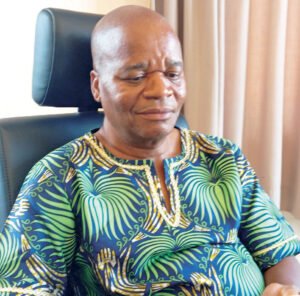
Must’s Director of Research and Outreach Alfred Maluwa said the institution is carrying out about 82 research projects with the latest one being funded by Unicef.
He said the idea is to support innovations on health and those that can address challenges in times of disasters.
“Innovation is an ongoing process here. But with this one, we are looking at emergency situations and how we can assist the locals.
“Because of the bitter lessons we learnt during Tropical Cyclone Freddy, we think these technologies will empower us in the way we will respond to disasters next time,” Maluwa said.
The top five winners are expected to get grants from Unesco, ranging from K2 million to K8 million for testing, patenting and perfecting their innovations.