By Godfrey Kenneth Beni:
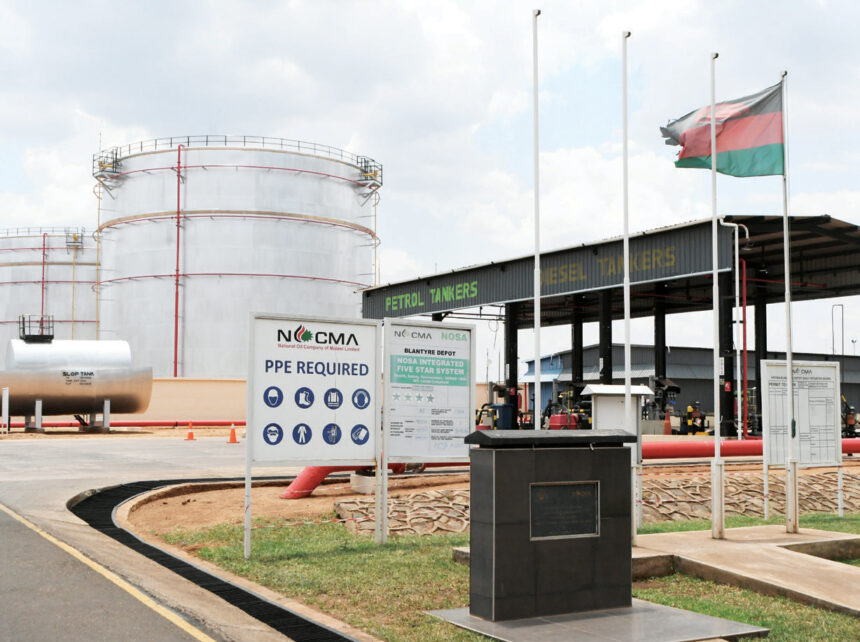
It started with the familiar click of the radio and the official statement from the Malawi Energy Regulatory Authority (Mera). As of April 1, 2026, the nightmare became math: petrol is now selling at K6,672 per little, diesel is fetching K6,687 per litre. For the few days since, the national conversation has rightly focused on transport fares.
But, as we tally the immediate pain, we are missing the silent crisis brewing in the shockwave: the devastating impact on the job seeker, the erosion of employee morale and the nosedive in productivity. We are not only paying more money to move; we are paying more to survive, and for millions of people, that equation no longer balances.
Consider the job seeker in areas such as Area 25 in Lilongwe and Ndirande in Blantyre. Before the 34 percent hike, the daily struggle to find a minibus fare was a hurdle.
Now it is a wall. Some Economic scholars (Chauwa, 2026) warn that a 30 percent fuel spike translates directly into transport inflation. For a young person who needs to travel from their township to the industrial area for an interview, the cost is now prohibitive.
- Advertisement -
If daily commuting costs consume over 60 percent of the urban budget, the act of looking for work becomes a luxury. We are seeing the emergence of a “commute tax” that locks the unemployed out of the labour market.
If you cannot afford to get to the job, you cannot take the job. This creates a dangerous underclass of the willing but stranded, disconnecting labour supply from demand and artificially inflating the skills shortage despite high unemployment rates.
Let us shift our gaze to those who are already in the formal workforce. Conventional wisdom says that a fuel hike hits the factory floor via production costs. But the psychological impact is just as severe. Employees are not stupid; they see the multiplier effect. They know that the K2,000 they spent on transport last month is now K3,000. They are doing the math while sitting at their desks.
This breeds presenteeism, being physically at work but mentally absent. How can an employee focus on quarterly targets or customer service when they are mentally calculating how to stretch the week’s budget? The morale of the workforce drops not because of the boss but because of the pump.
- Advertisement -
- Advertisement -
Adding to the misery is the sheer unpredictability. Even with the official price hike, supply remains erratic. Mera has admitted to logistical delays, and reports from Transporters Association indicate that trucks are stuck due to diesel shortages. This forces businesses into survival mode.
A driver for a distribution company might spend four hours in a queue at a station that has fuel, time that is not productive. A taxi driver must buy fuel on the black market at inflated prices just to keep the engine running, a cost they must eventually pass on to the worker who needs the ride. This logistical chaos kills productivity. In a country where manufacturing already suffers due to load-shedding, fuel unreliability is the final nail. A worker who is exhausted from walking distances or waiting for delayed transport is not a worker who is innovating and producing.
There is a term in economics called “loss aversion”. We feel the pain of a loss more acutely than the joy of a gain. Since September 2025, fuel prices have risen by nearly 96 percent. Wages have not followed suit. The result is a rupture of the psychological contract between the employer and employee.
The employee feels the system is rigged. The employer, squeezed by forex shortages and high operational costs, cannot offer a raise. This is the fire we are fueling. A demoralised, exhausted and financially desperate workforce is prone to high turnover, low engagement and, in extreme cases, corruption or theft. When an employee feels they cannot survive on their legitimate salary, their loyalty shifts from the company to survival.
We cannot control the war in the Middle East or the closure of the Strait of Hormuz. But we can control our response. The government’s talk of subsidies and cash transfers is necessary, but action is urgent. For the job seeker, practical interventions are long overdue. Mobile-based recruitment platforms can reduce the need for physical travel, but they risk excluding those without smartphones or data bundles.
A more inclusive approach is for the government, through district councils, to partner with community radio stations to broadcast local job vacancies and interview dates free of charge.
However, the private sector must also adapt. We need a new social contract for this crisis. Where possible, companies should consider hybrid working arrangements, not as a perk but as a financial lifeline.
For roles that do not require a physical desk, allowing remote work saves the company the cost of a disengaged employee. Employers can also introduce fuel advances or bulk-buying fuel cards to reduce the per-litre cost for staff.
Staggered shifts can reduce the time spent in traffic and queues, lowering the mental fatigue of the commute.
Otherwise, the prognosis is grim. A job seeker who cannot afford to attend an interview remains unemployed. An employee who is financially broken cannot produce quality work. We are watching the economy burn. But unless we extinguish the fire at the pump for everyone, we will lose not just our cars, but our workforce and, with it, any hope of recovery.