By Deogratias Mmana:
Recent trends indicate that international support for Morocco’s sovereignty over the Western Sahara territory is growing.
In recent months, several countries, including France, Panama and the Dominican Republic, have suspended their diplomatic relations with the Sahrawi Arab Democratic Republic (Sadr), which claims control over the Western Sahara region, located in the western Maghreb.
France’s recognition of Morocco’s sovereignty in July 2024 marked a decisive step towards resolving the Western Sahara conflict.
This move aimed to encourage the Sahrawi people and Algeria to negotiate peace terms before the status quo became permanent.
- Advertisement -
In response, France’s position prompted Algeria to immediately recall its ambassador from France.
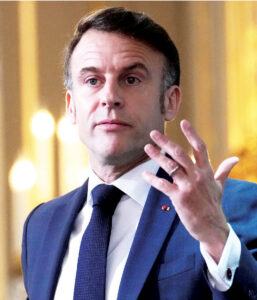
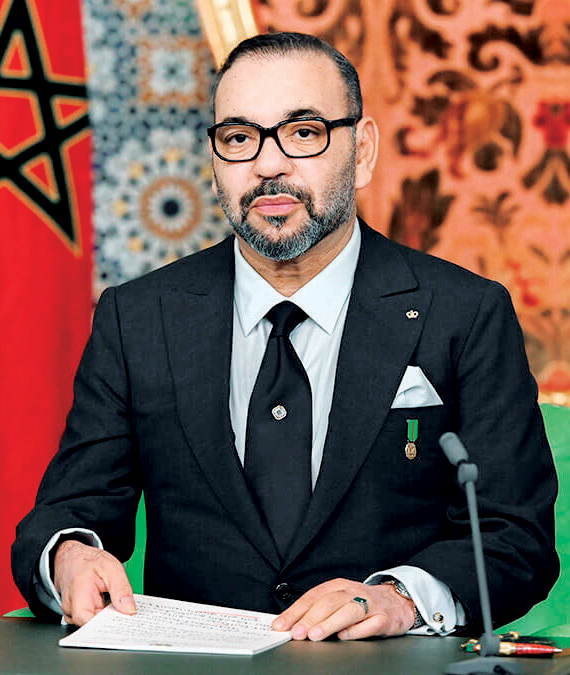
In July 2024, French President Emmanuel Macron sent a letter to King Mohammed VI of Morocco, marking the 25th anniversary of his ascension to the throne on July 30, announcing France’s recognition of Morocco’s sovereignty over the entire territory.
The most recent country to suspend recognition of the Sadr is Ghana, an African nation that had recognised the entity in 1979.
This has reduced the number of African countries recognising the Sadr to approximately 16 out of 54.
- Advertisement -
- Advertisement -
Morocco has claimed authority over Western Sahara since before 1956 and officially presented its claim at the United Nations (UN) in 1963.
The country controls most of the territory, as well as a buffer zone negotiated with the United Nations, while the Polisario Front, which is based in Tindouf in southern Algeria, advocates for an independent Sahrawi state.
The indigenous Sahrawi population and the Polisario Front have fought for independence since 1975, when Spain ceded the territory to Morocco and Mauritania following the Madrid Accords.
After Spain’s withdrawal in 1975, Morocco began developing the territory under its sovereignty.
Morocco transformed this desert region into a modern economic hub, constructing ports, airports, highways, mega-farms, universities, hospitals and professional institutions.
Despite massive political, financial and military support from Algeria, which hosts Polisario camps, the Polisario Front has been unsuccessful in its efforts to liberate the territory and establish the Sahrawi Arab Democratic Republic.
According to the United States Institute of Peace (usip.org), the UN became involved in 1991, establishing a peacekeeping mission tasked with organising and overseeing a referendum on the territory’s status.
However, the referendum has yet to take place and the territory remains under Moroccan control, with many former inhabitants living in refugee camps in Algeria.
Usip also notes that in 2020, President Donald Trump announced US recognition of Morocco’s sovereignty over the entire Western Sahara, a move that coincided with Morocco’s recognition of Israel under the Abraham Accords.
This shift in US policy supported Morocco’s 2007 proposal for Western Sahara autonomy as the only viable basis for a just and lasting solution to the dispute.
Many supporters of Sahrawi independence, including Algeria, saw Trump’s proclamation as a setback, though numerous countries have followed the US lead since then.
In October 2024, the Kingdom of Morocco welcomed the adoption of UN Security Council resolution 2756, which extended the mandate of the UN Mission for the Referendum in Western Sahara until October 2025.
This mission, established in 1991, was intended to help the people of Western Sahara choose between independence and integration with Morocco.
According to the Ministry of Foreign Affairs of Morocco, the resolution reflects an irreversible trajectory set by King Mohammed VI regarding the kingdom’s territorial integrity, supported by permanent members of the Security Council and influential nations backing Morocco’s sovereignty over the Sahara and the Moroccan autonomy initiative.
This includes the continued withdrawal of recognition of the so-called Sadr.
The government of Malawi has expressed its support for France’s recognition of Morocco’s sovereignty over Western Sahara.
Ministry of Foreign Affairs spokesperson Charles Nkhalamba confirmed that Malawi reaffirms the position taken by France.
Morocco’s ambassador to Malawi, Abdelkader Naji, explained why many countries are now distancing themselves from the Sadr.
“The reasons are numerous, but the primary one lies in the context of the Cold War, during which many countries, including those that recognised the Sadr, aligned with the Eastern Bloc.
“As the geopolitical landscape evolved, these countries came to understand that the situation was merely a separatist movement driven by left-wing ideologies,” the ambassador said.
Naji emphasised that the Moroccan diplomatic effort, led by King Mohammed VI, has succeeded in convincing the international community of the true nature of the conflict over the Sahara.
Morocco has presented compelling arguments based on the historical, social and economic ties between the kingdom and its southern region, which has never been independent.
He added that Algeria remains trapped in outdated leftist ideologies from the 1960s, while Morocco progresses in accordance with international law, proposing the 2007 autonomy initiative as the most serious, realistic and credible solution to the dispute.
“Morocco, as a whole, is developing democratically, economically and politically, with a future-oriented vision, while Algeria remains anchored in the past,” Naji explained.