




By Emmanuel Chilemba:
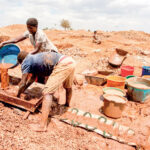
Illegal gold mining is leaving deep scars on protected areas in Nsanje District as miners push into Mwabvi Wildlife Reserve and Matandwe Forest Reserve.
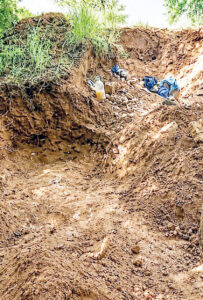
“It was first noticed in Mwabvi in October 2025. The mining is done by digging holes and cutting down trees, resulting in the degradation of the reserve and destruction of wildlife habitats,” Joseph Nkosi, spokesperson for the Department of Tourism and Wildlife, said.
The gold rush across the combined 398-square-kilometre protected area has left deep scars, with dug-out trenches and pits replacing trails once used by wildlife.
The actual extent of the encroachment remains unclear, although officials say mining sites continue to spread towards the protected areas.
- Advertisement -
The growing gold rush has created an informal economy in which local miners extract gold while middlemen buy and transport the mineral to other markets.
According to Nkosi, Mozambican businessmen have influenced the illegal mining activities, with some having been arrested and convicted.
Officials believe the involvement of foreign buyers has helped turn small-scale gold digging into a more organised commercial operation.
“The department remains committed to constructive stakeholder engagement and dialogue. To this end, ongoing sensitisation meetings are being conducted with local leaders, community members and park authorities to foster collaboration and local support,” Nkosi said.
- Advertisement -
- Advertisement -
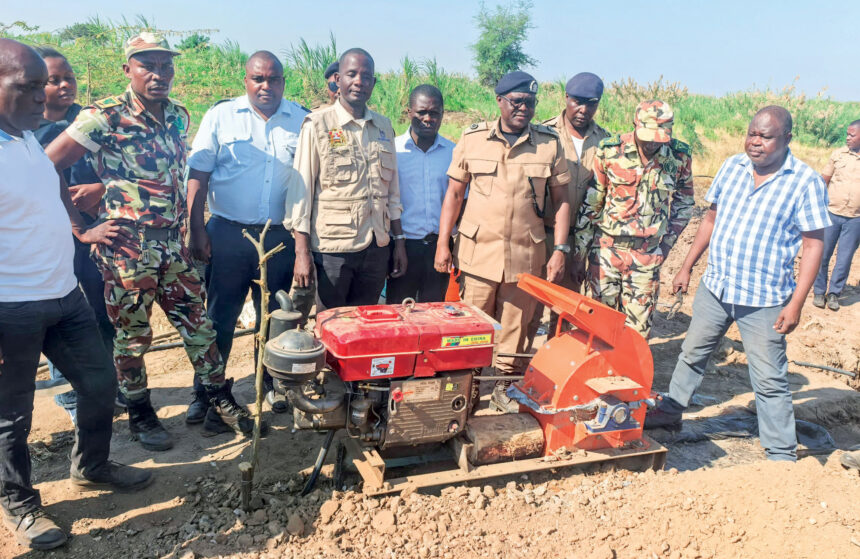
He added that law enforcement measures have been intensified, with a joint operational strategy involving the Malawi Police Service and scaled-up patrols by wildlife rangers within Mwabvi Wildlife Reserve successfully disrupting illegal mining activities.
Nkosi stressed that local communities are key strategic partners in the sustainable management and conservation of natural heritage and must therefore play a central role.
“Conservation measures are designed to protect wildlife while delivering direct, tangible benefits to surrounding communities economically and environmentally,” he said.
Traditional leaders and community members are being urged to report illegal mining activities and support authorities in protecting the reserves.
Some residents, however, say conservation efforts must be accompanied by alternative livelihood opportunities if communities are to move away from illegal mining.
The mining rush has also fuelled child labour, drug and substance abuse and prostitution in surrounding communities.
“In some surrounding areas, the situation has also been associated with drug and substance abuse, particularly in makeshift joints, and prostitution,” one well-placed official told The Daily Times.
The official further claimed that siltation has been ongoing, with kingpins, including Mozambicans, buying mineral deposits from locals in surrounding areas.
“The syndicates target the riverbeds of the Mwabvi, Dande and Thangadzi rivers for gold panning, causing severe erosion and polluting water sources.
“This endangers aquatic life as well as other animals that depend on these rivers as water sources,” she added.
The impact is also being felt in the rivers, where miners disturb riverbeds in search of gold and leave behind sediment and mining waste.

Nsanje Police spokesperson Jabulani Ng’oma said law enforcers in the district, together with counterparts from the Department of Parks and Wildlife, have been closely monitoring siltation.
Ng’oma said joint operations have led to arrests and the confiscation of mining equipment, including mining machines, shovels, picks and a handheld gold-detecting device.
During an operation on July 23, 2026, five Mozambican nationals were arrested.
Ng’oma identified the suspects as Tabia Faka, 48, Pedrito Boma, 33, Isaac Danger, 42, Benito Zwanki, 26, and Timoti Blande, 45, all from Nyaladanga, Tete Province, Mozambique.
The five appeared before the Bangula Second Grade Magistrate’s Court, where they were charged with three counts: entering a protected area without a permit, conveying weapons into a protected area without a permit and mining in a protected area without a valid licence.
“On the first count, each convict was fined K150,000 or, in default, to serve 12 months’ imprisonment with hard labour. On the second count, each was fined K250,000 or, in default, to serve 36 months’ imprisonment with hard labour.
“On the third count, each was fined K250,000 or, in default, to serve a further 36 months’ imprisonment with hard labour,” the police report in our possession reads.
Despite increased patrols and arrests, the continued presence of miners suggests that enforcement efforts are struggling to keep pace with the expansion of the illegal trade.
Officials acknowledge that sustained enforcement will be necessary to prevent miners from returning to sites after patrol teams leave.
The challenge is compounded by the remote terrain, which makes it difficult for enforcement officers to maintain a permanent presence across the affected areas.
The development is particularly concerning for Mwabvi Wildlife Reserve, which has already lost much of its former natural heritage because of extensive deforestation.
According to data gathered and analysed by this publication from Global Forest Watch, Mwabvi Wildlife Reserve recorded 97 percent tree-cover loss between 2001 and 2025.
Located at the southern tip of the Shire Valley, close to the Mozambican border, the reserve was once home to the Big Five.
Today, it harbours small herds of buffalo, antelope, nyala and suni, kudu, duiker and impala, as well as warthog and a variety of birds.
The reserve still contains diverse landscapes, including dry tropical Miombo and montane woodlands, sandstone outcrops and rugged, hilly terrain.
Wildlife officials fear that continued mining will push animals away from their traditional habitats and increase pressure on the remaining areas where they can find food and water.
The scale of the damage also raises questions about who will finance the rehabilitation of abandoned mining sites and restore degraded habitats.
Without rehabilitation, abandoned pits could remain hazards to wildlife and people long after mining activities have stopped.
According to this publication’s analysis, encroachment by illegal miners into the country’s protected areas is not unique, as Nkhotakota Wildlife Reserve has also been targeted more than once.
Such developments pose a serious threat to wildlife conservation, while also putting the country’s tourism sector and its contribution to economic growth at risk.
The degradation of Mwabvi could undermine efforts to revive wildlife tourism in a reserve that has already suffered significant losses in wildlife and forest cover.
Further degradation could make the reserve less attractive to tourists at a time when Malawi is seeking to expand tourism as a source of foreign exchange and employment.

The sector is strategically prioritised under the long-term development blueprint, Malawi 2063, in recognition of its contribution to socio-economic development, job creation and poverty reduction.
In terms of GDP contribution, after declining to K394.7 billion in 2020, the sector’s total contribution had risen to K865.2 billion by 2024, with projections indicating further growth to K1 trillion in 2025.
This is according to data gathered and analysed from the Treasury.
Meanwhile, environmental officials believe a stronger presence from a multi-agency taskforce could help disrupt the networks financing and facilitating illegal mining in protected areas.
Under the Malawi 2063 economic blueprint, mining is prioritised as a primary driver to propel the nation towards upper-middle-income status.
The development also comes as economic and mining experts cite the mining sector as key to easing the country’s long-standing foreign exchange shortages.
They argue that declining tobacco prices and sustained anti-smoking campaigns threaten Malawi’s top foreign exchange earner. This could further strain foreign exchange reserves, which have been hovering below the recommended 3.9 months of import cover.
In the short to medium term, however, Capital Hill is bankrolling a gold-buying initiative under the Reserve Bank of Malawi’s structured market.
Without a coordinated response that addresses both the criminal networks behind the trade and the economic pressures driving local participation, the damage to Malawi’s protected areas could become increasingly difficult to reverse.
The challenge now is to stop the expansion of illegal mining before temporary mining sites become permanent scars across one of the country’s remaining wildlife landscapes.
Mwabvi now faces a difficult choice between short-term mineral gains and the long-term value of protecting its forests, rivers and wildlife.