





By Tony Roberts
Governments around the world use surveillance technology to monitor external threats to national security. Some African governments are also spending vast sums on mass surveillance of their own citizens.
They are using mobile phone spyware, internet interception devices, social media monitoring and biometric identity systems.
Artificial intelligence for facial recognition and car number plate recognition is another digital surveillance technology in their growing toolkit.
- Advertisement -

I recently led research which found that governments in Nigeria, Ghana, Morocco, Malawi and Zambia were collectively spending over $1 billion a year on these digital surveillance technologies, supplied by companies in the United States, the United Kingdom, China, the European Union and Israel.
- Advertisement -
These are enormous amounts of public expenditure in countries where public services such as education and healthcare are under-funded.
The research also uncovered the harms that this digital surveillance causes.
We found that states were using surveillance technology contracts to spy on opposition politicians, journalists and peaceful activists.
They were singling them out for harassment, arrest and even torture. This is in violation of countries’ constitutions, international human rights law and domestic laws.
- Advertisement -
All the five countries studied have signed international conventions on the right to privacy and have incorporated privacy rights into domestic constitutions and national laws.
Our findings give cause for concern about the chilling effect of mass surveillance on citizens’ freedom of speech, stifling debate, closing civic space and damaging democracy.
The report documents the use of surveillance to monitor, arrest and threaten journalists and peaceful activists who criticise government policies or ministers.
The study
We examined over 2,400 database records of contracts for the supply of surveillance technologies for the five countries. Ten countries were originally selected for this study to represent Africa’s main regions and economies.
However, we were forced to discontinue research in Egypt, Ethiopia, Algeria and Tunisia due to security risks for the researchers. The author of the Côte d’Ivoire report had to withdraw for unrelated personal reasons.
This study covers only 10 percent of the countries in Africa, so the total expenditure on surveillance technologies is certainly much higher.
Despite these limitations, our report provides the most detail to date on the size of the market. It also details companies and countries supplying the surveillance technologies.
According to the evidence available to us, Nigeria has procured more than any other country on the continent.
The government is a customer of nearly every major surveillance technology company that we examined.
It spends hundreds of millions of dollars annually, and at least $2.7 billion on known contracts between 2013 and 2022. This is the equivalent of $12 per Nigerian citizen.
However, this is only a fraction of the true total as the monetary value of many known contracts is not public knowledge and many contracts are not in the public domain at all.
The findings
We found that different African countries had distinct surveillance profiles.
Morocco has been an avid consumer of internet and mobile phone interception technologies. It has even conducted mobile surveillance of its own king.
Ghana focuses on mobile phone spyware and on surveillance of public space. It spent over $250 million between 2018 and 2021 on a “safe city” project.
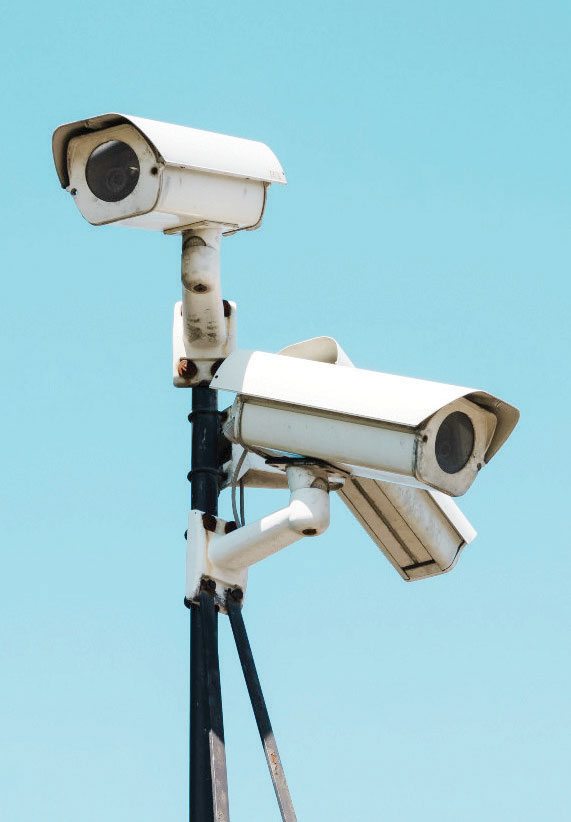
This involved over 8,400 CCTV cameras on streets, equipped with facial recognition technology and streaming information to a national surveillance data centre with equipment from Chinese companies like Huawei and ZTE.
Zambia has also made a huge investment in a safe city surveillance system. In Nigeria, facial and car number plate recognition is used across Lagos and Abuja.
Malawi’s investment in surveillance systems is comparatively modest; so far it has rejected the safe city surveillance package being rolled out across Africa by Chinese companies.
Human rights cost
Beyond the financial cost, the widespread use of digital surveillance products has taken a toll on human rights.
It has caused long-term physical and psychological harm to individuals unjustly targeted by surveillance tech and held without trial or even tortured by authorities, as documented in the report by the “surveillance stories” case studies from each country.
Journalists and activists, or regular citizens, have been tracked, arrested and detained just for posting a critical message on social media.
Under the pretext of national security, governments have exceeded their legal powers of surveillance. They have done so with impunity.
As our reports document, even when courts find that security agencies have exceeded their legal power, nobody has been prosecuted or even demoted.
The few rules of surveillance supply that are in place are not being followed.
For instance Frontex, headquartered in Warsaw, Poland and the European External Action Service, the EU’s diplomatic agency, are being investigated by the European Ombudsman over failures to conduct human rights assessments of their surveillance technology transfers to non-EU countries.
Self-policing of companies has proved inadequate in preventing violation of human rights.
Surveillance is a violation of the right to privacy of communication and correspondence. Privacy is important in its own right. It is also important in making possible free trade, freedom of expression and open democracy.
What to do about it
Our study points to an urgent need for international governance in the absence of effective national checks for the use of artificial intelligence in surveillance. Authoritarian governments could misuse it to violate privacy and repress peaceful opposition.
On the supply side, there is a need for robust legal frameworks to abolish the export of surveillance technologies used to violate human rights.
Companies supplying these to known human rights abusers should be sanctioned, as is the case with companies that breach legal controls on the export of weapons and munitions.
On the demand side the public needs to be more aware of their privacy rights and of the expansion of mass surveillance. Civil society has a role to play in getting the courts to protect their rights and freedoms.
Public expenditure on surveillance should be defunded and the money redirected to productive social services such as education and health. The goal should be the abolition of all rights-violating surveillance technologies. —The Conversation