By Sellina Tambula & Blessings Makuwira:
Mining is among key priority sectors in Malawi 2063 and are billed to have potential to support industrialisation and, resultantly, economic growth.
According to the Ministry of Mining’s website, the sector is expected to rise to between 10 percent and 20 percent when all the upcoming projects are in full operation.
Malawi aims at harnessing the mining sector in value addition and increase export of finished products.
Yet, as observers state, a lot still needs to be done to ensure that the sector grows and the welfare and safety of its human resources are upheld.
- Advertisement -
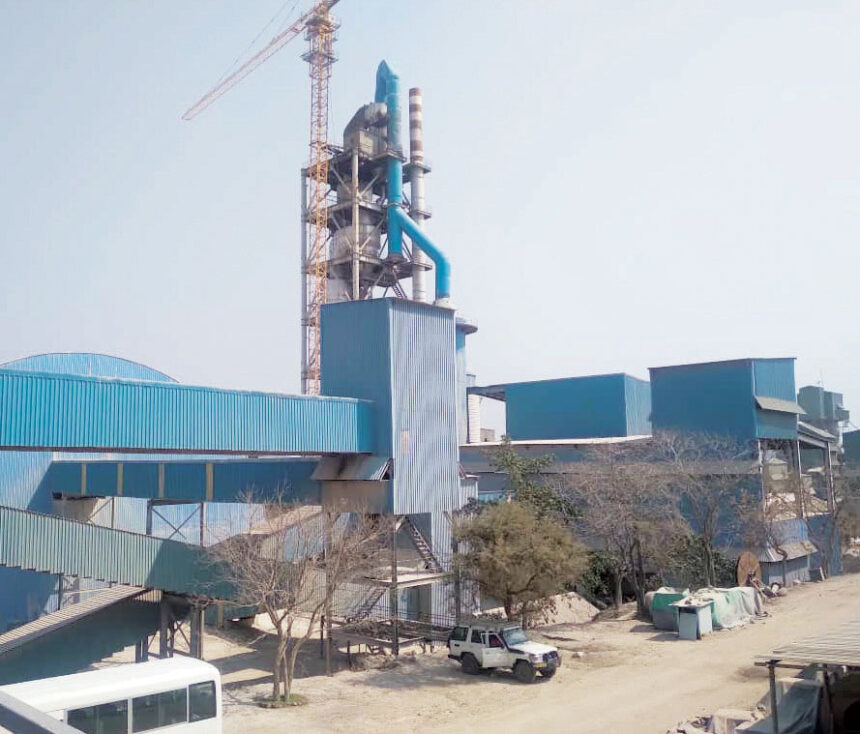
At Cement Products Limited (CPL) in Mangochi, with about 550 employees, the issue of safety pops up all the time, as the workers frequently blast and excavate minerals apart from working in dusty environments.
The company has the actual mine where limestone—a key mineral used in cement production— is excavated, and the production side where the cement is processed and packaged.
CPL Administration and Human Resources Manager, Rashid Kapalasa Gama, admits that not long ago, the company was registering an injury almost every month.
“Three to four years ago, we were experiencing a lot of accidents but now we are only recording minor accidents such as dust getting into someone’s eyes,” Gama says.
- Advertisement -
- Advertisement -
He adds that to reduce cases of accidents, the company started employing workers who are well trained in handling mining machinery and providing personal protective equipment (PPE).
CPL, Gama says, periodically engages medical personnel to do periodic check-ups to ensure workers do not develop occupational conditions such as tuberculosis (TB).
“Because of this, we have not recorded a respiratory disease in the past six months,” he says.
Luka Ngwira, who is the Safety, Health and Environmental Manager at CPL, says ensuring the safety of workers allows a firm to maximise its operations.
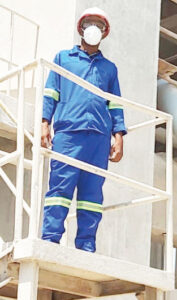
“Workers in the mine and those in production are required to wear safety gear such as work suits, safety goggles, gloves and boots for their protection,” Ngwira explains.
He adds that the mining company is also empowering the workers with safety information.
A worker at CPL Felix Chimenya says he has worked in various factories for 13 years and at CPL for four years.
“In all my years working, I have never been injured or even developed any occupational disease because I always make sure I wear protective gear when I am working,” Chimenya says.
People working in an environment such as Chimenya’s could be at risk of developing Silicosis, a lung disease caused by inhaling silica.
This is a natural substance found in varying amounts in most rocks, sand and clay. Silica is also a major constituent of construction materials such as bricks, tiles, concrete and mortar.
Exposure to silica dust can lead to the development of lung cancer, kidney disease and chronic obstructive pulmonary disease.
According to the National Institutes of Health, over 200,000 cases of silicosis were identified in 2017 globally and millions more continue being exposed in the workplace.
Chimenya says not wearing PPE is dangerous as one can develop such occupational diseases in the long term, compromising health and affecting one’s livelihood.
Another employee at CPL Patrick Zachepa also attests to the importance of fitness in such work as his life drastically changed when he developed diabetes in 2019.
He joined CPL in 2016 and although his condition cannot be directly linked to his work, falling sick meant he could no longer work as a tower crane operator, which required him to climb up to a height of about 75 metres from the ground.
“I was too weak to climb the stairs to get to the crane and it took me two years to fully recover but, fortunately, the company transferred me to the safety department.
“I now do housekeeping, which requires ensuring that the working environment is clean and that fellow workers are adhering to safety measures,” Zachepa explains.
Southern Region Mining Engineer Marumbo Mpasa says the Department of Mines is doing periodic inspection in the mining sector to ensure safety standards are being observed.
“Among other things, we check if the levels of dust in the workplace are not too much, whether workers are wearing PPE and if the rooms are well ventilated,” Mpasa explains.
He adds that the greatest challenge that is being encountered is that although employers are providing PPE to workers, some do not use them while others sell them.
“This is one of the biggest complaints we are receiving during our inspections. We insist that the employer should sensitise the workers to the importance of wearing the PPE,” Mpasa explains.
And Rodrick Phiri, who is Principal Mineral Processing Engineer in the Department of Mines, stresses safety in both the formal and informal sectors.
He recounts a “sad tale” of a miner in Nathenje, Lilongwe, who had dug out a tunnel without proper support beams in his search for semi-precious stones.
During inspections, experts had cautioned him against going ahead with his insecure activity but he reportedly continued after the inspectors had left.
“Three months later, when we returned for inspections, we were told that the man had died after the tunnel had collapsed on him,” Phiri says.