By Pemphero Malimba
A year and some months have passed since 25-year-old Laurent Taferanji began producing and selling fire briquettes in his Area 36 residence in Lilongwe. Among others, Taferanji, a Form Two dropout who sought knowledge of briquette production as a source of income and a way of supporting efforts to reduce charcoal use, makes the briquettes by mixing porridge made from cassava flour with groundnut shells. He relies on the business for survival, earning between K90,000 and K150,000 a month after producing about three bags of fire briquettes weighing 50 kilogrammes (kg) each and selling them to vendors who then sell the briquettes at higher prices in nearby markets in the city.
“When I sell the briquettes, it helps me to invest the proceeds in other businesses. I produce organic fertilisers, so money realised from the briquettes is invested in the organic fertilisers and in irrigation farming that I also do,” Taferanji says. He adds that the briquettes are vital because customers can use a few of them to cook a variety of things, which is different from using charcoal. They are also cheaper and durable. “When you light the fire, you can cook nsima, prepare relish and heat water for bathing, but with charcoal, you have to buy more to achieve all that. This means those who use briquettes save money,” the young entrepreneur explains.
He also points out the environmental benefits of the briquettes. “They do not release much smoke. You can even use them for indoor cooking and no one will face difficulties while cooking,” Taferanji says. However, despite the business slowly changing his life, his dream of becoming a major supplier of briquettes is being held back by a number of challenges.
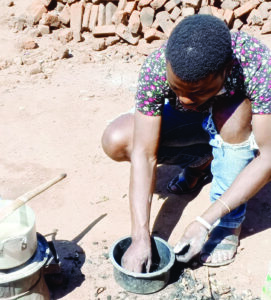
Apart from poor access to markets, Taferanji struggles with low production due to the lack of a machine. It takes him time to produce the briquettes, such that putting together a 50kg bag is not a simple task. “If I could get a machine, I could produce more than 100 bags because what matters is having the raw materials and the machine just makes the briquettes,” he says. Taferanji’s situation is similar to that of 21-year-old Tadala Phiri, who runs her business from her home along the MitunduBunda Road in Lilongwe.
- Advertisement -
Despite earning about K100,000 a month, the lack of a machine to speed up production limits her dream of producing more and earning higher income. On average, she produces about 15kg of briquettes manually. “Manual production is not easy and by the end of a week, I produce a bag weighing 50kg, and by the end of the month, I produce about three or four bags,” Phiri says.
A Times inquiry revealed that a machine for producing briquettes costs no less than K1.5 million. Phiri says most young people do not earn enough from the business to afford the machine. “Sometimes when we try to access loans, they ask for collateral, which most of us do not have, so it becomes hard to get the loans needed to boost our businesses,” she laments.
Phiri adds that selling briquettes also faces challenges due to a lack of understanding among local people. She says the reception is slow because most people do not know how the briquettes work. “I try to educate people about their benefits, but some ask for them for free to try and sometimes never come back to give feedback or buy them,” Phiri says.
The two are examples of hundreds of thousands of young men and women who are jobless but trying to earn a living using locally available resources by producing and selling fire briquettes. According to the Malawi Labour Force Survey 2024 released by the National Statistical Office, the unemployment rate is 19.7 percent, while youth unemployment for those aged 15 to 35 in the labour force is 21.5 percent.
- Advertisement -
- Advertisement -
The National Charcoal Strategy, which runs from 2017 to 2027, indicates that more than 97 percent of households in Malawi rely on illegally and unsustainably sourced charcoal and firewood for domestic cooking and heating. This has resulted in high levels of deforestation and forest degradation, with negative impacts on water availability, hydropower generation and the broader vulnerability of Malawians to climate change.
The strategy encourages the promotion of renewable forms of energy such as fire briquettes and notes that, if produced well, they have the potential to provide concentrated, cost-effective, renewable and cleaner fuel than firewood.
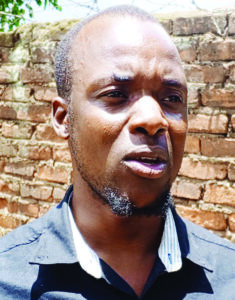
But the question remains whether Malawi can reduce the use of firewood and charcoal by embracing innovations such as fire briquettes for cooking. Executive Director of Youth Action for Success and Development, Edward Msiska, believes that increasing briquette production has the potential to create more jobs for youth and reduce reliance on charcoal. Msiska, whose organisation has trained about 100 young people including Taferanji and Phiri in Lilongwe and surrounding areas, says young people can be empowered to produce more briquettes if government promotes youth access to financing. “We know the government is the main provider of social services nationally. It has the responsibility to establish flexible funding mechanisms for youth-led initiatives,” he says.
He notes that some funding mechanisms that exist are not accessible to most young people. Msiska adds that there is some relief now that there is the National Youth Council of Malawi with the National Youth Innovation Fund. “Some young people producing briquettes have been able to access machines through this fund. This is a good step, but more efforts are needed,” he says.
He recommends that the government introduce mentors to guide young people producing briquettes, insisting that every product used by the community requires quality assurance. “Continuous mentorship is one way to maintain and improve quality because young people often lack guidance, which limits their capacity to improve the effectiveness of their briquettes,” Msiska says.
He adds that encouraging briquette production not only creates jobs but also supports environmental conservation.
He also draws attention to Lilongwe City Council’s strategic plan which highlights poor waste management as a key challenge.
“By turning dry organic waste into briquettes, these young people are helping to address that issue,” Msiska says. The trend raises questions about whether Malawi will achieve its longterm development goals, as enabler seven of Malawi 2063 emphasises green investment, action research and innovation to support a safe, clean, secure and sustainable environment. Patrick Botha, spokesperson for the Ministry of Industrialisation, Business, Trade and Tourism, says the ministry is implementing several interventions to support small and medium enterprises such as promoting capacity building and improving access to finance through engagement with financial institutions and development partners. “The ministry is encouraging young people to form cooperatives, making it easier to access loans and ensure repayment,” Botha says.
He adds that the government is implementing these initiatives as part of its commitment to the Malawi National Micro, Small and Medium Enterprises policy, which prioritises innovation and value addition including green technologies. Botha further states that the ministry is working through the Small and Medium Enterprises Development Corporation to offer training to youth on business management, production, quality standards and market access.
“The corporation has a memorandum of understanding with the Malawi Bureau of Standards to facilitate access to certificates at subsidised rates, which addresses past complaints about delays,” he says.
Botha encourages youth to seek financial advice from officers in their respective districts, saying there are agri-business and trade officers across the country. He says these officers provide guidance to small and medium enterprises. Recently, Minister of Youth and Sports Patricia Wiskies told Parliament that her ministry is championing the development and mainstreaming of the National Youth Services Strategy. The aim, Wiskies said, is to address persistent youth challenges including high unemployment, limited access to finance, inadequate skills development and exclusion from decision-making. The question remains whether this will result in young people accessing finance more easily to support their businesses.