By Vincent Khonje;
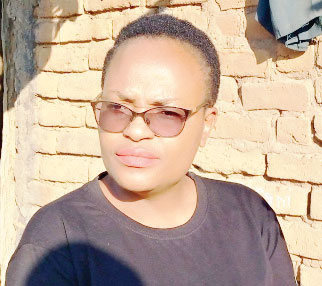
Chifundo’s condition makes them a target of ridicule and exclusion in their community.
At 17, they find it difficult to determine where they belong and constantly search for acceptance among fellow teenagers.
It is proving to be a difficult task.
“At school, my peers would mock me and refused to be around me during break time. I eventually dropped out,” Chifundo says.
- Advertisement -
The resident of a remote location in Mchinji was born with biological traits that do not conform to traditional male or female characteristics.
Chifundo has a combination of both male and female genitalia, but prefers to be called a girl and is being raised as such.
Her birth was not without confusion. It was enmeshed in a web of misinformation and superstition, as some community members blamed her condition on witchcraft.
Her parents consulted several witchdoctors but got no solution. Eventually, they accepted that Chifundo had to live like that.
- Advertisement -
- Advertisement -
At school, all was well until her peers discovered she was different from them.
“In Standard 4 I dropped out of school. Though I loved school, I could not continue with the discrimination that I faced,” the teenager says.
She has a penchant for both football and netball but could be kicked out of the boys’ or girls’ teams every moment she attempted to play.
In the community where she lives, because her intersex condition is well known, she cannot travel far from home without people pointing at her or gathering to discuss her life.
On the day of our interaction for this article, Chifundo was putting on a yellow blouse and had a wrapper around her waist to signify she is female.
“Both genitals are fine but I use my female organ for passing urine,” she says.
The male organ also functions properly and sufficiently responds to sensual situations including those coming during dreams.
While she has accepted the female gender assignment, Chifundo desires to be considered male in line with how her body’s features are developing.
“Given a chance, I would like to live as a male, but I am as confused as everyone else,” she says.
The teen declares that she wants to live a genuine life and is seeking a gender-affirming procedure to match her external outlook with her internal gender identity.
Nonprofit multispecialty academic medical centre Cleveland Clinic says the procedure involves helping people transition to their self-identified gender.
“Most people who choose gender-affirmation surgeries report improved mental health and quality of life,” Cleveland Clinic says.
Chifundo believes such a process will help her reclaim her confidence and move on with life unencumbered by social stigma.
Her mother is imploring well-wishers to support her child with anything that can bring self-assurance in her life as she transitions into adulthood.
The mother, we will disguise as Lucy, says “some people” suggested a medical procedure to decide which gender Chifundo should retain.
“But my estranged husband has shown no support as she fears the child will die,” Lucy says.
Intersex surgeries themselves are not encouraged unless there is consent from the person on whom the procedure should be carried out.
Human Rights Watch (HRW) states that most doctors acknowledge that in some cases, parents may prefer to leave their child’s body intact as a way of preserving the person’s health, sexual function, fertility options, autonomy and dignity.
“A growing number of doctors are opposed to doing unnecessary early surgery… without the patient’s consent,” HRW says.
Child protection worker Phales Kalima acknowledges that Chifundo’s case is complicated.
Kalima is also asking those who can assist the teen as she grows up to come in so that she lives a normal life.
“It is a rare case. I have reported the matter to the nearest health centre but it appears the case is so complex for a small health facility,” she says.
Mchinji District Assistant Social Welfare Officer Hanna Mangani also hopes well-wishers will help Chifundo to be what they want.
“The child comes from a poor family and it is depressing to hear that [she] dropped out of school. [She] needs psychosocial support apart from any procedure that may re-affirm the gender,” Mangani says.
Chifundo insists that her dream of returning to school is very much alive, but she believes vocational skills would be better, considering the years lost after she dropped out.
“Tailoring would do for me,” the shy and quiet teen says.
Reports point out that while less people tend to have awareness of intersex people and the issues they face, being intersex is actually fairly common.
“Experts estimate that up to 1.7 percent of the population are born with intersex traits,” the United Nations Human Rights Commission says.—Mana