



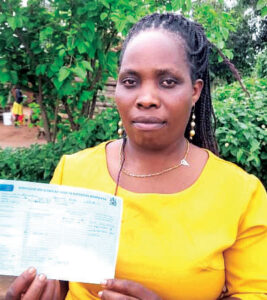
Eunice Ngwira, 35, from Kachizuzu Village in Traditional Authority Kampingo Sibande in Mzimba dropped out of school while in Standard 8 and opted for marriage.
She struggles to read and write. Still, she is a solution to some challenges mothers in her area face regarding health-related issues.
“I always make sure every child born in our area has access to all the vaccines needed as recommended by health authorities,” Ngwira says.
Though she cannot read English, she has full knowledge of all the vaccines for children including their names and diseases and the time the child is supposed to get the shots in line with their ages.
Closer to somebody who went to a medical college, she also has vast knowledge of drugs and proper treatments.
- Advertisement -
“The child is supposed to be given the BCG vaccine at birth and after six weeks I follow the mother and check if the child has received OPV1, PCV1, Penta 1 or Rota 1,” Ngwira says, in a bid to show her knowledge of vaccines.
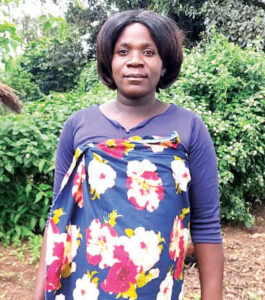
Ivy Nyirenda, 33, from the same area has a similar story.
After dropping out of school while in Standard 7, she got married and joined a mother care group in the area.
Nyirenda starts her day by checking names of babies in her register if it is a day for any child to get a vaccine.
- Advertisement -
- Advertisement -
She finds time to meet mothers in the area, ‘teaching’ them about the vaccines and their importance to children and everyone.
Nyirenda says despite sometimes meeting some mothers who, due to religious beliefs, shun vaccines, she still ensures that their children get the jabs.
“I am not a health expert but, as a mother, I know the importance of vaccines. I was trained in how these vaccines work and I cannot accept that we should lose our babies because their mothers reject the vaccines,” she states.
Ngwira and Nyirenda are members of Chikhwengwe Mother Care Group, who are working on voluntary basis in the area to help under-five children.
The group is determined to make sure that children have access to quality health care by making it a point that mothers know all the vaccines for the infants and other health-related matters.
It pushed the community to construct a house for a health surveillance assistant (HSA) after realising that some children were defaulting on vaccination because the area did not have a resident HSA.
A member of the mother care group, Nelise Kachilinda, says the mothers swayed authorities at Mzimba North Health Office to deploy an HSA to the area.
“Initially, the [health office] told us it could not deploy the HSA because there was no house for him. We, therefore, convinced our chiefs to mobilise their subjects to construct the house,” Kachilinda says.
The mothers also managed to lobby for a fridge at Chikhwengwe Health Post which they constructed in the area, for safe keeping of vaccines.
Before that, the HSA was cycling some 44 kilometres to get the inoculations at the nearest health centre.
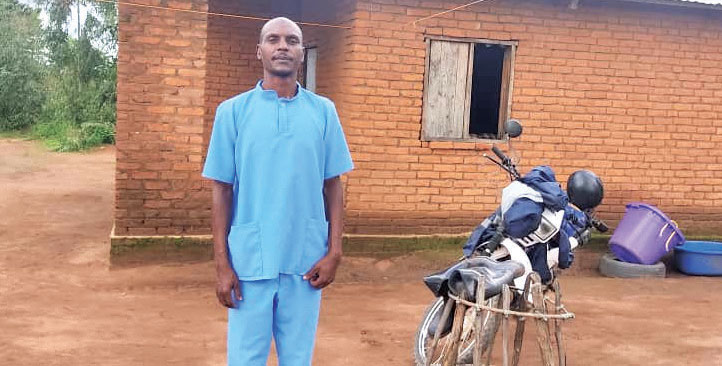
HSA John Tsaka waxes lyrical about the mothers and chiefs in his catchment area, saying they make his job easier.
Tsaka says the mother care group frequently checks the health post to see if all the necessary drugs are in stock and go a step further by inspecting hygiene and sanitation facilities in homes.
The HSA adds that before he was deployed to the area, vaccine uptake was at 40 percent because it shot to about 91 percent after his placement.
Mzimba North Director of Health and Social Services, Naomi Mulwafu, pays tribute to mother care groups for helping in improving health service delivery, particularly in hard-to-reach areas.
“What is remaining is for us to deploy a community nurse who should be following up on pregnant women and new-borns. That will ensure people from this area have access to universal health care,” Mulwafu says.
The strides by members of Chikhwengwe Mother Care Group are courtesy of an immunisation project that Malawi Health Equity Network (Mhen) is undertaking in different parts of the country.
Mhen Executive Director George Jobe says over 200 houses and clinics have been constructed in nine districts where the project is being implemented.
“The mothers also know about family planning, nutrition and community mobilisation and they are assisting a lot in ensuring that their areas access health services without problems,” Jobe says.
Deputy Minister of Health Halima Daudi admits that government alone cannot reach everyone with the necessary health services, especially as it strives to achieve universal health coverage.
“The mother care groups are supporting government efforts even in the administration of other vaccines and the spreading of health-related messages,” Daudi says.
Meanwhile, in Chibavi Township in Mzuzu City, mother care groups are pushing Mzimba North District Health Office to construct a health centre to cater for children from the area and surrounding locations.
The request follows a research which they conducted in conjunction with an HSA which indicated that in December last year, Chibavi Township alone had 900 pregnant women.