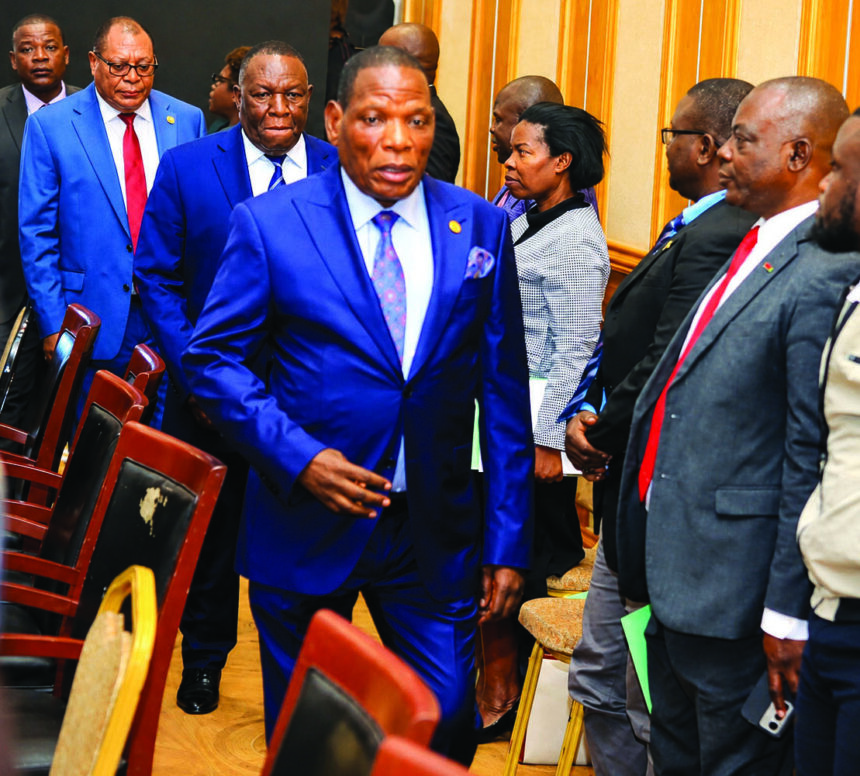
An International Monetary Fund (IMF) mission team arrived in the country yesterday for talks with local authorities on a possible new Extended Credit Facility (ECF) programme, a year after the previous four-year $175 million (about K306 billion) arrangement fell off.
Treasury spokesperson Williams Banda said the team would engage stakeholders on Malawi’s economic situation.
Focus for the two-week mission would be on macroeconomic stability, fiscal policy and structural reforms—the standard conditions that come with IMF concessional lending to low-income countries.
The Treasury remains key to the conversation, which could determine Malawi’s position in securing a credible roadmap out of a prolonged economic crisis marked by high inflation, foreign exchange shortages, rising public debt and weak economic growth.
At the end of the previous programme, IMF said fiscal discipline had proven difficult to maintain due to elevated spending pressures and insufficient revenue mobilisation efforts.
- Advertisement -
Rebuilding international reserve buffers had been challenging with the current foreign exchange system, and the external debt restructuring process needed to restore debt sustainability was yet to be concluded.
Finance Minister Joseph Mwanamvekha conceded at the National Economic Recovery Plan workshop in Lilongwe last week that addressing challenges facing the economy required collaboration.
“There comes a time when a nation must choose between temporary discomfort associated with reforms and permanent economic decline caused by inaction, Mwanamvekha said.
The fund already demonstrated willingness to support Malawi, with its director of the communications department Julie Kozack saying “We had already started discussions on a new fund-supported programme…”
- Advertisement -
- Advertisement -
The conversation with the fund starts as Malawi’s real gross domestic product (GDP) growth inched up to 2.1 percent in 2025 from 1.8 percent in 2024 while foreign exchange and fuel shortages dampened economic activity.
At K23.9 trillion, Malawi’s total public debt is equivalent to 90.9 percent of GDP as of December 2025, making it harder for the country to achieve a sustainable macroeconomic path.
By 2026, the IMF says the interest bill is anticipated to exceed 40 percent of total government revenue—meaning that, for every K10 collected in taxes, K4 goes straight to servicing debt.
In a recent interview, Economics Association of Malawi President Bertha Chikadza said Malawi’s situation required “unity of purpose, policy consistency, discipline, accountability and implementation focus”.