Finance Minister Simplex Chithyola Banda is on November 13 expected to face Parliament for the first time in his capacity as the country’s Chancellor of the Exchequer to present the 2023-24 Mid-Year Budget Statement.
Already, the national budget is off-rail as almost all parameters have gone rouge with glaring mismatches between assumptions anchoring the financial plan and reality on ground.
But industry captains and other experts have high expectations to see the Treasury realigning budget lines with reality, a task which would require sacrifices.
For instance, the Malawi Confederation of Chambers of Commerce and Industry (MCCCI)—an umbrella body for private sector players—says it expects budget adjustments to tilt towards enhancing productivity and exports development.
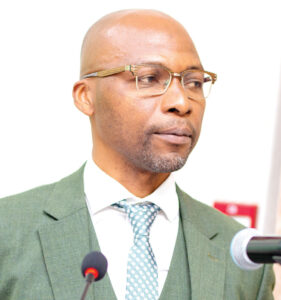
In an interview, MCCCI President Lekani Katandula said the revised budget should incentivise exports and stimulate domestic production while addressing potential food shortages.
- Advertisement -
“The importance of revisiting the minimum wage to combat the escalating inflation rate and measures to reduce fiscal deficits, which would ultimately help moderate inflation and interest rates, cannot be overemphasised. This is what we expect to take centre stage during the deliberations,” Katandula said.
In a separate interview, Institute of Chartered Accountants in Malawi Chief Executive Officer Noel Zigowa said to enhance productivity, the government should make the most of various opportunities within the agricultural sector.
“To reduce the reliance on importing finished agricultural products at higher prices, we need clear policies that encourage local production and discourage imports,” Zogowa said.
In an interview, Chithyola Banda said the government’s focus would remain on controlling expenditure.
- Advertisement -
- Advertisement -
Chithyola expressed the need for fiscal discipline and the importance of achieving value for money in government activities.
He hinted at the government’s efforts to secure budgetary support from development partners by demonstrating the fiscal responsibility remains key.
“Key to this is how we convince development partners to come and start giving us budgetary support; this can only be done if they see that we are practicing fiscal discipline,” Chithyola-Banda said.
As members of Parliament convene this November, Chithyola-Banda faces the challenge of balancing these expectations with fiscal responsibility and accountability to effectively steer the country’s economic future.
The first six months of the 2023-24 financial year have been characterised by shortages of foreign exchange and fuel, a volatile Kwacha on the exchange market and fluctuating inflation.
In the 2023-24 National Budget, the third under the Tonse-led administration, the Treasury assumed that the local economy would swell by 2.7 percent this year.
But due to subdued activity and effects of Cyclone Freddy, fresh estimates point to a 1.9 percent real gross domestic product growth.
Already, most other macroeconomic fundamentals are in red.
Headline inflation—the rate at which commodity prices change at a given period in an economy—maintained an upward spiral for the greater part of the year to 27.8 percent.
Initially, the Treasury projected inflation to average 17.9 percent in 2023, but the Monetary Policy Committee of the Reserve Bank of Malawi sees it at 29.5 percent.
A recent International Monetary Fund Review notes that Malawi has been affected by a series of shocks including an outbreak of cholera and cyclone Freddy, which caused significant loss of life and damage to infrastructure and affected performance of the fiscus.