By Foster Benjamin:
She calls herself “the neglected” and “the forgotten.” Or “the outcast.”
“I’m a living example of neglect, deprivation and discrimination,” says Shemile Lackson, a 38-year-old, paralysed on her left side, from polio.
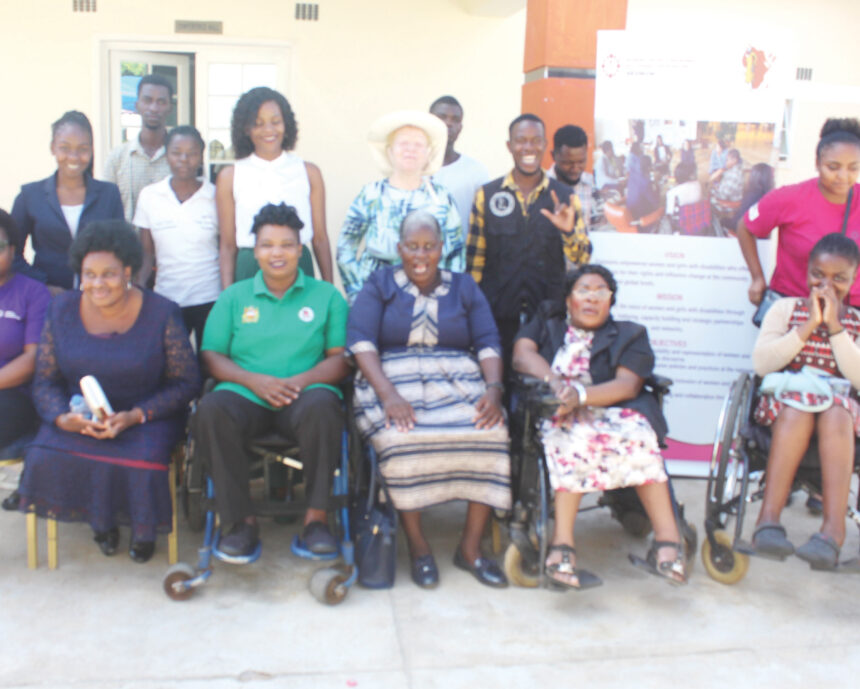
This is what Lackson is telling a network of women and girls with disabilities visiting her at her home in Ntcheu District.
- Advertisement -

It is a tiny home—a mud, thatched hut—precariously perched on a bleak, windswept terrain in Kasale Village, on the edge of Ntcheu Boma.
- Advertisement -
Like many women with disabilities, Lackson pours out a long list of grievances. Chief among them is a lack of access to farming land.
“Food is scarce, and I go hungry, most of the times. It’s all because I don’t have any piece of land to cultivate crops,” she says.
In fact, she doesn’t see her disability negatively.
“I’m not like those disabled people who often want to be pitied, considered to be deserving of charity. If given land, I can till it well, using my right arm,” says Lackson, a mother of three.
- Advertisement -
Eight years ago, she recalls, she used to hoe in her father’s garden back in his neighbouring home village. But things became nasty when Lackson’s father died, prompting relatives to kick Lackson, her brothers and their ailing mother out of the village.
“They told us ‘Since your pillar has fallen, you should go back to Kasale, and you’ll be farming there,’” she remembers bitterly, “Arriving in Kasale, I was shocked as things turned nastier for me. I wasn’t apportioned any piece of land, because of my status. When I confronted mkulu wa limana [head of the clan] he told me in the face: ‘You’re disabled, therefore you cannot farm.’ It really hurt me. It’s sad that we’re still being spoken to in a dismissive manner. But, to be honest with you, I seriously needed land, and I still need it, to grow crops and become self-sustaining.”
The mkulu wa limana’s cold response didn’t deter Lackson from her fight for land. She went to Group Village Headwoman (GVH) Kasale to intervene in her crisis.
She claims GVH Kasale’s response was apparently frosty, saying “we chiefs don’t overtake mkulu wa limana (head of the clan) in settling land issues among clans.”
This claim is supported by Esther Mbite, chairperson for Network of Girls and Women with Disabilities in Malawi (NEGWDM).
She is among the team visiting Lackson’s home.
When asked by this reporter, GVH Kasale admitted to be “wrongly dismissing complaints of land lodged by women with disabilities because we didn’t know that they, too, have rights and potential to cultivate.”
“I must confess that we, unknowingly, were wrong discriminating our disabled relatives in the allocation of land to grow crops,” Kasale says.
“For instance, when they approached us, for access to land, we could either push them back, or tell them right in the face ‘You cannot farm since you’re disabled’.”
This is sadly common not only in Ntcheu but across the country—and the world over. People with disabilities are often overlooked, and seen as unworthy. They, indeed, are subject to multiple and intersecting forms of discrimination on the basis of their status. In fact, it is mostly disabled women who are often in dire straits, and severely impacted.
Turning to Kasale Village, according to the village head herself, here is the good news: women with disabilities “will now be considered and shared land.”
“As chiefs, we banged heads and discussed how best we can offer them [women with disabilities] pieces of land. Very soon, we’ll do that,” Kasale claimed. “In fact we know pretty well now that disability is not inability. We need to level the playing field, no matter what. This is all because of one disabled people’s organisation which came to us in June last year. They shed light on land rights among disabled women. They told us we shouldn’t be hostile to them but, as traditional leaders, we should accommodate and treat them equally.”
At the time, Disabled Women in Africa (Diwa), which promotes NEGWDM’s advocacy efforts with support from the Southern Africa Litigation Centre (SALC), appealed to both Ntcheu District executive committee and chiefs to change policies and by-laws to be inclusive of all disabled women and girls.
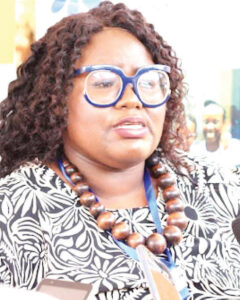
growing inequalities Picture courtesy of National Democratic Institute
Diwa Executive Director Ruth Mkutumula believes creating policies that embrace the rights and dignity of disabled women is a key to improving their lives.
“Issues of diversity and equity have been at the centre of the talk, but you’ll see that nothing is being done to seriously address growing inequalities,” Mkutumula explains, adding, “Women with disabilities are still tied up in never-ending struggles; struggles for justice, for land, and for everything. So, we’re trying to advocate for their rights. It’s past time to address land equity for these women with disabilities and all those who are marginalised.”
But central to this is the creation of the project dubbed ‘Leveraging Intersectionality to Empower Rural Women’.
As Deliwe Fweta, who is the project officer, says: “This (the project) exists to empower women from rural communities to share their needs and challenges through advocacy, collaboration, and engagement with civil society organisations, or the CSOs, and decision makers.
“At the same time, it also injects life to women-focused CSOs, striving to address inequalities, gender based violence, and barriers to access to and control of land these rural and marginalized women particularly face.”
Ultimately, the undeniable truth stands out: many women— both disabled and non-disabled—are still plagued by deep-seated stigma and discrimination. One thing then seems certain; unless Diwa seriously affirms its commitment to amplifying marginalised women’s voices, implementation will be elusive, according to the Centre for Human Rights and Legal Assistance Executive Director, Chancy Lutere.
“While Diwa and other disabled people’s organisations are advancing the rights and inclusion of disabled women, we want them to fully implement their visions, because, sometimes, implementation is just a problem in many circles. But I hope they’ll be able to fulfil their objectives and change the narrative of those women at the margins of society. We also want them to walk their talk: by fully involving those disabled women in decision making processes, as set out in UN Convention on the Rights of Persons with Disabilities, which gives voice to the cry of all disabled people,” Lutere says.
As for Lackson, in Ntcheu, she says she won’t stop asking for a piece of land until her label change “from longing to belonging.”