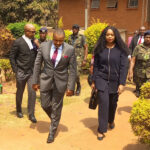
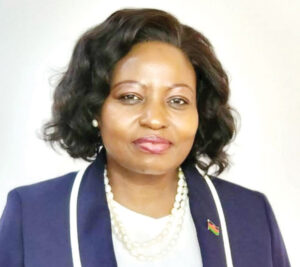
Malawi’s High Commissioner to South Africa, Stella Ndau, has said the embassy is facing difficulties to identify some Malawian victims of the fire accident in Johannesburg because most of them were undocumented migrants.
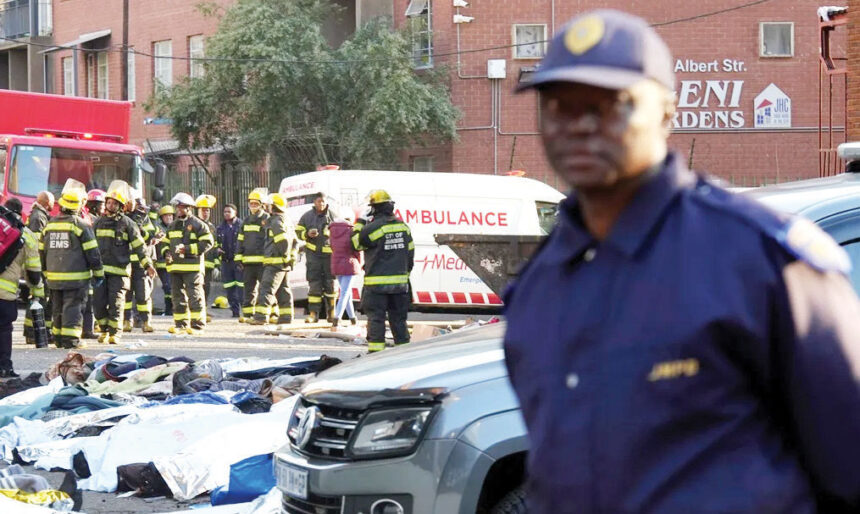
As we went press Friday, over 20 Malawians were reported to have been killed in the blaze.
But the Malawi High Commission there says it is struggling with other formalities on the Malawian victims as most of them were undocumented.
The High Commission is relying on relatives or close friends to identify the victims and the dead bodies.
- Advertisement -
“We are doing all we can to identify the victims, but I cannot confirm whether their bodies can be repatriated back to Malawi due to the condition of their bodies,” Ndau said.
South African officials told the BBC that out of the 74 corpses, 62 have been burned beyond recognition and they hope to use DNA samples to help in the identification process.
According to the BBC, the South African government has promised help to all the victims but that it is a difficult situation for many of them as they are undocumented migrants.
Some fear coming forward could expose them to the authorities that they have been staying in the country without proper documents.
- Advertisement -
- Advertisement -
Ndau said the flat that has been involved in the fire accident is an old building that was among the structures condemned by the city council. It has since been closed.
A Malawian resident in the city said Friday that families of the victims were still searching for their relations on site.
“It was a hijacked building where a lot of foreigners constructed makeshift rooms out of cardboards. A large hall within the building was demarcated into rooms. It’s easy for a fire outbreak,” he said, adding that the survivors had been taken to temporary shelter.
“I don’t think they will go back considering that the building was illegally occupied,” he said.
A Muslim cleric in South Africa, Sufiyani M’baraka of Revealed Masjid, who witnessed the incident told Malawi News Friday that they were at the mortuary in Soweto at the time of interview trying to identify Malawian victims who are Muslims so that they could be buried.
“As soon as we identify our faithful, we will have to bury them here today. We have already hired funeral home services to help us,” M’baraka said.
Yesterday, the Gauteng Health Department started conducting an exercise where families could identify their loved ones at Diepkloof Mortuary.
Media Liaison Specialist for the Member of Mayoral Committee (MMC) for Public Safety Lelethu Ndyamboti told Malawi News that Gauteng Forensic Pathology Service (FPS) had identified 40 males, 24 females, and 10 bodies that could not be recognised as they had been badly burnt.
“The Gauteng FPS is using the Digital Fingerprint System to identify unknown bodies that have visible fingerprints. The system uses biometric scanners and third-party access to the databases of the Department of Home Affairs, the South African Police Service, and the National Credit Bureau to identify deceased bodies.
“Bodies that have been burned beyond recognition and without fingerprints, they will be identified through the DNA process,” Ndyamboti said
She said the building has been closed, all other occupants have vacated and the municipality, in collaboration with non-governmental organisations, is now working on finding alternative accommodation for them.
She said there is a hotline number that has been set up by the provincial government where relatives and family members of the deceased can call to claim the remains and belongings of their loved ones.
Programme Officer for the Centre for Social Concerns (CfSC) Tobias Jere said what has happened in South Africa is a sad development that points to the state of growing poverty in Africa.
“Because of poverty, people from different backgrounds found themselves trapped in an old building.
“The growing levels of poverty have compelled Africans to look for greener pastures in South Africa in the course of which they have lost their lives,” Jere said.
Reports indicate that foreigners living in the abandoned infrastructure threw themselves out of windows to escape the fire.
A South African observer told the media there that the fire started on the ground floor, making it difficult for those in upper floors to escape amid the billowing smoke and raging flames.
Emergency Management Services (EMS) spokesperson, Robert Mulaudzi, said that 52 people were injured in the blaze and have been admitted to various hospitals around Johannesburg.
He said seven of the victims were children, the youngest being a one-year-old.
It is estimated that over 200 people may have been living in the building.
“This is a tragedy for Johannesburg. Over 20 years in the service, I have never come across something like this,” Mulaudzi said, adding that the building is well known by city authorities as “hijacked buildings.”
The buildings are said to be where black South Africans use to go to collect documents that would enable them to work in white-owned areas of the city during the apartheid regime.
Head of the Human Settlements Department for Gauteng Province, which includes Johannesburg, Lebogang Isaac Maile, said some of the victims who occupied the building may have been renting from criminal gangs who were illegally collecting fees.
“There are cartels that have been receiving money from vulnerable people. Because some of these buildings, if not most of them, are actually in the hands of those cartels who collect rent from the people,” Maile said.
He said the fire demonstrates a chronic problem of housing in the province; there are at least 1.2 million people who need housing in South Africa.
On Thursday, President Cyril Ramaphosa visited the site and said the fire was a great tragedy felt by families whose loved ones perished.
“It’s a wake-up call for us to begin to address the situation of housing in the inner city,” Ramaphosa said.
He said he hoped that the investigations into the fire would prevent a repeat of such a tragedy.