When parliamentarians passed the revised K8.589 trillion mid-term budget earlier this month, there was a general feeling that the K512 billion increase from the initial budget that was passed in March this year meant marginalised groups, such as prisoners, had been considered.
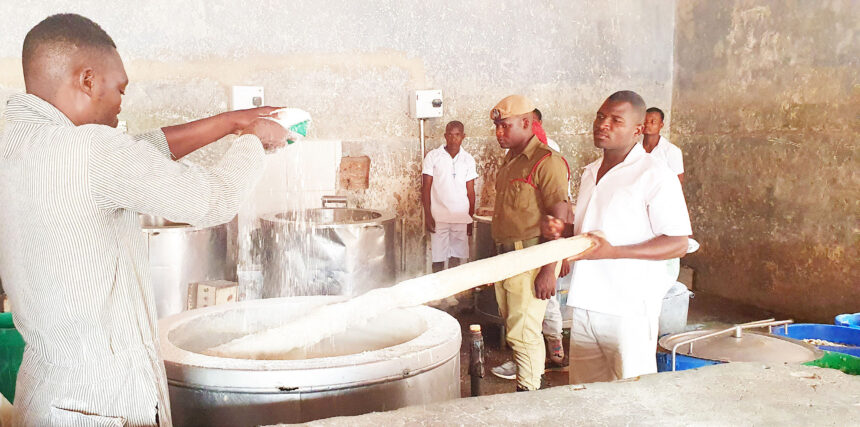
To the contrary, prisoners in the country’s prisons will continue to make do with K350 per inmate per day, in line with financial resources that were allocated to the Malawi Prison Service.
The Daily Times has since learned that some of the country’s prisons have already exhausted their allocations.
For instance, Deputy Commissioner of Prisons, who is also Officer-in- Charge for Blantyre (Chichiri) Prison, Owen Maharawipha Levi has disclosed that the prison has exhausted its allocation, leaving it struggling to provide for the basic needs of its 2,674 inmates after the government allocated K350.00 per inmate per day.
Levi made the disclosure on Wednesday during commemorations marking Human Rights Day, organised by the Centre for Human Rights Education, Advice and Assistance (Chreaa).
- Advertisement -
According to Levi, the government allocated K924 million for the 2024- 25 national budget, a paltry sum that translates to K350 per inmate per day.
“With this budget, it’s a challenge to meet the needs of prisoners, especially with regards to respect for human rights. The prison’s official capacity is 1,200 inmates but the current population is more than double that number, leading to concerns about sanitation and the spread of diseases,” he said.
Levi said due to congestion, the prison, in partnership with the office of the Blantyre District Health Officer, conducts mass screenings to identify inmates who have communicable diseases.
A representative of the inmates, Shoes Kachotsa, pleaded with Parliament to address challenges faced by prisoners.
- Advertisement -
- Advertisement -
Kachotsa said cells were full due to the slow pace of cases in courts which result in many suspects being held on remand.
Reacting to the development, Chreaa Executive Director Victor Mhango said “K350 per day is not enough, and it can’t even buy a loaf of bread”.
Mhango expressed hope that the new Prison Act, which is replacing the outdated 1956 version, would bring about positive change once operational guidelines are put in place.
Justice Sylvester Kalembera acknowledged progress made in the justice sector but emphasised the need for improved coordination to address systematic challenges.
“All organisations working together in the criminal justice system must work together so that cases are heard in time to reduce congestion in prisons,” Kalembera said.
Director of Criminal Litigation in the Office of the Director of Public Prosecutions Josephine Gwaza said her office was aware of the delays in concluding cases, adding that it had taken note of the factors that contribute to delays.
“Resource constraints seem to run across all relevant stakeholders. We might have resources to go ahead with trials but you will find that the Judiciary does not have [enough resources]. On that, our proposal is that, perhaps, each responsible institution should have enough funding so that we should all be available and [shortage of] resources should not be an excuse,” Gwaza said.
Programme Coordinator for Irish Rule of Law International Irli Lindiwe Sibande said the event was a reminder to those incarcerated that they are not forgotten.
“They pass through so many difficulties and the event is an encouragement that even though they are in prison, they still have rights,” Sibande said.
The commemoration marking Human Rights Day, which started with the United Nations General Assembly adopting the Universal Declaration of Human Rights on December 10, 1948, served as a reminder of the importance of promoting awareness of human rights.