By Mercy Matonga:
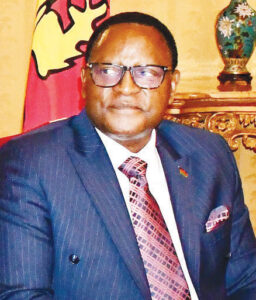
President Lazarus Chakwera Tuesday said Malawi has a deficit of $366 million (K640 billion) in its plan to support people affected by El Nino in 23 of the country’s 28 districts.
On March 23, Chakwera declared a state of disaster in the districts which were heavily hit by dryspells and floods induced by the climate phenomenon and appealed for local and international humanitarian support.
He said at least two million farming households, according to preliminary assessments, had been affected, with 700,000 hectares of maize damaged.
At the launch of the National El Nino-Induced Prolonged Dry Spell and Floods Response Appeal, which took place in Lilongwe Tuesday, the President said a total of $436 million (K763 billion) is needed for the response.
- Advertisement -
He said government has so far received $57 million from the World Bank and $21.6 million from other well-wishers, leaving the deficit of $366 million.
Chakwera appealed to Malawi’s partners to “put something” in the response basket just as the World Bank had done by “substantively and swiftly responding to our current crisis”.
“I believe it is time for us as a country to create such a basket and, in turn, for you as our partners to consider what you can similarly set aside and contribute to that basket throughout the year, which will be ring-fenced for immediate response to the climate disaster we can expect to hit us next spring,” Chakwera said.
He further called on humanitarian organisations to scale up their funding to enable the government to reach people facing acute food insecurity.
- Advertisement -
- Advertisement -
The President then announced that he would make a further appeal for support during the second edition of the Malawi Partners Conference that he would be hosting on the margins of this year’s United Nations General Assembly.
“And you have my invitation to join us and let us know who else you think we should invite so that we can further mobilise resources for this response plan,” Chakwera said.

According to Commissioner for the Department of Disaster Management Affairs (Dodma) Charles Kalemba, nine million people in the country are food insecure in the wake of disasters.
Figures which Kalemba presented on Tropical Cyclone Freddy recovery indicate that, so far, $133.3 million has been sourced out of the needed $866.92 million, leaving a gap of $733.62 million.
He said Dodma has put in place both long and short-term plans to help those affected by the food insecurity situation.
“We have mega farms that are already prepared for irrigation. Communities will be mobilised by the Ministry of Agriculture and will be provided with inputs for them to produce their food,” Kalemba said.
He added that those who will not be able to produce will go into the next “defence” which is the lean season, where government and stakeholders distribute relief food to hunger-stricken families.

United Nations (UN) Resident Coordinator Rebecca Adda- Dontoh said with the frequent natural disasters, there is a need for humanitarian response.
“This is not a fight for the UN alone; it is about all international partners coming together to support Malawi because the situation is very dire.
“Malawi hasn’t yet recovered from the previous disasters and we have the El Niño impact, which has literally killed crops,” Adda- Dontoh said.
Freddy, the most energetic cyclone to lash the southern hemisphere, left a trail of devastation in Malawi which included the washing away of thousands of hectares of crops in 10 districts in the Southern Region.
Before the country had even recovered from the impacts of the disaster, El Nino arrived to magnify the food security crisis.