Twice, in January and February this year, 11-year-old Elube from Blantyre Mudi Ward could not help it but let a fountain of tears run down her cheeks.
“I lost two people, who were paying my school fees, to cholera. Back at the village, which is in Traditional Authority Nthache in Mwanza District, my grandparents are too poor to afford school fees. As such, when the well-wishers, who are from the same village, asked them to let them take care of me and pay school fees, they could not think twice.
“However, cholera claimed their lives and I just lost it,” she says, fighting back tears.
The standard 7 girl points out that she still shakes in fear whenever she hears about cholera, which, she suspects, the two well-wishers contracted after consuming water from one of the streams in the ward.
Despite being in an urban area, Blantyre often suffers from the problem of water supply, with some people in Nthukwa Township, Chilomoni, for example, only being able to draw water between 9pm and 4am.
- Advertisement -
This exposes people to waterborne diseases such as cholera.
To prevent cases of cholera, stakeholders are still conducting awareness and clean-up campaigns.
For instance, Councilor for Blantyre Mudi Ward Morris Maloya has been leading people in Tithetse Cholera Campaign and has visited such places as Chadzunda Market following its launch at Mdeka Admarc Ground on May 9 2023.
“Cholera is still a threat and, as such, we must sensitise people to the dangers of cholera. We must also encourage them to be drinking safe water,” Maloya points out.
- Advertisement -
- Advertisement -
Unfortunately, safe water is not always available.
“We wish the government could establish kiosks and other sources of safe water,” Blantyre resident Mark Mulinga, 45, says.
This is happening when Malawi’s chances of getting another consignment of cholera vaccines any time soon are said to be very slim as, in May this year, the World Health Organisation (WHO) said it would not consider Malawi now.
On January 21 2023, the Ministry of Health announced it had used all the 2.9 million cholera vaccines in all health facilities.
Ministry of Health spokesperson Adrian Chikumbe recently said the ministry applied for 7.6 million doses.
He said WHO told the ministry that it is distributing vaccines to other countries which are struggling with cholera but are yet access the vaccines.
“Under the present circumstances, we reapplied to WHO for 1.4 million doses and we are waiting for a response. As things stand, people still have to wait until the country has the vaccines to get more doses of the vaccines,” Chikumbe said.
Malawi Health Equity Network Executive Director George Jobe said it is unfortunate that there is high demand for cholera vaccines from the manufacturers.
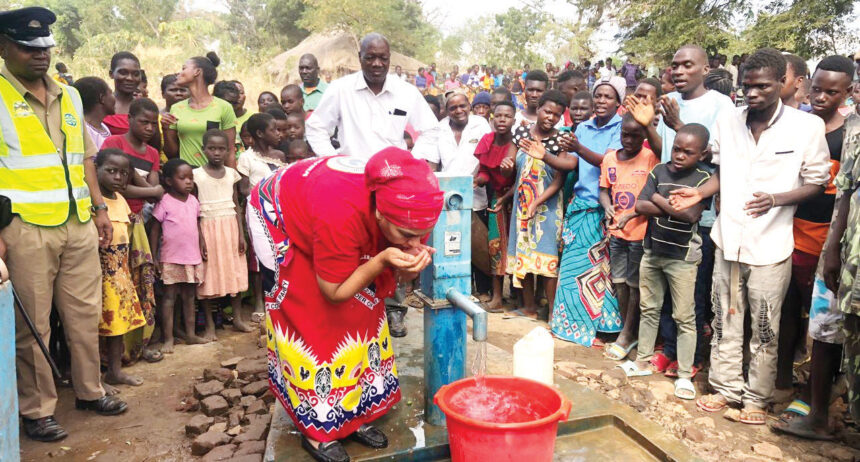
Fortunately for the people of Chiradzulu, Blantyre and other districts, some non-State actors are complementing the government’s efforts in the water, health and sanitation sector.
One of them is Water For People. The organisation has been improving coverage of sanitation services through what is known as a Community- Led Total Sanitation Model. This approach creates demand for better toilets by sharing messages on the dangers of open defecation and encouraging community members to change their behaviour.
The organisation started working in Blantyre, which is the second largest city in Malawi, in 2007.
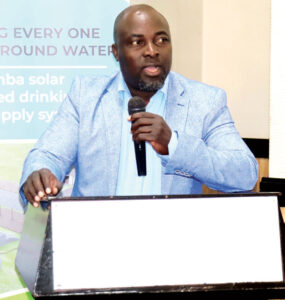
“We work specifically in the 21 low-income areas or informal settlements of peri-urban Blantyre. Implementation of our interventions is done in partnership with Blantyre City Council and Blantyre Water Board,” the organisation’s country director Ulemu Chiluzi says.
This is happening at a time results of a Water Point and Community Water Level of Service Survey which Water for People conducted have shown that water point level of service for Blantyre dropped by 4.1 percent, from 90.7 percent in 2022 to 86.6 percent in 2023.
In Chiradzulu District, the organisation started implementing projects in 2019. This is a rural district located just 12 miles from the City of Blantyre.
Chiradzulu programmes are implemented in partnership with the district council.
Last year, the number of boreholes constructed was 31, with the number of water systems put in place standing at three.
The total number of boreholes constructed, through the support of Charity Water and other grants, is 45, with 43 boreholes being rehabilitated. In the same year (last year); four systems were constructed under Charity Water and other grants.
The total number of mega solar-powered water systems constructed last year stood at seven.
This year, the number of water systems to be constructed is six while 45 boreholes will be constructed under the Chiradzulu Wash for Everyone Project, with 24 boreholes set for rehabilitation. A total number of seven solar-powered water systems is set to be constructed.
In the district, Water For People partnered with World Vision in implementation of the $10 million Chiradzulu Wash for Everyone Project.
Chiluzi is impressed with progress of the initiatives, further emphasising the importance of extending safe water services to community members in the district.
“For instance, 11 percent of people in Chiradzulu District do not have access to safe water. This includes schools that have high enrolment rates. So, this initiative will contribute towards closing that gap,” Chiluzi pointed out.
The country director added that such programmes have the potential to change community members’ lives.
Water and Sanitation Minister Abida Mia agrees, saying non-State actors are helping the government meet its goals.
“On our part, we are committed to improving the water and sanitation situation in Malawi until everyone is reached with services,” Mia explains.
One only hopes doing that will not take forever.