By Park Jae-kyung:
This year marks the 60th anniversary of diplomatic relations between the Republic of Korea and the Republic of Malawi — a milestone in a partnership that has continually deepened and diversified over the decades.
Since the establishment of ties in 1965, our two nations have built one of the longest and most enduring partnerships between Korea and Africa—a relationship that is rooted in trust, respect and a shared vision for human development.
Shared beginnings, shared aspirations
Our story began with shared beginnings and shared aspirations. When Korea and Malawi established diplomatic relations in 1965, both countries were still in their formative years.
- Advertisement -
Korea was recovering from the scars of war, striving to lay the foundation for industrial and social transformation.
Malawi, newly independent, was charting its own path as a young nation with great promise and ambition.
Though our contexts were different, our aspirations were the same — to uplift our people, to build strong communities and to create a future defined by dignity and opportunity. That shared dream became the cornerstone of the Korea-Malawi friendship that has lasted six decades.
Early cooperation and infrastructure development
- Advertisement -
- Advertisement -
In the early years of our relationship, cooperation centered on the basics of nation-building.
During the 1970s, Korean construction firms took part in key public works projects in Malawi, including the development of facilities connected to Lilongwe International Airport and the pavement of key national and urban roads, which played an important role in improving connectivity and supporting Malawi’s growing capital.
These efforts were among Korea’s earliest contributions to infrastructure development in Africa – practical symbols of mutual trust between our two nations.
At that time, Korea was also taking its first steps into overseas construction and industrial projects, and Malawi offered an early opportunity for cooperation in Africa.
Investing in people: Health and education
Over time, our partnership has grown to focus on human development.
One of the most enduring symbols of this partnership is the Daeyang Luke Hospital, established by Korean non-governmental organisation (NGO) Miracle for Africa Foundation. The hospital provides quality medical care to over 65,000 people annually and serves as a training ground for healthcare professionals.
Under the same foundation, Daeyang University was established to nurture future leaders through its college of nursing, business, and ICT. Within its campus, the Lilongwe King Sejong Institute—which is affiliated with the Ministry of Culture of Korea—offers free Korean language and cultural education, creating opportunities for scholarships and academic exchanges in Korea.
Other Korean NGOs have also been deeply engaged in Malawi for many years. Organisations such as Good Neighbours, Korea Food for the Hungry International (KFHI), and World Vision Korea have worked in communities from Lilongwe to Blantyre— supporting schools, clean water projects, rural livelihoods and the empowerment of children and girls. Their presence reflects the generosity of ordinary Koreans who believe that helping others is a shared responsibility— “kugwira ntchito limodzi pa chitukuko”, working together for development.
Agriculture: Cultivating shared prosperity
Agriculture has always been central to Malawi’s identity, and it has been a central pillar of our cooperation.
Korea has supported Malawi’s efforts toward agricultural mechanisation through the donation of agricultural machinery.
Most recently, for the past two years, over 10 tractors and two mobile grain dryers were donated to Salima Agriculture Technology Centre, which have helped smallholder farmers enhance productivity and food security.
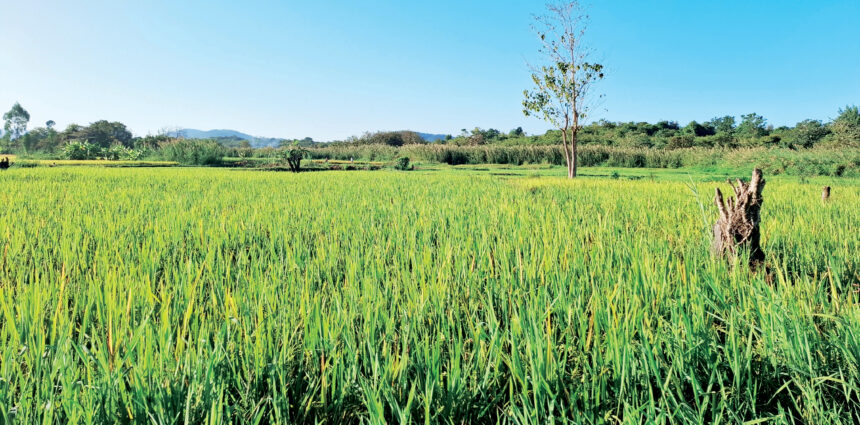
Our agricultural partnership is evolving into a more strategic collaboration under the K-Rice Initiative, a flagship Korean programme that seeks to boost rice production across Africa through technology transfer, improved seed varieties and irrigation management.
Malawi is one of the partners in this initiative, which aims to transform agriculture from subsistence to sustainability.
Initial groundwork has begun this year for a project, which supports large-scale rice seed production in Salima, suggesting growing cooperation between Korea and Malawi in the rice value chain.
These efforts build on Korea’s own experience of rural transformation through the Saemaul Undong (New Village Movement), a national campaign that turned hardship into hope through the spirit of diligence, cooperation and self-help—pamodzi pa chitukuko (together in development).
Development cooperation through KOICA and global partnerships
Korea’s aid agency, Korea International Cooperation Agency (Koica), has played a central role in expanding bilateral cooperation over the past decades. Koica’s projects in Malawi are closely aligned with the country’s development priorities, focusing on health, education, agriculture and resilience.
Among Koica’s key partnerships is its collaboration with the World Food Programme (WFP). Together, they have implemented programmes to strengthen food systems, enhance nutrition, and support smallholder farmers— particularly in the face of climate-related challenges including El-Nino-induced drought of two years ago.
These efforts have enhanced community resilience across several districts.
Another important partnership is with the United Nations Population Fund (UNFPA), through which Koica supports maternal and reproductive health programmes. These initiatives aim to advance maternal and reproductive health in Malawi. This collaboration supports safe childbirth, women’s health education, and better access to essential services for adolescent girls—helping protect and empower women and girls at the heart of Malawi’s communities.
Together, these initiatives represent a comprehensive, people-centered approach to partnership—one that promotes inclusivity, equity and opportunity.
Building capacity and global cooperation
Beyond bilateral assistance, Korea and Malawi continue to collaborate on global platforms including the United Nations, the World Health Organisation, and the Global Green Growth Institute (GGGI), sharing the commitment to sustainable development and climate resilience.
Human capacity building has also been a cornerstone of our cooperation.
Over the years, dozens of Malawian students and professionals have studied in Korea under the Koica and Global Korea Scholarship (GKS) programmes. Many of them have returned to serve in key positions across government, academia and civil society— a living bridge between our two nations.
Grassroots friendship: The story of Chizumulu Football Club (FC)
Beyond government programmes and international partnerships, our friendship also flourishes at the grassroots level.
A heart-warming example is Chizumulu FC, a football club on Chizumulu Island. Just a few months ago, a young Korean, inspired by the passion and energy of Chizumulu Club players, decided to take ownership of the team. His story has since captured public attention in Korea, drawing many new supporters to the team.
On that small island in Lake Malawi, football has become a bridge—connecting people across cultures through teamwork and friendship. The story of Chizumulu FC shows that the spirit of cooperation extends far beyond diplomacy. It lives in the energy of young players, the cheers of the community and the friendships that transcend borders.
Looking ahead: A vision for the next 60 Years
As we celebrate this milestone, we also look to the future — to a new era of cooperation defined by innovation, sustainability and human connection. The next chapter of Korea–Malawi relations will focus on:
- Agricultural innovation and climate-smart farming, strengthening food security and resilience against climate change;
- Health and human resource development, expanding training opportunities and improving access to healthcare;
- Digital transformation and youth entrepreneurship, equipping the next generation with the tools and skills to thrive in a connected world; and
- Renewable energy and green growth, promoting sustainable development and responding to global environmental challenges together.
Korea’s journey from poverty to prosperity is often cited as an example of what determination, education and solidarity can achieve. As we share that experience with Malawi, we do so as a friend — not to teach, but to walk side by side, ndi chikondi ndi mgwirizano (with love and unity).
For 60 years, our two nations have proven that genuine friendship transcends geography and time. As we embark on the next 60, let us continue to build on this proud legacy — for our peoples, for our children and for the shared prosperity of generations to come.
The author is the Ambassador of the Republic of Korea to the Republic of Malawi