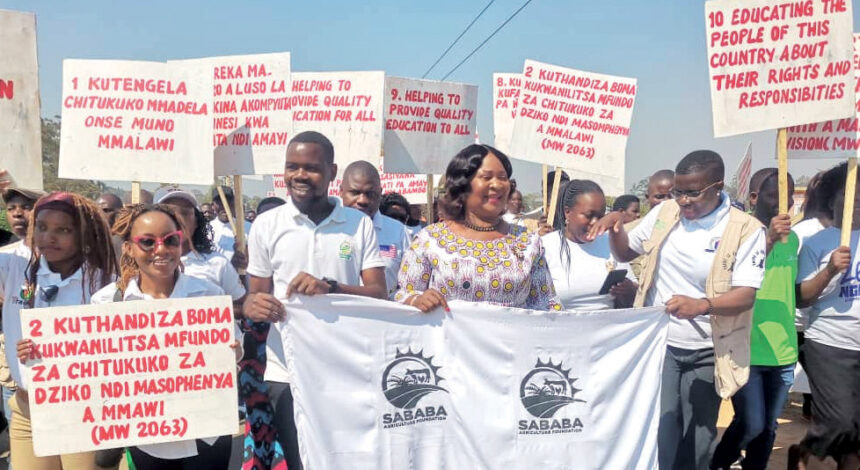
The government has asked local non-governmental organisations (NGOs) operating in the country to begin seeking alternative sources of funding, saying excessive dependence on donors could lead many to collapse.
Minister of Gender, Community Development and Social Welfare, Jean Sendeza, expressed concern that many organisations were affected following the USAid funding cut earlier this year, particularly those in the health sector.
Sendeza was speaking on Saturday at this year’s NGO Day commemorations in Mzuzu, held under the theme ‘Harnessing Local Resources for Sustainable Development – Advancing the Impact of NGO Sectors towards Malawi 2063’.
The minister was responding to a recent survey conducted by the NGO Regulatory Authority (Ngora), which revealed that approximately 25.2 percent of 151 organisations reported being directly affected by the aid cut.
“We have seen that some organisations in the pavilions we visited have started implementing alternative approaches to generate resources for their activities. This is the way forward because relying solely on donors will not get us anywhere,” Sendeza said.
- Advertisement -
She went on to commend NGOs for complementing the government’s efforts in national development, particularly in sectors such as health and education.
Ngora Board Chairperson Innocentia Ottober said NGOs had contributed around K1 trillion to the country this year, of which K747 billion was received in foreign currency, mainly United States dollars, British pounds and euros.
“NGOs are making significant contributions to the country’s development and we are pleased that the government recognises this.
“However, we still need effective systems to track the foreign exchange entering the country, as this money supports various national development initiatives,” Ottober said.
- Advertisement -
- Advertisement -
Family Planning Association of Malawi (Fpam) and Last Mile Health are among the many NGOs operating in the health sector.
Fpam Communications and Advocacy Officer, Faith Kadzanja, said the organisation would continue working with the government to ensure the country is on track to achieve Malawi 2063, the country’s long-term development plan.
“For us to reach the goals of Malawi 2063, the population must be healthy and sexual and reproductive health must not be neglected. We want Malawians to use modern contraception so we can better manage our population,” Kadzanja said.