The Soils, Food and Health Communities (SFHC) has tipped farmers to embrace local seed varieties for crops such as maize and practise crop diversify to enhance yield in the wake of climate change.
The organisation’s Agriculture and Nutrition Coordinator, Lizzie Shumba, said they intend to impart knowledge to farmers on agro-ecological approaches and climate change adaptation strategies.
Agroecology is sustainable farming that works with nature by strengthening relationships between plants, animals, people and their environment.
She said this during an agro-ecology, gender, nutrition and climate change campaign being carried out in areas such as Edundu, Chimbongondo, Bwabwa, Entiani and Chisangano in Mzimba District.
Shumba said local seeds can be recycled as they are nutritious and resilient to climate change.
- Advertisement -
“We are trying to bring back the indigenous seeds because in the past farmers used to have crops such as sorghum, finger millet and bambara nuts which were retired unnecessarily. We are training them in seed multiplication, so that they should be able to maintain local seeds,” Shumba said.
One of the community promoters Blessings Moyo said the adoption rate of agro-ecological approaches is increasing among farmers citing the use of Bokashi manure among others.
Inkosana Mateyu Chitaya under Inkosi Ntwalo said with the high cost of inorganic fertilisers the organic approaches have proved beneficial to his subjects.
“The cost of farm inputs is very high and for subsistence farmers it is even worse. What we are being trained on is quite helpful, for example, the making of manure; we are using locally available resources to make manure, which are not expensive, but very effective and adds necessary nutrients to the soil,” Chitaya said.
- Advertisement -
- Advertisement -
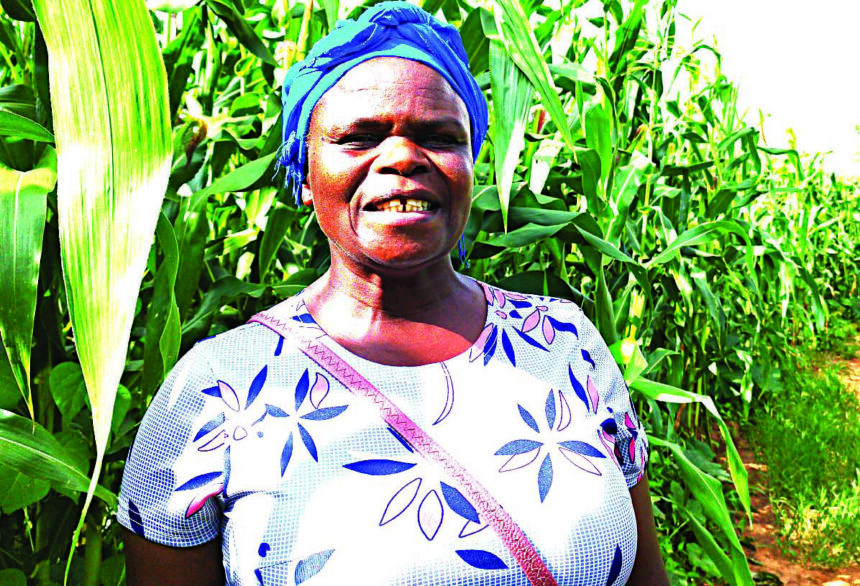
One of the farmers Lyna Njunga from Edundu in Mzimba said she has among others embraced intercropping where this season she has grown maize, soya bean and pumpkins on one field.
“I have also planted a local variety of maize in my field because with it I am not labored to buy seed every year. With local varieties weevils are kept at bay unlike hybrid seeds,” Njunga said.
SFHC has been working in various districts of Malawi since 2000 supporting over 6000 farmers in building sustainable, healthy, equitable, and resilient communities.
The organization uses farmer-led approaches to reach out to the farmers on various initiatives to improve their crop yield.