From unregistered motorcycles, drink-driving to poor road network, Malawi is never short of road accident contributing factors, turning the country’s roads into a deathtrap. MCLOYD CHILANGIZA and GIFT SITIMA write.
The Directorate of Road Traffic and Safety Services does not stop screaming— through messages on some of its vehicles: “Arrive Alive!”
However, the message seems to be falling on deaf ears, perhaps because the directorate has become less combative.
In the past, public service messages directorate officials used to coin could go thus:
Msewu/
- Advertisement -
Msewu siwako/
Msewu, msewu siwako msewu/
Akakugunda/
Usati n’tsoka waziyamba dala/
- Advertisement -
- Advertisement -
Akakugunda/
Usati n’tsoka waziyamba dala…
Ironically, some people think that the message and approach worked.
“It was rare for us to experience road accidents before 1994. The first time I witnessed a serious road accident was in 1996, when a minibus that was coming from the direction of Kamuzu Road in Salima heading towards Zero Point [the Boma] hit three people, including two pedestrians and one motorcyclist at Takomana Mini-Market in the lakeshore district.
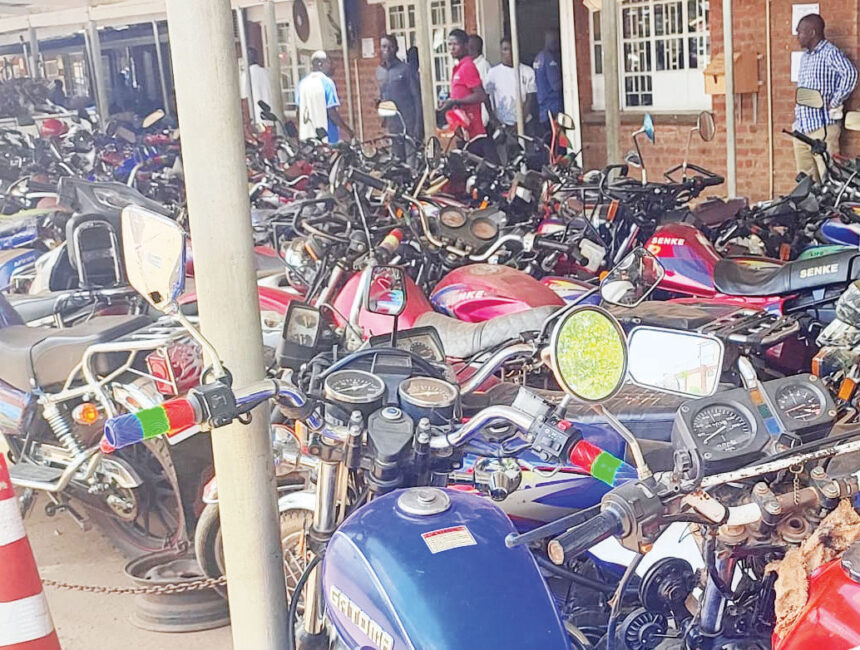
“I blame current high levels of accidents on democracy, which has meant public service messages are delivered in an apologetic manner, and the proliferation of second-hand vehicles and unregistered motorcycles on the roads of Malawi,” says 72-year-old Gogo Chanza from Mtukulamwendo in the lakeshore district.
True to his words, Ministry of Health records indicate that injuries sustained during road accidents are surpassing some of the diseases that have been giving people a headache over the years.
It indicates that there has been a 32 percent surge in the rate of road accident injuries globally, surpassing the rate of deaths attributed to malaria, tuberculosis and HIV and Aids combined .
And, according to Malawi Orthopedics Association President Maureen Sabawo, road accident cases are contributing to rising cases of trauma in the country.
Maureen Sabawo, who spoke during the two-day National Trauma Consultative Forum in Lilongwe, says statistics indicate that motorcycle operators are responsible for 49 percent of road accidents in the country.
“Research we have done shows that almost 60 percent of recorded accidents are coming from road traffic accidents and out that 60 percent, 49 percent are attributed to motorcycle [kabaza] operators.
“However, lack of data on the occurrence of accidents, understaffing and financial issues are among the setbacks hampering the proper execution of trauma and orthopedic services in the country, as the government only allocates 4.8 percent of the budget towards the provision of such services,” she points out.
She expresses hope that stakeholders would address the financial issues identified and pave the way for deliberations on the draft Malawi National Emergency Trauma Policy so as to scale down the mortality rate.
Meanwhile, Emergency Response and Disaster Management acting Deputy Director in the Ministry of Health Yankho Luwe has indicated that they have developed policies to contain injury-related deaths.
“In January, the Ministry of Health launched the Health Sector Strategic Plan and this is part of the efforts to reduce the fatality [rate] by 50 percent by 2030,
“In fact, the ministry has been making strategic efforts, the first thing being the implementation of policies [notably the Health Sector Strategic Plan) and we have also developed an Emergency and Critical Care Strategy which has spelt out methodologies on how to reduce deaths caused by injuries by 2020,” Luwe explains.
AO Alliance Managing Director Claude Martin Jr emphasises the need to strengthen pre-hospital care to reduce injury-related deaths in the country.
“Injuries kill more people than communicable diseases and we need to strengthen the trauma care system in low income countries, which involves a lot of work such as strengthening pre-hospital care so that people are assisted when they get hit by a car or motorcycle,” Martin Jr suggests.
A 2021 report which the World Health Organisation produced indicates that 4. 4 million people die due to injuries globally, further indicating that Malawi has the ninth highest incidence of road traffic deaths in the world.
It is a glaring reminder that a lot needs to be done to tame road accidents and make Malawi’s roads a sanctuary for all.