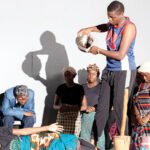
How things have changed!
Not long ago, before Alleluya Band started making the long, customary trips to Italy, Malawi music was akin to a soliloquy: Artists, big and small, standing on a big stage, waxing lyrical about issues such as love, social and economic struggles, determination to swim above the muddy waters of trouble, among others, only to realise that they were talking to themselves.
The world did not really care.
Those were days of tough experiences as artists struggled to leave a mark on the international scene, a development they blamed on lack of government support.
Talking of government support, local artists— musicians inclusive— have long been disregarded by policy makers, who have ensured that they [artists] do not benefit from the national cake by sitting on National Heritage and Arts Council (Nahec) Bill.
- Advertisement -
As such, while some sports associations have been getting government subventions, artists have been left to fend for themselves.
Of course, Culture Minister Richard Chimwendo Banda has vowed that Nahec Bill would see the light of day during the next meeting of Parliament, which starts on Friday this week.
“We are committed to ensuring that we table the bill,” Chimwendo Banda said during the 2023 Entertainers of the Year Programme, which State-run Malawi Broadcasting Corporation organised.
But, then, first things first. The fact remains that local artists remain ostracised, even by the very same people that turn to music and artistic products when downtrodden.
- Advertisement -
- Advertisement -
To make matters worse, local music has, for a long time, remained on the fringes of success.
As Nigerian music has been making headway, making headlines across the world, the Malawian musician has remained stuck in the grotto of obscurity.
Fortunately, there are always people who are willing to face challenges head on and take on the world.
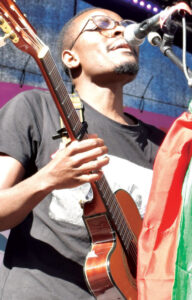
The name Patience Namadingo comes to mind.
In an exclusive interview with Times Exclusive host Brian Banda, whose programme aimed on Times Television in January this year, Namadingo presented himself as the head of an army; that is, leader of the country’s musicians on their sojourn to lands unknown.
He said the success of a Malawian musician should be regarded as the success of all musicians in Malawi.
We will conquer the world only “as an army”, he said.
Soldier Lucius Banda agreed, saying time has come for Malawians to stop pitying artists against each other because all artists are advancing the same cause; that of promoting industry interests.
Paving roads abroad
Granted, it has become very easy— or so it seems— for artists such as Namadingo, who once set his base in Lusaka, Zambia; Tay Grin; Alleluya Band; Lucius Banda, and others, to light the candle of fame at the international scene.
Others may say they were already established artists in the country and that, as such, fame followed them.
Tay Grin was once nominees for the Africa Music Awards and went to Nigeria, where the grand finale took place.
Tay Grin’s ‘Chipapapa’ song was put to the test, in the form of competition from South African and Zimbabwean artists who were also vying for honours in the category of Best Male Artiste in Southern Africa.
However, save for Tay Grin, who has a number of foreign awards to his name, other artists have not been so lucky.
As such, other artists have suggested that while the good news of scooping an award is always gratefully received by individuals targeted by such awards, Malawi can also benefit, culture-wise, if artists who get nominated for international awards sell the country through, say, their dances and use of Malawi’s vernacular languages.
“There are more ways of selling Malawi than winning awards or getting nominated for awards. I think artists who have been invited abroad have lost an opportunity to sell Malawi as they imitate Western dressing. If we can put on attire that reflects our culture, we would be selling the country as an attractive tourism destination,” veteran artist Lommie Mafunga said.
Indeed, another veteran artist, Snowden Ibu, points out that an invitation to perform abroad could open opportunities for not only those invited to the events but other artists, too.
Yet, according to ibbu, such opportunities may lack a sense of purpose when artists who go abroad fail to share lessons learned when they return home.
True to his words, Namadingo said last month that he has been applying some of the things he has learned in the United States (US) to the Malawi scenario.
“I have learned a lot in the United States and I have been utilising some of the things learned. Our friends are too advanced that side,” he said.
True to his words, it is important to take advantage of such opportunities, which were hard to come by during the era of revered musicians such as the late Allan Namoko, Stonard Lungu, Michael Yekha, Dr Daniel Kachamba, Robert Fumulani, among others.
Indeed, Kachamba was one of the lucky few to get the opportunity to perform abroad and, later, received an honorary doctorate degree.
In rare cases, however, opportunities followed local musicians on home soil, most notably after the British Broadcasting Corporation (BBC) team which visited Malawi and pitted local traditional bands against each other on April 12 1992 at a festival specifically organised for acoustic bands.
Surprisingly, Lower Shire veteran musician Mafunga out-performed the likes of Namoko and the BBC crew that visited the country had no choice but to take four of his songs —Kumwalira Kwababa, Chiwerewere, Miseche, Munthu Sakondwera— to London, United Kingdom (UK).
Luck smiled on Mother Malawi again on October 15 1994, when an entourage of music production experts from London courted Malawian musicians in a Malawi video film project on travel.
Namoko and Chivu River Jazz Band, Fumbi Jazz Band, Ndingo Brothers Band had the rare opportunity to showcase their talent to a foreign audience on Malawi soil.
The crew, led by George Clever, captured the Ndingo Brothers in the densely-populated Ndirande Township, skillfully drilling local children on how they could push bicycle rims to serve as background for Namoko’s music.
However, the scene has changed so much these days that news of an invitation extended to a local musician to perform abroad no longer shakes the country.

For example, Maskal— before he went to the US to “find myself” first in 2014 and, then, in 2016, coming back this year— took his music to audiences in the US, South Africa and the United Kingdom (UK).
Maskal, who has created his own identity with his Afro and R & B fusion, used such opportunities to greater effect; no wonder, tracks such as ‘Udalire’ and ‘Usatope’ are well known in countries such as the UK, buoyed by the presence of Malawians who are intent on remaining in touch with their roots.
Veteran musician Lucius Banda is another musician who has taken his lyrics to the UK, South Africa, among other countries, with encouraging results.
Hyphen— formerly Young Kay— too, has had the opportunity to strut his stuff across the borders, most notably his performances at the Big Brother Africa reality television show stage.
However, foreign tours are more common to Alleluya Band than any other music outfit in Malawi. The band has been touring countries such as Italy as if it were going for a fishing escapade on Lake Malawi. The trend started way back, when Paul Banda was the band leader, and continues.
Late last year, this happened, too.
This year, some band members are in Italy, representing fellow artists at Alleluya Band.
The future is really bright for Malawi music, but success depends on the government living up to its word on Nahec tabling.