By George Mhango, contributor:
Fifteen-month-old Flora Yohane from Kungwi Village Head in Traditional Authority (TA) Mwambo, Zomba District, has narrowly escaped death.
According to district health authorities, she was suffering from severe malnutrition.
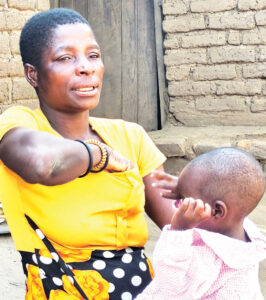
“Flora developed a cough, had diarrhoea and lost weight. I was forced to seek medical help during a mass screening exercise conducted by health surveillance assistants (HSAs) in our area,” her mother, Loveness Duwa, says.
Flora was diagnosed with severe acute malnutrition (marasmus) during screenings carried out between March and April 2025.
- Advertisement -
The mid-upper arm circumference measurement is a crucial tool for assessing nutritional status, especially in children and pregnant women, to detect acute malnutrition.
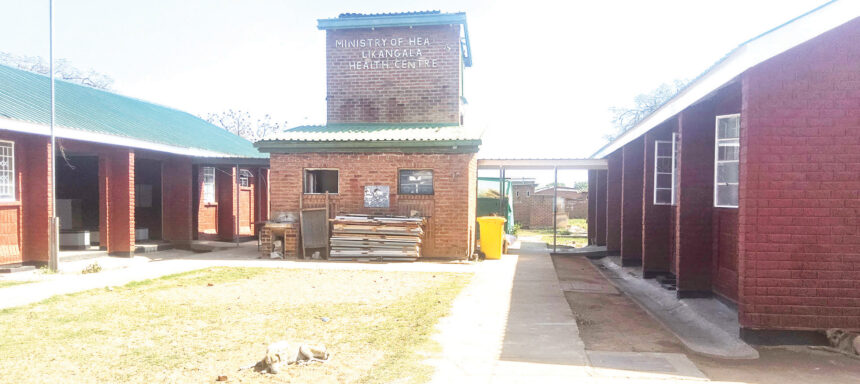
She was referred to Likangala Health Centre on the outskirts of Zomba, Malawi’s former capital, where she was admitted to an outpatient therapeutic programme for treatment.
Sandra Chikumbu, aged thirteen months, from Likaka Village in the same TA, went through a similar ordeal. Diagnosed with marasmus, she was referred to Matawale Health Centre for care.
“I don’t have land to cultivate crops. Most of the land belongs to Likangala Scheme. We rely on piece work for food, but it is scarce,” Sandra’s mother laments.
- Advertisement -
- Advertisement -
Silent crisis
Maggie Kamangira, an HSA, attributes the rise in malnutrition cases to poor harvests caused by erratic weather patterns.
“In the 2023-24 farming season, none of the 1,535 people in Likaka Village harvested any crops due to drought. This severely affected pregnant and breastfeeding women,” Kamangira explains.
She says mass screening exercises aim to assess the health of children under five, particularly in light of nutritional challenges linked to El Niño-induced weather patterns.
“When children are found to be malnourished, their mothers or caregivers are given advice on what foods to feed them after discharge from hospital,” she adds.
When the weather turns deadly
According to Unicef, cases like Flora’s and Sandra’s are the result of the 2023-24 El Niño weather event, which led to widespread climatic shocks, dry spells and localised flooding.
These events caused massive crop failures and acute food insecurity, especially in Malawi’s Southern and Eastern regions.
Between October 2024 and March 2025, over 5.7 million people required humanitarian aid.
Unicef notes that economic instability, inflation and rising food prices worsened household vulnerabilities, heightening malnutrition and protection risks.
To mitigate these impacts, Unicef Malawi, with support from the European Civil Protection and Humanitarian Aid Operations (Echo), launched an integrated emergency project.
The project focused on nutrition, health and child protection in ten severely affected districts of Nsanje, Chikwawa, Balaka, Machinga, Mangochi, Phalombe, Mulanje, Chiradzulu, Zomba and Salima.
Beyond nutrition
The programme also provided primary healthcare, sexual and reproductive health (SRH) outreach, mental health and psychosocial support, and services to prevent and respond to gender-based violence (GBV).
“We are grateful for the support that saved Flora’s life. It has also helped us continue feeding her a nutritious and diverse diet so she can grow up healthy,” Duwa says.
The benefits of mass nutrition screening and treatment are already visible in many communities. After eight weeks of treatment, Flora recovered and is now healthy and active.
“My daughter can walk now, unlike before. She eats well and I am happy with her progress because it allows me to do some piece work and provide food for the family,” Duwa, who has six children, says.
Sandra’s mother also recalls how her daughter suffered from a persistent cough and diarrhoea before receiving treatment.
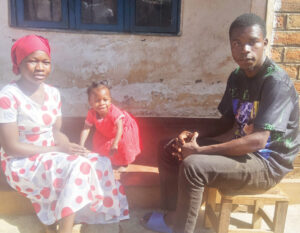
“I thought it was just normal until the door-to-door screening by the government and partners like Unicef revealed what she was actually suffering from,” 23-year-old Kumbukani, Sandra’s mother, says.
Breaking barriers
Between 2024 and 2025, Unicef, through support from Echo, screened over 500,000 children for malnutrition across the Southern and Eastern regions.
Unicef’s Zonal Nutrition Coordinator for the Southern Region, Misheck Mwambakulu, notes that cases of severe wasting rose from 3,751 in April 2024 to 5,514 in April 2025, indicating improvements in early detection and access to treatment.
“Mobile outreach clinics reached remote communities with essential health services, including SRH and immunisations. Over 20,000 caregivers and frontline workers received psychosocial support and GBV services,” Mwambakulu says.
According to Macrotrends, a financial and economic data platform, Malawi’s infant mortality rate is projected at 29.84 deaths per 1,000 live births in 2025, a 4.38 percent drop from 31.20 in 2024.
“The lean season sees higher admissions. For example, between January and June 2025, we screened over 1,600 children in Zomba and have managed to reduce admissions through early detection,” Mwambakulu explains.
He adds that integrated services are vital to breaking the cycle of hunger, disease and abuse during emergencies.
Mwambakulu affirms that the Echo-funded project has been life-saving, meeting the urgent needs of Malawi’s most vulnerable children and families.
Uniting for change
Unicef and its partners’ efforts to tackle malnutrition and reduce infant mortality align with the Malawi Government’s goal to eliminate all forms of malnutrition by 2030, in line with the Sustainable Development Goal 2.
This is outlined in the Malawi Zero Hunger and Malnutrition Strategic Review, a government-led initiative designed to establish a hunger baseline, identify gaps and prioritise actions to reach the 2030 goal.
Malawi has also committed to transforming its food systems through increased food production, reduced waste, stronger value chains and improved climate resilience.