
By Zuze Sebastian Matoliro:
Many Malawians live at the crossroads of culture and medicine, where fevers are often blamed on spirits and where delayed diagnoses cost lives and futures.
A lumbar puncture (often called a spinal tap) is a medical procedure where a doctor gently inserts a small needle into the lower back to take a sample of the fluid that surrounds the brain and spinal cord. This fluid is called cerebrospinal fluid (CSF).
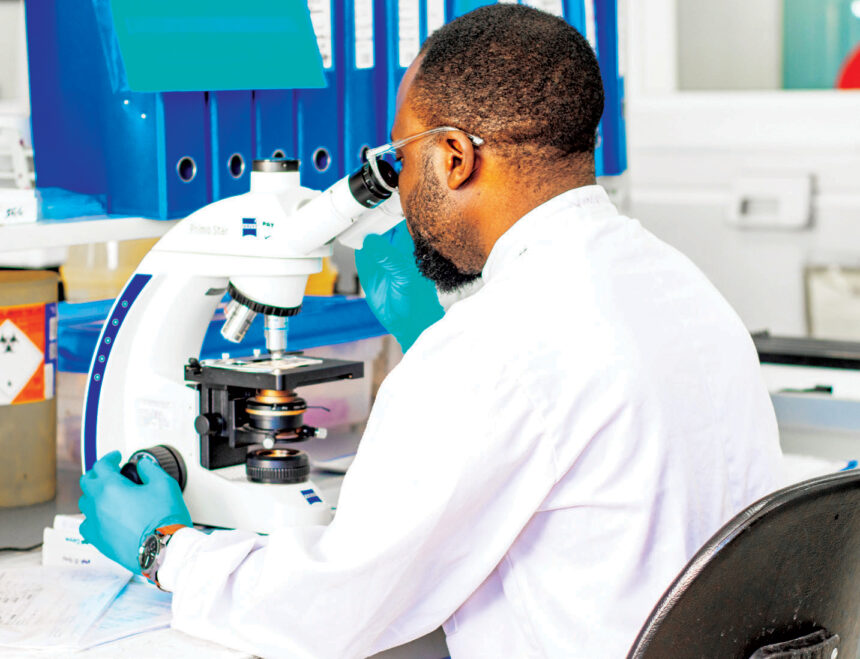
In much of rural Malawi, CSF testing, the most reliable method for confirming meningitis, is often not performed. and healthcare facilities struggle with limited equipment and materials, as well as staff shortages, forcing health workers to treat patients based only on the symptoms.
As testified by Thokozani Jizale, health facility in-charge at Monkey Bay Health Centre, “Many rural patients arrive too late or are likely treated for the wrong illness because we lack laboratory capacity to test for meningitis”.
- Advertisement -
The results are devastating when patients are treated for malaria while meningitis worsens quickly without the right treatment.
The lack of laboratory testing for meningitis may not only prolong suffering but also contribute to the growing issue of antimicrobial resistance (AMR), in which pathogens become less sensitive to drugs due to unnecessary exposure.
During a community discussion organised by the Malawi Liverpool Wellcome Research Programme (MLW) in Zomba with the Mwambo Umoyo N’kukambirana Radio Listening Club, one elder shared: “When someone has a stiff neck, we ask a grave digger to step on it for healing.”
Such beliefs endure in areas where health information is scarce, and hospitals are hours away on foot.
- Advertisement -
- Advertisement -
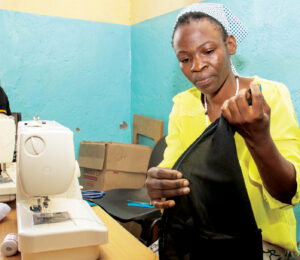
Take, for instance, the issue of Patricia Magalasi, a young woman who dreamed of becoming a journalist but collapsed in class after what was initially thought to be malaria.
Later, tests confirmed that it was meningitis, leaving her partially paralysed.
Today, Patricia trains in tailoring at Aquaid Resource Centre.
“I had to give up my dream,” she said, “but I haven’t given up on living.”
To bridge the knowledge gap, MLW—with support from the LifeArc and the NIHR Global Health Group on vaccines to control respiratory pathogens and AMR across Africa (VacAMR)—is conducting a study titled ‘Evaluating the Feasibility of a Dried Spot Kit to Store and Transport Clinical Specimens for the Diagnosis of Central Nervous System Infection in Southern Malawi’, exploring a low-cost diagnostic method (Dried Spot) already used extensively for HIV laboratory testing in Malawi.
The technique collects small blood or fluid samples onto special paper for easy transport and storage of samples.
Leading this research at MLW is Associate Professor Brenda Kwambana-Adams.
She said the innovation could transform meningitis detection.
“Once proven effective, even clinics without laboratories will be able to collect and send samples for testing safely,” she explained. “This could transform meningitis laboratory testing, making it more accessible to all in low-resource settings.”
Health rights advocate Maziko Matemba welcomed the innovation, describing it as “a scientific breakthrough that challenges myths with evidence”, aligning with the World Health Organisation’s goal of eliminating meningitis by 2030.
According to the World Health Organisation, one in five people who survive bacterial meningitis suffer from lasting complications such as hearing loss, brain damage or epilepsy.
For Malawian families, the impact is not only medical but also emotional, economic and social.