On Monday last week, Finance Minister Simplex Chithyola Banda presented to Parliament a revised 2023-24 national budget which has seen the financial plan rising by about K540 billion from the initial K3.79 trillion presented in February to K4.33 trillion. As THOMAS MUNTHALI writes, the budget review is a litmus test for sustaining economic recovery measures with action.
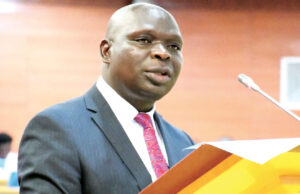
Listening to the Minister of Finance Simplex Chithyola Banda presenting the mid-term budget statement to Parliament gave hope to many Malawians.
Putting the 2023- 24 budget performance in perspective, the minister explained why the devaluation of the Kwacha had to happen. He went further to define the measures towards recovery, foreign exchange attraction and retention, as well as how to protect the forex generated – and I am sure more could be hatched as we go along.
That the Kwacha was misaligned to the dollar was a known fact. The thriving parallel market with its huge premiums told the story loud and clear. Fear of the unknown made the decision to align it not to happen soon enough. This meant watching a wound grow until such a time as this when treating it became a must to avoid amputation. Because of the size and depth of the wound, the treatment is a painful experience and yet necessary.
Kudos to the country’s leadership for aligning the currency – it is a bold and important economic decision, but not the easiest to make politically.
- Advertisement -
Moving forward, however, devaluation should actually be a step towards letting the currency completely float–actually, reading in between the lines, it seems the monetary authorities are already making efforts in that direction.
Otherwise, in an environment of acute forex shortage, the monetary authorities will keep on devaluing the currency and in the process be chasing the parallel rate.
This will mean Malawians will keep on facing a spate of price increase shock every time there is devaluation.
This entails that the best is to let the market clear by itself with the demand and supply forces. Actually, a rate determined by the market will offer the best gauge of an economy’s performance. A stable currency will mean there are enough dollars in the market implying that our export and import substitution measures are working and the opposite is true.
- Advertisement -
- Advertisement -
Primarily, the key reason why aligning the currency was important, was to invigorate the productive sectors – basically to generate more forex through trade in goods and services as well as to retain the forex through import substitution.
Making this happen will require doing certain things right. Three action areas immediately come to mind.
First, is having a vibrant private sector that is fully incentivised to either bring new investments or scale-up, including enhanced capacity utilisation. This is because the development partners’ budget support unlocked by the IMF’s ECF is not sustainable.
We need to generate our own forex and revenues. Hence sending an unequivocal signal of ‘Malawi is open for business’ is a must. This will require effective engagement with the private sector – large as well as small and medium enterprises – with regard to the laws and other incentives that will make them immediately begin to make investment decisions.
This is no time to have a ‘tick the box’ position in engaging the private sector but making sure that the legal, policy and general business environment is truly conducive to long-term investment decisions. Beating regional averages in the business environment incentives is a defined quick win in the Malawi 2063 First 10- Year Implementation Plan (MIP-1).
Secondly, this is now time for Malawi to invoke the developmental state philosophy. Simply put, the government should take an active role in catalyzing investments in the strategic sectors of the economy. Truth is that even with the best package of private sector investment incentives, there is bound to be market failures – the private sector simply not investing for one reason or another. So, the government needs to catalyse investments in all the strategic sectors of the economy where forex can either be generated or indeed preserved through import substitution.
Therefore, establishing and capitalising the trail-brazer institutions like the National Mining Company and the newly revamped Malawi Development Corporation as well as capitalising a fully-reformed and commercially-oriented Admarc [Agricultural Development and Marketing Corporation] to be a massive aggregator of farm produce, an agro-processor and exporter, will be critical.
Lastly, it is soothing to hear the minister clearly stating in the mid-term budget statement that ‘in the 2023-2024 fiscal plan, mid-year budgetary resources will continue to be allocated to strategic issues, which are aligned to the Malawi 2063.
Bravo Honourable Minister! But the main task and litmus test is to follow through the measures with action. This is important because hitherto, putting our resources where they matter more and holding each other accountable, has been elusive!
That said, implementation of the reforms and measures outlined in the mid-term review and in the IMF’s ECF Programme should be viewed as a package and not cherry-picking on what has to be implemented. We have been here before, and this time failure is not an option. We do not have the luxury of time!
The Malawi we want is happening! But the pace can be accelerated if we all do our part!