By Pemphero Malimba:
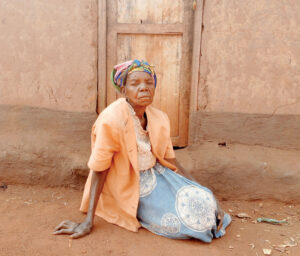
For many years, Magdalena Mazani, a 78-year-old woman from Yohane Village, Traditional Authority Kalumo in Ntchisi District, has wished to escape poverty.
Mazani, a mother of four and grandmother to many, lives with one of her granddaughters in a small room allocated to her in one of the three-roomed boys’ quarters in the village, as she has no house of her own.
She relies on maize and soya bean farming for her income, which helps her access basic essentials.
“After the harvest, I sell the soya beans to buy necessities such as soap and sugar. When the harvest is poor, it becomes a challenge. Sometimes, I go to bed on an empty stomach due to a lack of food,” she laments.
- Advertisement -
Her 16-year-old granddaughter, who is in Standard 6, sometimes helps by doing piecework.
“When she does piecework, we can get food for ourselves. In the morning, we have porridge; in the afternoon and evening, we eat nsima when resources allow,” Mazani adds.
Her situation becomes dire when she falls ill.
To reach the nearest health facility, Khuwi Health Centre, which is six kilometres away from her village, she needs transport fare between K500 and K1,000 one way.
- Advertisement -
- Advertisement -
“At times, I cannot afford the fare, so I stay home until I recover,” she says.
One of her children, Velentina Lilambwe, tries her best to support her mother despite her own hardships.
“I have been doing my best to support my mother, but it is always difficult for me since I am a single mother of five children and have no economic activity,” the 45-year-old explains.
Mazani and her daughter are among the 20 percent of the country’s 20 million people living in extreme poverty.
This situation persists despite the government’s implementation of various social safety nets across the country, such as the Social Cash Transfer Programme (SCTP).
According to the SCTP Strategic Plan 2022- 2027, the programme, commonly known as Mtukula Pakhomo, targets labour-constrained and ultra-poor individuals— those unfit for work, under 18, over 64 or those with disabilities or chronic illnesses.
The programme supports at least 325,000 households across the country, with Ntchisi alone receiving assistance for 5,000 households.
Elita Vula, a 51-year-old woman, lives a different life as one of the seven beneficiaries out of 137 households in Mazani’s village. Vula receives at least K18,000 per month through the programme.
“I started benefiting from the programme in 2018 and my life has changed significantly. Over the years, I have managed to buy goats and pigs and start a small business, so I can comfortably say that we are doing well,” Vula explains.
In addition to rearing animals and running a business, she uses manure from the livestock to fertilise her garden.
“We were trained to make mbeya fertiliser, which has greatly improved our harvests. Fellow farmers come to learn from me and I am ready to graduate from the programme and start doing things on my own,” she says.
Mazani and Lilambwe, however, blame the government for their predicament.
The two argue that, despite registering for the programme since 2018, they have never been selected.
Lilambwe believes the programme could have been beneficial for her and her mother.
“I could have started a small business to support my mother and children,” she says.
Chairperson of the Parliamentary Committee on Social Welfare, Savel Kafwafwa, attributes Mazani and Lilambwe’s situation to issues with the Unified Beneficiary Registry (UBR).
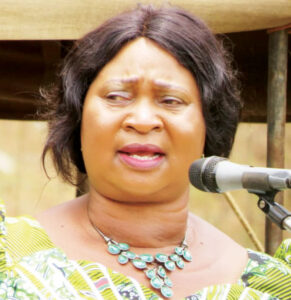
“We find the system problematic because it only selects ten percent of those registered and does so randomly. This randomisation is problematic because it may include a 40-year-old and exclude a 75-year-old lady,” Kafwafwa says.
Minister of Gender, Community Development, and Social Welfare Jean Sendeza acknowledges the issue and reveals the ministry’s plan to address it.
She says the system does not consider the situation on the ground.
“Before disbursing cash transfers, they need to validate the list of beneficiaries on the ground to ensure those on the list are the actual beneficiaries,” Sendeza says.
The minister admits the problem is widespread across the country.
“People who should be on the beneficiaries’ list are not included. Councils need to ensure that all officers are on the ground verifying that the list of beneficiaries is accurate,” she adds.
Executive Director of the Malawi Network of Older Persons Organisations, Andrew Kavala, acknowledges that many elderly individuals are not benefiting due to flaws in the criteria.
Kavala notes that the current targeting criteria have inclusive and exclusive errors.
“Many people who do not deserve to benefit are receiving aid, while those who do deserve it are left out, with many elderly persons falling into the latter category,” he says.
He hopes for improvements in the programme’s implementation.
“I understand the ministry is piloting a new phase in Thyolo, focusing on categorical targeting. This involves assessing the number of elderly persons and those with disabilities in the programme to ensure more of them benefit,” he says.