By Dumbani Mzale, contributor:
President Lazarus Chakwera has made history by leading the country in championing quality-driven infrastructure projects that many believe will benefit future generations.
Over the past few years, Chakwera has consistently emphasised that durable infrastructure contributes to economic growth by facilitating trade, reducing transport costs and creating employment opportunities as part of its wider impact.
Under his first term, he has ensured that all infrastructure projects meet the highest standards and have exceptional quality. He has also repeatedly said that substandard work will not be tolerated.
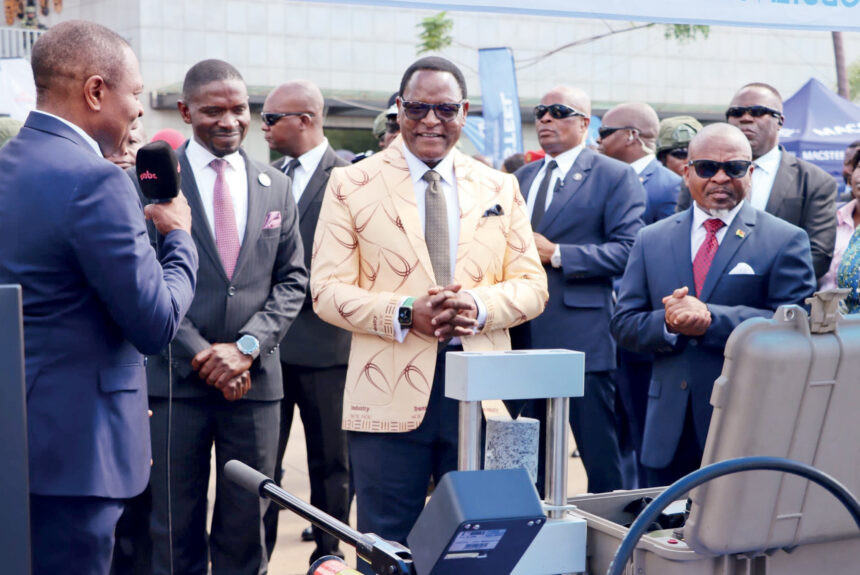
His commitment to transforming Malawi into a hub for quality, durable infrastructure was evident on Tuesday, May 20, 2025, at the Bingu International Convention Centre (BICC), when he presided over the inaugural National Construction Day.
- Advertisement -
He was honoured on this occasion as a Champion of Quality Infrastructure by the country’s construction regulatory body, the National Construction Industry Council (NCIC).
As a patron of the Malawi Institute of Architects, Chakwera was also praised for his consistent advocacy for quality infrastructure, which has flourished across the country over the past five years.
It was also highlighted during the event that Chakwera has continually called for professionalism from NCIC and all those involved in the construction industry.
According to NCIC Board Chairperson Jeremiah Mugaba, Chakwera has shown unwavering support for professionalism and transparency within the local construction sector.
- Advertisement -
- Advertisement -
Mugaba was also forthright in his remarks, commending the President for his dedication to promoting capacity building among local contractors.
NCIC also praised Chakwera for supporting the review of the NCIC Act, which was recently passed during the most recent parliamentary session.
As a special recognition, Chakwera was presented with a gift and an honorary title on behalf of the construction industry in Malawi.
The events at BICC highlighted Chakwera’s passion and commitment to Malawians, particularly in terms of his efforts to build a new Malawi, a promise he continues to fulfil.
“When I came into office in 2020, I pledged to build a new Malawi and this is what I am doing. I will not stop,” he declared to the hundreds gathered in the hotel’s auditorium.
To ensure that all infrastructure projects maintain high standards, Chakwera has frequently instructed his Minister of Transport, Jacob Hara, to ensure there is no compromise in quality.
Hara, a respected engineer, took the opportunity to explain in detail Chakwera’s ambitions and expectations when it comes to construction projects.
“Your Excellency, you have often told me that everything we build must be of the highest standard. I recall when we started the rehabilitation of the M1 Road from Lumbadzi to Chiweta, you instructed that we revise the road’s design, abandoning the previous regime’s plan to patch the tarmac here and there,” Hara said.
He added that previous administrations avoided large-scale, high-value projects.
Instead, they focused on distributing smaller projects across the country as a political strategy to win votes, rather than laying a strong foundation for the country’s future.
Under Chakwera’s leadership, Malawi is now gaining international recognition in various fields, including construction.
At the event, Hara shared the news that Malawi has been ranked among the top three countries for infrastructure transparency, reflecting the nation’s commitment to publishing reliable data.
This award, recognising the consistent and timely publication of data in the construction sector, positions Malawi as a regional leader in transparent infrastructure governance.
It places the country among the top three member states out of 16 in the Construction Sector Transparency (Cost) international network, earning the country this accolade.
“This recognition means the data we publish on public infrastructure is not only reliable, but also secure and relevant throughout the entire project cycle,” Hara said.

NCIC Chief Executive Officer Gerald Khonje, whose organisation hosts the Cost Malawi secretariat, noted that the award highlights a strong culture of information disclosure under the Chakwera administration.
He described it as a historic achievement and a significant milestone for all Malawians.
“It is a testament to the commitment of stakeholders across government, the private sector, civil society and donor institutions,” Khonje said.
Chakwera, however, seems unsatisfied with current achievements, vowing to continue with more projects if re-elected in the upcoming elections on September 16, 2025.
His administration is already overseeing over 600 infrastructure projects, which will soon be showcased to the public through images so that everyone can appreciate the work being done.
“My government will soon release a full list, along with pictures, of over 600 projects we have completed or are in the process of implementing across the country. Malawians will be the judge, and by doing so, I will prove the critics wrong,” Chakwera said.
Chakwera also criticised leaders from previous administrations for attempting to monopolise or claim credit for national development projects they oversaw during their time in office.
He stressed that every president after Malawi’s first, Hastings Kamuzu Banda, has been building on the foundations laid by Banda.
Chakwera reminded Malawians that the previous administration was more adept at laying foundation stones than actually completing and finishing projects.