 The past few weeks have been a difficult period for Malawi.
On June 1, veteran broadcaster and actor Hope Chisanu died in the United States of America, followed seven days later by former Minister of Justice Ralph Kasambara.
While the country was still mourning Kasambara, a military plane carrying Vice-President Saulos Chilima crashed in Chikangawa Forest in Mzimba, killing him and eight others, including former first lady Patricia Shanil Dzimbiri.
Chilima was en route to Nkhata Bay, where Kasambara’s body was to be laid to rest, when the tragedy occurred.
An investigation into the crash is currently underway.
- Advertisement -
Returning from South Korea after attending the Korea-Africa Summit, Chilima stopped in South Africa to visit veteran musician Lucius Banda, who was undergoing treatment for kidney problems, to offer him encouragement.
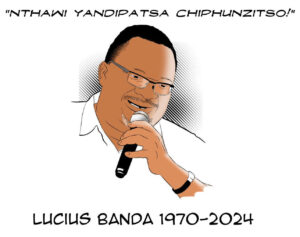
Following Chilima’s death, Lucius, one of Malawi’s most revered musicians, penned a condolence message in which he indicated he was still hospitalised.
Seventeen days after writing the message, Lucius succumbed to his prolonged illness, which had necessitated his three-month stay in a South African hospital.
June will likely be remembered as Malawi’s darkest month, a time of profound loss.
- Advertisement -
- Advertisement -
Even now, questions linger about the successive passing of so many prominent figures in a single month.
But nature respects no human wishes and adheres to no predictable pattern we can fathom.
There are moments when one cannot comprehend why someone has to die.
There are deaths that, in our human understanding, should not happen in such succession. However, every death, regardless of status— be it slave or master, president or foreigner, child or elder—is inevitable.
It defies circumstance. If one’s time to depart has arrived, nothing alters that inevitability.
Yet, there remains a tacit acceptance that some deaths may draw less attention.
Lucius Banda was not one of those; he was an exceptional musician.
No Malawian artist has left a mark quite like ‘Soldier,’ as Lucius was affectionately known in musical circles.
No other Malawian artist has produced 20 full music albums in their lifetime.
And perhaps, no other artist has championed the cause of the underprivileged, condemned corruption or fought for justice with the fervour Lucius displayed.
His melodies will continue to resonate in the souls of many, stirring consciences and urging them to carry on the struggle in their own ways.
His music transcended mere entertainment; it embodied a tireless pursuit of justice and a steadfast commitment to community.
Lucius, like all of us, had his flaws; no human is without imperfection. He made mistakes because he was human, not divine.
Yet, as others have noted, let his music serve as an enduring inspiration for those who believe Malawi can be a better place if the voices of the voiceless are amplified.
His music was a catalyst for social change, even if it did not achieve all he envisioned. Yet, he never wavered.
As we commemorate Lucius, we should draw inspiration from his words and causes championed in his songs.
He admonished the youth not to stand idly by while their nation was plundered by the corrupt and the transient.
Lucius reminded young Malawians that this warm heart of Africa was their only home and cautioned against being manipulated by politicians.
Beyond his musical prowess, he symbolised hope and resilience. Despite setbacks, such as his conviction in the certificate case, he always bounced back.
He navigated political challenges of his era and reclaimed a seat in Parliament representing Balaka Central Constituency.
In honouring Lucius, let us celebrate not just his musical legacy but also his unwavering dedication to his people and country, which were central to his life.
He went beyond music; he reached out to the needy and supported students requiring educational assistance.
In every note sung and every chord struck, Soldier remained a fighter. He has left an indelible mark on the hearts of those who knew him, listened to his music and admired his character.