There must be something intoxicating with power.
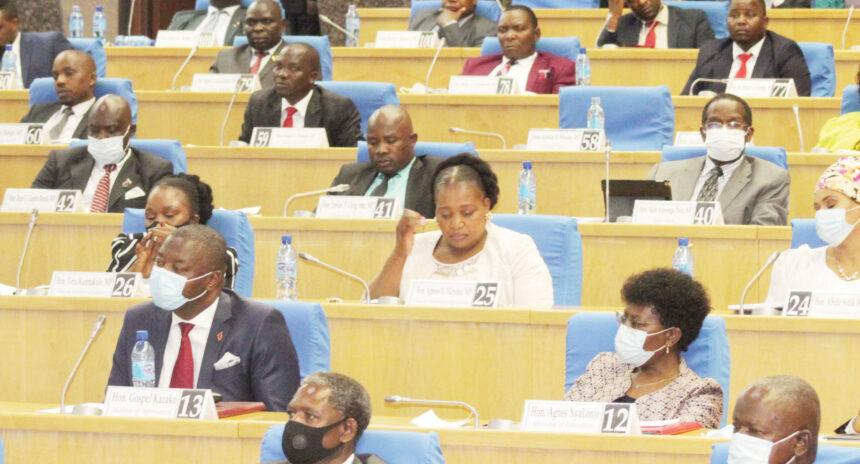
If not, why does it seem to open the floodgates of perverseness in, say, members of Parliament (MPs)?
In an ideal situation, power is supposed to facilitate progress.
In fact, in a functioning democracy, power is supposed to be shared— and policy makers holding one end of the joystick, with voters— no matter how ordinary or poverty stricken—holding the other end. That is why they say the joystick of power, anyway.
There is no joystick with one end.
- Advertisement -
However, in the Malawi scenario, there is someone— always someone or some people— who want to hold both ends, a tendency that is anathema to democracy, especially a young one like ours.
The problem is, for far too long, and whenever the issue of power is raised, some, if not most, Malawians have been focusing on the President— as if power is the exclusive of the President.
Far from it, and that is why Malawi has the Executive, the Legislature and the Judiciary. It would not be stretching ‘muscles’ of the imagination too far to say the country, no matter how small or landlocked, has sound branches of the government.
The Executive has been making things happen in this country. Just by declaring, using the word of mouth, Dr Hastings Kamuzu Banda’s dream of a Malawi with its own public university [the University of Malawi], a Malawi with its own lakeshore road, among other things, materialised.
- Advertisement -
- Advertisement -
Just by the wave of President Bakili Muluzi’s right hand, primary education in public schools became free for all and the starter-pack initiative was introduced to shore up crop production.
Simply by clearing his throat, President Bingu wa Mutharika’s dream of a fully-fledged university called Malawi University of Science and Technology in Thyolo District materialised. Indeed, just by envisioning a modern stadium in Malawi, he engaged the Chinese government and, now, there is Bingu National Stadium, imposing though vulnerable to vandals.
In fact, by simply waving her neck-scarf, President Joyce Banda devalued the Kwacha by 49.5 percent and development partners who had chickened out of Malawi started warming up to it again. Again, by simply thinking about a Malawi that would have a fledgling transport system in rural areas, youths were given motorcycle taxis and movement has become easy in rural areas, while also empowering youths and hitherto unemployed people economically.
Through a declaration, President Peter Mutharika actualised the Farm Inputs Subsidy Programme dream, which shored up food production in the country. In fact, Lilongwe, the administrative capital, has the Area 18 Inter-Change, which has changed the physical outlook of the place.
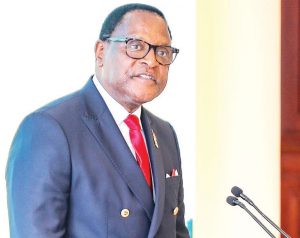
With his emphatic voice, President Lazarus Chakwera made sure that he assented to the Access to Information Bill so that it could become an Act.
Just by pleading with tobacco farmers not to give up on the crop, Chakwera has made tobacco farmers smile this year, with the country earning $283.7 million (about K310.2 billion) after producing 120 million kilogrammes of tobacco.
This year, there was no murmuring at the auction flours, with farmers smiling all the way to the bank.
All this shows that the Executive has, in its own way, been vibrant.
The Judiciary has equally been phenomenal.
For instance, without rulings of the High Court sitting as a Constitutional Court and the Supreme Court of Appeal, results of the 2019 Presidential Election would not have been nullified. Indeed, eligible voters would not have voted in the June 23 2020 court-ordered presidential election
The Judiciary can make things tick, pushing hard on the wheels of justice so that there is no turning left or right.
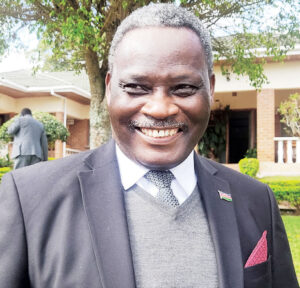
Just last year, on November 11 to be precise, Chief Justice Rizine Mzikamanda was recognised as champion of the rule of law. This year, the Malawi Judiciary has been honoured again.
Malawians are in safe hands.
The Legislature, too, has had its moments in the sun.
It has been argued that, without sound opposition which the Malawi Congress Party, Alliance for Democracy and United Democratic Front (UDF) provided to Bingu wa Mutharika during his first term, some of the transformative policies he implemented could not have been as beneficial to the nation.
Of course, sane Malawians know that some of the people that opposed him did so out of malice. They were angry that Bingu had dumped the UDF for the unknown, which later became known as the Democratic Progressive Party.
By passing myriad bills, among them those on public infrastructure, lawmakers have helped in the transformation of Malawi. Indeed, through Constituency Development Fund, with a package of K100 million per year, up from K40 million last year, the landscape of constituencies is changing one year at a time.
However, Parliament has, at times, posed a threat to Malawi democracy.
The issue of the Recall Provision comes to mind. The provision gave constituents power to recall self-serving, snobbish and non-performing lawmakers so that those with energy, zeal and will to deliver the goods could take their place.
But, ever so greedy, the lawmakers saw it fit to remove the Recall Provision from the laws of this country.
Their objective is, of course, an open secret. They do not want to be held to account for their failure. It is behaviour that is clearly anathema to democracy. A threat to Malawi democracy, in fact.
And, then, there is the issue of their conditions of service. Despite getting hefty loans, allowances and other trappings, lawmakers continue to want the best for themselves. For instance, if they had their way, they would mop all the money in the system and take it home.
Of late, talk is about how lawmakers want to continue burdening the taxpayer with more yokes.
Of course, we are yet to see a lawmaker coming up with atrocious ideas or motions in the current meeting of Parliament
But this has not stopped those with a sixth sense from airing their views.
For instance, Human Rights Defenders Coalition Chairperson Gift Trapence has warned that, should lawmakers table bills that are not in the interest of Malawians, demonstrations will be held throughout the county.
Trapence says, considering the economic challenges Malawi is sailing through, not forgetting the problem of shortage of drugs, it would be a selfish act on the part of legislators to demand more from the taxpayer.
“Oftentimes, MPs think that Malawians do not follow issues but there are many Malawians that are following current affairs and know what is good or bad for them. That is why, in the past, some people wanted the Recall Provision so that MPs that do not perform should be removed but the MPs shot it down and, yet, if one is performing well, that provision cannot affect him or her. Most of these MPs are selfish and only need Malawians during election time.
“They get a lot of allowances from meetings of committees. Why, then, should they think of themselves only,” he said.
However, Honorary Secretary for Malawi Law Society Gabriel Chembezi said whatever parliamentarians deliberate on, the final authority is the President, who should safeguard the interest of the people.
“The President should provide checks on every move by MPs to see if they are doing things in the interest of Malawians or not.
“However, if the President consents to any bill, Malawians are free to take the President to task. The other way is for citizens to obtain an injunction from the court or apply for judicial review. The laws give powers to the court to review the law and see if it is in line with the Constitution or not. Any Malawian has the freedom to challenge it [motion or bill] in court should he or she feel that the issue is not in the interest of Malawians,” Chembezi said.
In the end, if lawmakers think of themselves more than they think of constituents, they risk sparking the wrath of Malawians, who may exchange their warm-heartedness with tough talk and action.