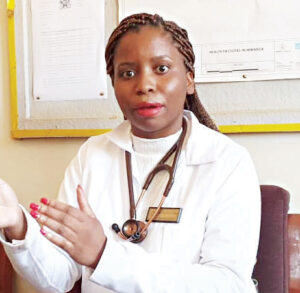
The journey to Mwanza District Hospital’s maternity wing does not follow a single trail; for some pregnant mothers, it entails taking a series of dusty roads, dry or flooded rivers before joining the tarred road that takes one to the health service facility.
Initially, pregnant women would end up finding themselves in a maternity wing that was not spacious enough, a development that compromised privacy.
No more.
While Carl Jung is renowned for saying “Life begins at 40…”, healthcare officials in the district say life begins at zero second— right there, in the maternity wing at the facility.
Medical personnel say, for this reason, they ensure that the maternity wing environment is conducive to the safe delivery of the unborn, not forgetting the sustenance of the lives of all the babies that are born at the facility.
- Advertisement -
No wonder, Mwanza District Hospital matron-cum-senior nursery officer Gloria Chirombo as well as Mwanza District Council senior medical officer Judith Pemba are often seen moving around the wing, ensuring that it is clean and safe.
Their, and other medical personnel’s, efforts got a boost when, using resources from the Health Rehabilitation Fund, the district council rehabilitated the maternity wing.
The task involved making demarcations, painting as well as stocking rooms with necessary items, including beds.
The facility has, among other things, a kangaroo mother care ward, National Registration Bureau office, nursery ward, labour ward, postnatal care section, antenatal services section, among others.
- Advertisement -
- Advertisement -
“Apart from the fact that the maternity wing is beautiful, service seekers’ dignity is being honoured. We also ensure that we provide requisite care to women, depending on how they have delivered. Those who deliver through caesarian section and those who deliver normally are guaranteed proper treatment so that we safeguard the lives of the mother and baby.
“For your information, we have seven beds in the labour ward, with each bed allocated a special room where there are curtains to safeguard privacy and ensure that women get all the necessary attention and care,” Pemba pointed out.
She added that care does not end when the women and baby are leaving the maternity wing and heading for home; “we ensure that we provide them with the necessary information on vaccines, child care, disease prevention, disease symptom detection in babies, among other things. We do all this to ensure that the babies survive”.
Such dedicated efforts prompted President Lazarus Chakwera—in his State of The Nation Address (Sona), titled ‘Taking Our Development Forward to Continue The Progress We Have Delivered’ and presented to Parliament on February 14, 2025— to include Mwanza among districts that are making inroads in terms of increasing access to healthcare services and providing quality healthcare services.
When the baby born at Mwanza District Hospital is ready to access primary school education services, they may go to schools—which were established either a long time ago or recently—such as Chidoole Full Primary (FP), Chizumbi FP, Khudze FP, Mphingwi FP, Namiwawa, Nthomba, Tsenga FP, Choti FP School, Dzeyo FP, Fumbi FP, Futsa FP, Kachere FP, Kaphiri Kamodzi FP, Madzi-Aphitsa FP, Michiru FP, Mphande FP, Mphete FP, Mteka FP, Mwembezi FP, Namisi FP, Sanjika FP, Tchetsa FP, Kadoole FP, Lipongwe FP, Maye FP, Milore FP, Mkantho FP, Mpandadzi FP, Mpira FP, Mtsamika FP, Mwanza FP, Thethula FP, Ching’ombe FP, Chisambang’ombe FP, Chisumbu Junior Primary (JP), Chiwale JP, Kalanga FP, Kaponyatola FP, Malowa FP, Manjenje FP, Muwale FP, Phanda FP, Phaso JP, Sathamapira FP, Thawale FP, Tsupe FP, Chete FP and Kanjedza FP, among others.
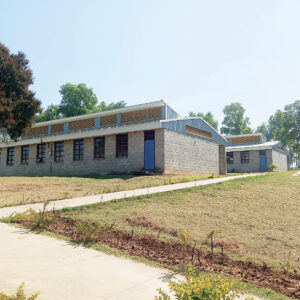
For Kanjedza FP School learners, there is another recent incentive.
According to one of the learners Gift Banda of Jamu Village, Traditional Authority (TA) Kanduku, the problem they were facing when they wanted to go to school, namely lack of a bridge, has been fixed.
“We used to face problems when going to school during the rainy season because there was no bridge between our village and the school. As a result, most learners were shunning school during the rainy season.
“That is no longer the case, though, after Mwanza District Council constructed a bridge, namely Humba, for us,” he said.
The council constructed the bridge at a cost of K68,100,775.10 under the World Bank-funded Governance to Enable Service Delivery (Gesd) initiative.
Standard 5 learner at the school, Fatsani Mikolasi, concurs with Banda, saying the rainfall season no longer serves as an impediment to their education goals as the bridge now connects Kanjedza to their villages.
Mother of four Anne Rosario, from Humba Village, TA Kandudu, said she no longer fears for the safety of her school-going children during the rainy season.
“I have four children, of whom three go to school. Before the bridge was constructed, I could not allow them to go to school on their own as there was no bridge here. After the bridge was constructed, they go to school on their own. I always have peace of mind,” she said.
Mwanza District Council Director of Public Works Eric Nyekanyeka said they decided to construct the bridge to ease mobility challenges.
“We are happy that people, from pedestrians to motorcycle and vehicle users, are using the bridge, which has made life easy for them,” he explained.
Bridge construction works started on August 1, 2024 and ended 90 days later, a moment that has turned out to be lifechanging for residents.
At first, when learners were done with their education at Kanjedza Primary School, ostensibly after sitting Primary School Leaving Certificate of Education examinations, they had to cover a distance of 18 kilometres (km) or more to access services at Chidole Community Day Secondary School (CDSS) or else they could cover the 10km distance to Mwanza Secondary School.
This is no longer the case as there is the imposing Kanjedza CDSS in the vicinity.
Kanjedza CDSS Head teacher Tomeyo Ephraim said, among other things, construction of the school has eradicated the problem of high school dropout rates.
“Students’ enrolment figures have become consistent as students are no longer dropping out of school. Even girls have a source of motivation to come to school; they have spacious and good washing rooms.
“In addition, girl students have role models. Out of the 11 teachers we have, six are female, who serve as a source of motivation to girls who want to pursue their education goals,” Ephraim stressed.
He added that the school, which runs up to form 3, has an enrolment of 165 students.
“We are expecting to have all classes, from form one to four, this coming September, when it will be the first time we will have form four students. We are talking about those who were in form three,” Ephraim said.
In the Sona, Chakwera also indicated that his administration had completed the construction of other secondary schools, “including Phete”.
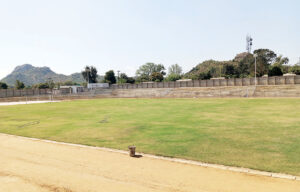
In the Sona, the President also informed Malawians that progress has been made on Mwanza Stadium construction works.
“We are completing works for Mwanza Stadium to open it for the youth of Mwanza,” Chakwera pointed out.
When we visited the facility, we found workers busy at work.
Nyekanyeka said the facility would change the face of Mwanza.
“To begin with, the infrastructure has added beauty to the district. Again, youths have found something to do after securing employment and even venturing into business activities. For your information, the facility has a basketball, netball court, running track and other facilities, all of which make this a multi-purpose facility.
“We believe that, once completed, the facility will help youths refrain from bad behaviour as they will be busy with various activities. We want this facility to benefit future generations; not just members of the present generation. To ensure durability and sustainability of the facility, we plan to establish a committee that will be looking after the facility. With the stadium, Mwanza is enhancing its face,” Nyekanyeka said.
On his part, the contractor, Bonongwe Construction Company, has indicated that it has created employment opportunities while ensuring that the infrastructure is of quality.
“Three-quarters of the people we have employed are from Mwanza District. In addition, the people who are employed here were trained in local colleges, which means we are complementing efforts of colleges and other higher education institutions in the country,” explained Bonongwe Construction Company Manager Maliseni Mtondera Tchire.
He added that they were committed to ensuring that they hand over a facility that is top notch.
“The way construction works have progressed, we laud Mwanza District Council and all partners for ensuring that everything is in order, including the provision of funds for construction. This was supposed to be a two-year project but we have done the work within one-and-a-half year,” Mtondera Tchire said.
Less than 200 metres from the stadium is a refurbished court building, in line with what Chakwera alluded to in his address to the nation.
“We have fully refurbished Mwanza Magistrates’ Court,” he told parliamentarians.
When we visited the court, which has a Principal Resident Magistrate and First Grade Magistrate, we found that the paint was still intact, with courtrooms and other offices well stocked with chairs, benches, printers, computers and other things.
Houses for police personnel are also taking shape there, with Chakwera indicating that “10 police houses” are being constructed.
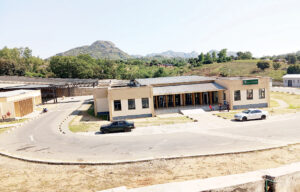
Adding to the list of development projects is a one-stop-border post.
“We have completed and operationalised the One-Stop-Border Post, reducing customs clearing time by 70 percent,” Chakwera said.
When we visited the border post, we found a bus that had just arrived from Zobue in Mozambique.
Senior port health officer Vasco Chamira pointed out that the border post has eased their work.
“At first, we used to operate from a tent, which could sometimes get blown down by winds. Now we are well sheltered, the floor is good and people have realised the benefits of getting screened for diseases at the border. If a bus passenger dies on the way, we are able to handle the body here. In the past, we could cover a long distance to arrive at the bus arrival point,” Chamira indicated.
The National Economic Empowerment Fund (Neef) loans issue was also on the President’s agenda.
“We have disbursed K53.7 million in Neef cash loans for business,” Chakwera said.
According to Patrick Tembo, Mwanza Branch Supervisor for Neef, work is progressing well.
“Our work is progressing well here because service seekers understand that for one to access loans, they have to be Malawian, have a national identity card, get a letter from tradition leaders, market chairpersons, among other requirements. We then offer the interested loan applicant guidance.
“So far, we have reached out to 3,000 direct beneficiaries, meaning those who have ventured into business and rain-fed agriculture as well as irrigation farming. 600 acres have since been covered under the irrigation farming component,” said Tembo, who added that most loan applicants are women and men.
“We have been holding engagement meetings with youths to ensure that they, too, understand the processes and access loans. So far, 100 youths have accessed loans for irrigation farming. What we have discovered is that some people fear irrigation farming loans because they are used to rain-fed agriculture. The other factor is that some people just feel like irrigation farming is not serious business, which is a misconception because, through irrigation, we can help improve the food security situation in the country, create employment and generate funds through sales,” Tembo explained.
One of the people who are reaping the benefits of Neef loans is Thambani-based Peter Katonda, who has become a living testimony that where there is a will, there is a way.
Apart from farm input loans from Neef, other farmers are being targeted through other means
“We have invested K143.8 million in farm equipment supported by the World Bank through Agcom 2,” Chakwera said.
Agcom refers to the Agricultural Commercialisation Project, a government flagship programme for transforming smallholder agriculture from mostly subsistence to commercial.
Project implementers link together producer organisations (POs), service providers and off-takers in a value chain, in a concept known as a Productive Alliance.
On the road to Thambani, farmers under Mpandazi Cooperative, which is affiliated to Nandolo Farmers Association of Malawi, received K41 million through Agcom 2.
The cooperative’s chairperson Michael Moses said members have worked hard to end up as beneficiaries of the project.
The cooperative started as a cluster, helped by the Evangelical Association of Malawi. In 2016, the cluster started operating as a cooperative such that, by 2019, the number of members had risen from 25 to 55.
Then, in 2020, members sought Agcom’s support, culminating in— with support from agriculture experts at Mwanza District Council—the writing of a proposal in 2021.
As part of the process, members were asked to follow legal processes of registering a cooperative.
“As such, we registered ourselves as a cooperative in 2022, when our objectives were to multiply produce and reduce crop wastage arising out of the Fall Armyworm infestation. We also wanted to stop vendors’ exploitation of farmers as we now set prices for our produce and benefit from group bargaining power.
“We now have an off taker for our produce. We are harvesting a lot of pigeon peas. Under the first phase of the project, we received weighing equipment and sprayers. Under phase two, the government gave us money for the setting up of an aggregation centre. We also bought a three-tonne vehicle in 2023. We main cultivate pigeon peas, maize and tomatoes,” Moses explained.
One of the members, Matilda Samuel from Mpandasoni Village, explained that she now contributes to household income generation activities, a development he attributed to sound advice from agriculture experts.
“Before I joined the cooperative, I could not harvest enough pigeon peas, did not know how to take care of tomatoes, vegetables and other crops in the garden. I did not even know how to properly apply pesticides and fertiliser to crops,” Samuel said.
On his part, Mwanza District Council Chief Agriculture Officer Truce Nyirenda pointed out that since they started implementing the Agcom project from the 2021-22 season, seven cooperatives have been helped by Agcom.
“Mpandazi Cooperative received K41,130,000 from Agcom. They used part of the money to buy a vehicle, scales and sprayers. For the seven groups that have been helped, the total amount received has reached K292 million.
“Under Agcom 2, two cooperatives have already been helped. The cooperatives mainly focus on pigeon peas, maize and tangerines. Some of the cooperatives that have been reached include Mpandazi, Mazimboko, Umodzi and Tipindule. The idea is to transform farming and make it a viable business,” Nyirenda said.
The idea, for sure, is to keep the supply lines of food running and the country on the right path to becoming a middle-income country by 2063, as envisioned in the Malawi 2063 vision, which Chakwera alluded to in the Sona.
Mwandira also said the provision of potable water in the district has improved, as the rate is at 74 percent.
“Some of the programmes, such as free water connection, have helped to make a difference on safe water supply,” he said.