Until she was five, little Swema could not make a single weighty step with her wobbly legs.
So, even her mother had kept the child out of the eyes and attention of other people in her village in one of Mzimba South’s most rustic locations.
The mother quietly made frequent trips to the hospital, where doctors noticed the girl was malnourished.
She was born with cerebral palsy, a group of conditions that affect movement and posture.
“She was weaned at two years and could not walk. She could also barely stand. That is when I took her to hospital, where she was placed in a nutrition centre,” Swema’s mother Enala Ndowela says.
- Advertisement -
Experts say cerebral palsy is caused by damage that occurs to the developing brain, most often before birth and that symptoms appear during infancy or preschool years.
In the process of Swema’s trips to Mzimba District Hospital, she was identified as a beneficiary of nutrition and physiotherapy in a project dubbed ‘Inclusive Early Childhood Care and Development (IECCD)’, which St John of God Hospitaller Services is implementing in Mzimba South with funding from Save the Children.
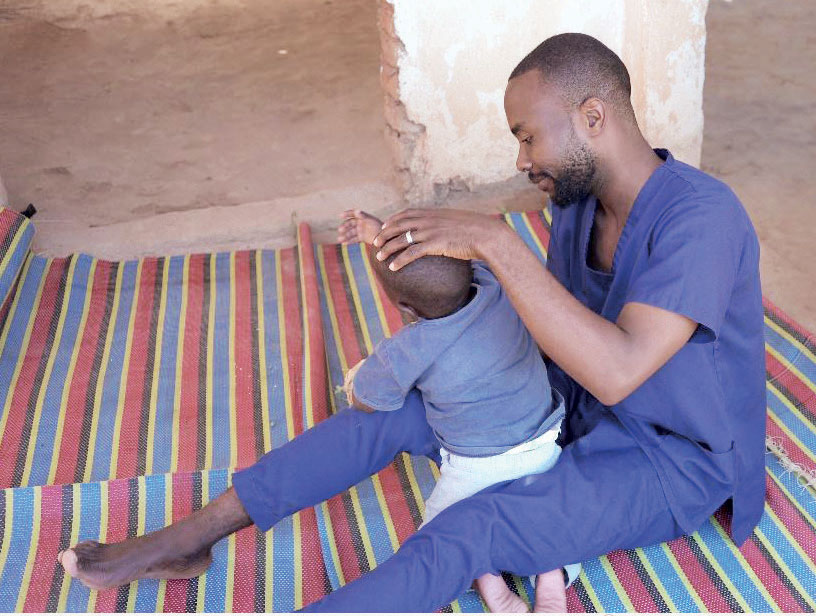
Morris Mwehiwa, a physiotherapist who has been handling Swema’s case, sheds light on the little girl’s condition.
“Because of problems with muscles due to cerebral palsy, the girl had feeding problems. Because she could not eat well, she developed malnutrition,” Mwehiwa says.
- Advertisement -
- Advertisement -
He adds that with the physiotherapy and nutrition support, the girl finally got onto her feet and improved in mental development.
Swema’s mother admits she never thought the girl, her sixth child, would ever walk having had the experience of the other five taking their first steps just before or after their first birthdays.
“In the [IECCD] project, I was also trained in preparing nutritious meals for my daughter and how to do home physiotherapy.
“Now, she even walks to the community-based childcare centre [CBCC] on her own. She is a happy girl,” Nyirongo says.
Among other targets, the project aims to ensure increased equitable access to integrated, quality and inclusive early childhood care and development for children marginalised by extreme poverty, disabilities and the effects of HIV and Aids.
It has reached 73 parents and guardians with counselling services, 69 children with physiotherapy sessions and 25 with assistive devices.
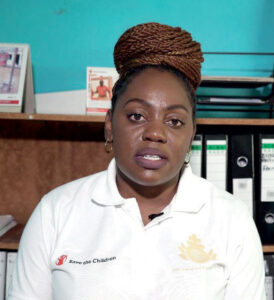
IECCD Coordinator Zindaba Lungu Tsukuluza notes a drastic improvement in the welfare of children in the targeted areas.
“More children are having access to ECD services because, among other interventions, we have also contributed to rehabilitation of some CBCC structures and supported the construction of disability-friendly toilets,” Lungu Tsukuluza says.
She is still worried that the progress is being slowed down by the fact that some children who are attending monthly physiotherapy clinics are being taken care of by elderly people.
Lungu Tsukuluza says this sometimes results in the children missing the sessions.
“In instances where parents migrate to South Africa and children are left in the care of their grandparents, the grandparents do not consistently take them to the locations where we have the physiotherapy clinics. But we are working on addressing this,” she says.
In several parts of Mzimba South, stories about children with disabilities being locked in houses have come out before.
Parents of such children have also been subjected to all manner of accusations by their neighbours.
But while admitting that such beliefs do exist, Village Head Mdhuli, in whose area Swema’s family lives, states there has been gradual progress in eliminating them.
“For instance, the intervention by St John of God and Save the Children has helped in changing people’s perception of disability.
“Parents no longer lock their children in houses, but take them to hospital for assistance,” the local leader says.
In another location, over 20 kilometres from Mzimba Town, off the M1 Road, a family has been grappling with the condition of their son who also had cerebral palsy.
Gilbert Banda was born prematurely.
At three years and four months, he has started making gentle steps and is on course to walking solidly without an assistive device.
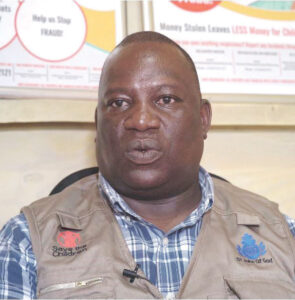
“We will soon be withdrawing the walker because he can now walk. Cerebral palsy affected the development of his muscles,” Project Coordinator for St John of God Hospitaller Services, Byson Chidzalo, says.
Just like Swema and several other children with similar conditions, Gilbert is undergoing rehabilitation.
His physiotherapist is Mwehiwa as well.
The time the toddler enrolled in the IECCD project, he had no head control or sitting balance.
“We had to provide the initial assistance to ensure he could control his head and sit on his own. Then the partners [Malawi against Physical Disabilities (MAP)] provided the devices to support his standing and, eventually, walking,” Mwehiwa says.
At Box Hunga CBCC in Traditional Authority Mzikubola, where the boy goes go, caregivers pay particular attention to his movements.
“I ensure he pays attention in class and that he feels part of the team. I also help him when he wants to go to the toilet. We were trained by Save the Children and St John of God in handling such children.
“In fact, the support he has been getting, through physiotherapy, is slowly eliminating the disability from him,” a caregiver at the CBCC, Flyness Nyirenda, says.
Other partners in the IECCD project include the social welfare office at Mzimba District Council, the Malawi Council for the Handicapped (Macoha) and MAP.
Macoha District Rehabilitation Manager for Mzimba, Mary Zephania, hopes for the interventions to spread to all parts of the massive district.
“We are happy that children with disabilities are being supported. Truth is such interventions are expensive and cannot be done by government alone,” Zephania says.
Across the country, over 2.5 million children are supposed to be accessing ECD services. Slightly over one million do.
Thousands others with special needs are left out.
Zephania says if supported like Swema and Gilbert, those left behind could start realising their potential as they are being rehabilitated in their early years.