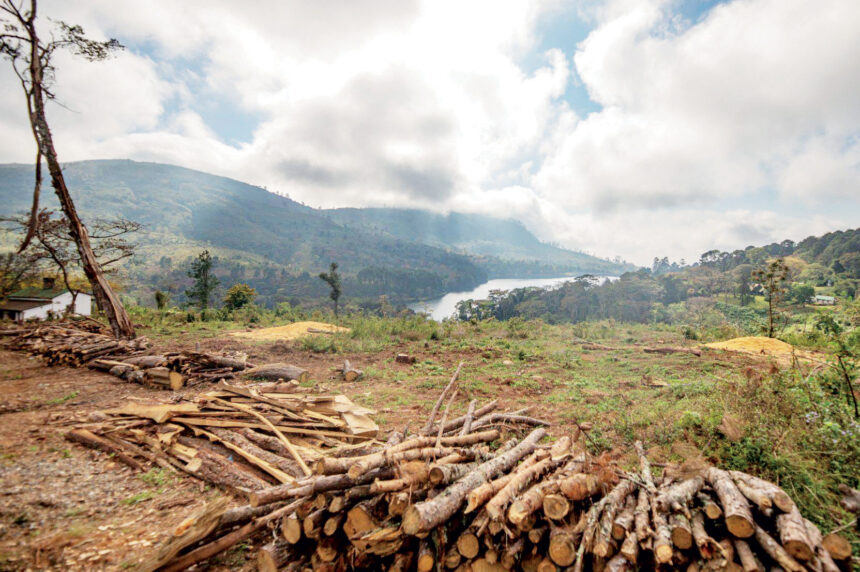
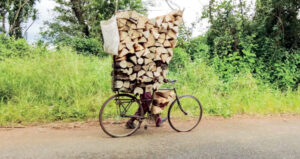
Illegal logging continues in Zomba Forest, with loggers relentlessly cutting down indigenous trees on the outer slopes of Zomba Mountain.
Looking at the previous state of the outer slopes, which once had a rich forest, one may feel disappointed by the current bare appearance.
Malawi’s forests are on the verge of collapsing despite ongoing preservation efforts across the country.
The situation in Zomba is particularly concerning because the city and its surrounding areas depend on Mulunguzi River to supply water to residents, including those who are damaging the forest downstream.
Minister of Natural Resources Owen Chomanika is aware of the situation on Zomba Mountain.
- Advertisement -
Weeks ago, Chomanika told Times Television’s Brian Banda on the ‘Times Exclusive’ programme that he has made various efforts to preserve protected areas and is aware of the “sad developments” in Zomba Forest and other areas.
A recent visit by The Daily Times to the outer slopes of Zomba revealed ongoing skirmishes between police and illegal loggers.
We found very big logs from indigenous trees that had been dropped by the illegal loggers.
In an interview, Zomba Police Station Public Relations Officer, Patricia Sipiliano, confirmed that the police intervened to bring order to the protected areas.
- Advertisement -
- Advertisement -
“We have been conducting patrols and that has been a routine process because it is one of the mandates of the police. We wanted to bring sanity to the forest. This will also be done in other areas where loggers are terrorising Zomba forest,” Sipiliano said.
Meanwhile, Zomba City Public Relations Officer, Aubrey Moses, confirmed the activities on the outer slopes of Zomba Mountain.
“We have learned with great concern about the rampant pruning and felling of trees on the outer slopes of Zomba Mountain. These activities pose a serious threat to the environment and the wellbeing of our communities,” Moses said.
He added that this is dangerous to communities downstream of Mulunguzi River, as it “increases the risk of flooding and landslides to both the lives and property of people. As you may be aware, in recent times, we have been experiencing flooding along Likangala River.”
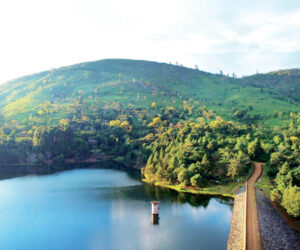
Moses further said the harmful practices may affect Mulunguzi River and those living near it, as cutting down trees contributes to soil erosion and affects water quality.
“Illegal tree felling is harmful to both humans and wildlife. Trees are a vital source of life as they protect water sources, provide habitat for wildlife and help maintain ecological balance,” he said.
Moses further explained that these acts are likely to accelerate climate change and disrupt the sustainability of natural resources.
“We would like to let the general public know that Zomba City Council does not issue any permit for pruning and felling of trees. The illegal logging pruning and felling of trees is a serious environmental offense that demands urgent coordinated action,” he said.
He added that the council is working closely with Zomba District Council, the Forestry Department, Malawi Defence Force, the police and other stakeholders to curb such practices.
“We continue to remind residents to refrain from these destructive activities and instead support reforestation and conservation efforts for the benefit of present and future generations,” he said.
Moses was unable to state how many hectares of land have been damaged as an assessment is apparently still being conducted.
Zomba District Council Spokesperson, Solister Mogha, said the council is also concerned because the degradation of stream and river banks negatively impacts the environment.
“The Zomba Mountain taskforce members as well as members of the Technical Committee on Environment under the city council have been to the place. They opted for joint patrols due to the damage caused by the illegal activities,” Mogha said.
Mogha also said it was dangerous as the degradation of trees and vegetation increases surface runoff which usually causes flash floods.
“This degradation also leads to siltation of rivers. This is uncalled for and we urge the community involved in these illegal activities to stop.
“Trees and forests play a huge role in our lives. We have seen how devastating the cyclones are, causing the loss of both lives and property,” he said.
He pleaded that the council’s message to communities in Zomba is that they should take care of trees and forests.
Mogha said information about how many hectares of forest were destroyed could be found from the Director of Parks and Environment at the city council, since the issue falls under their purview.
Meanwhile, tour guide Jonas Beyard expressed dismay over the actions of the illegal loggers and called upon the government to take action.
He said that a recent tour with clients was unsuccessful because he could not find the animals and birds he had promised to show them in the forest.
“This is sad. It is a development which started with wanton cutting down of trees in Nankhunda Forest. Such acts went on to get on top of the mountain in Zomba Plantations. And now we are on the outer slopes of Zomba Mountain. It will end in a dry tap if we are not careful,” he said.
The damaged area was once home to birds like White-winged apalis and was associated with indigenous trees like Albizia harveyi, m’bawa and mkweranyani.
A similar report by our sister paper, The Sunday Times, revealed that since August last year, a gang of 50 to 100 people has been visiting the top of Zomba Mountain not for leisure, but for business.
They move while armed with panga knives, machetes and other gadgets to cut down trees in the protected Zomba Forest area.
This has become their daily job and a way to earn a living. They used to travel early in the morning, visiting a protected area where they have been damaging trees.
If someone has once visited Queens View on top of Zomba Mountain, they might be worried and express discontentment over what they can see now.
This is the result of the exploitation of trees in the Zomba Mountain plantation.
Later, around 2 or 3pm, the gang would move down the mountain using a route which they have now changed.
If it is time to rest, they rest at one point. This reporter found them near a graveyard at Chikanda close to the University of Malawi resting after a long journey from up Zomba Mountain.