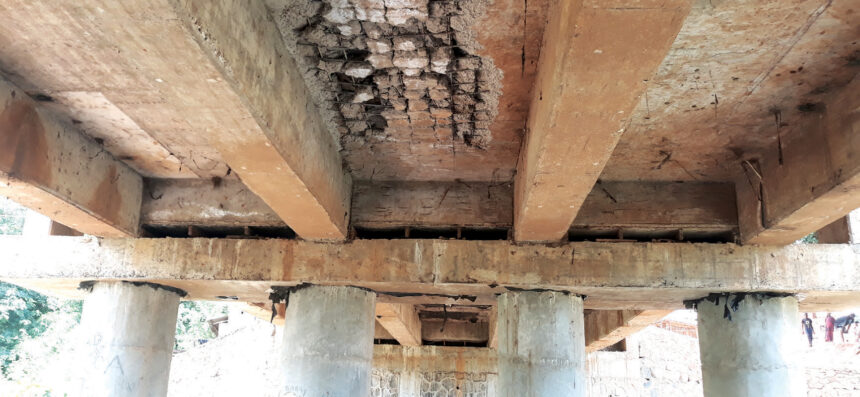

A preliminary report on the use of government-funded development projects under Constituency Development Fund (CDF) has uncovered mismanagement, unpaid labour and poor-quality constructions.
Details show a pattern of stalled or abandoned works, substandard infrastructure and worker exploitation stretching across at least 18 districts.
From bridges to classroom blocks, to grievances filed by community members, labourers and oversight bodies, it all paints a grim picture of how public funds are being misused or wasted.
Centre for Social Accountability and Transparency (Csat) conducted the inquiry between May and June this year.
Among other methods, the research included complaints from communities through a toll free line.
- Advertisement -
According to the report, the most outstanding issue is non-payment of labourers.
Over 20 cases have surfaced where workers were left uncompensated even after completing work.
In some cases, they were abandoned mid-project by contractors.
These cases have emerged across various projects in places such as Nkhata Bay, Mzimba, Dowa, Zomba and Nsanje.
- Advertisement -
- Advertisement -
On the other hand, at least over 17 projects have been found abandoned and without incomplete works, often without explanation.
Some projects have had contractors changing, in some cases as much as five times in the past four years. Yet works remain unfinished while the sites have been deserted.
The probe has also found poor construction quality which has triggered at least 10 official grievances.
In some cases, public funds were misused or siphoned.
For example, in Kasungu- Santhe area, a classroom block reported to be built using CDF money does not exist.
A few grievances highlight how basic worker safety and sanitation needs are being neglected.
While community projects have several funding windows, over 60 percent of complaints related to CDF-funded efforts— particularly roads, bridges and school infrastructure.
Despite the growing list of complaints, the majority remain unresolved.
The complaints are spread across multiple districts, with Nkhata Bay, Dowa, Mulanje, and Machinga repeatedly appearing in grievance records— suggesting deep-rooted issues in local governance and contractor oversight.

“From what we have found, with public funds at stake and livelihoods online, it is clear that Malawi’s development project system is in urgent need of overhaul,” said Csat Executive Director, Willy Kambwandira.
He added: “The calls are growing louder for government, MPs, and councils to act with transparency, efficiency, and respect for workers and the community.”
Chief Executive Officer at Malawi Local Government Association Hadrod Mkandawire said the report paints a worrying picture.
“Communities remain in the dark, often left without updates or recourse as projects stall or contractors vanish,” he said.
The report comes amid a Constitutional Court ruling in May which said that Member of Parliament cannot manage or vote on CDF or Water Resource Fund (WRF) at council level.
The court found this to violate the constitutional separation of powers and created conflicts of interest.
It declared the 2022 CDF and WRF guidelines unconstitutional and ordered that MPs’ roles in the two funding windows be removed and the oversight responsibilities transferred to other non-legislator stakeholders.
National Advocacy Platform, a coalition of civil society organisations on governance, backed the court decision.
It said the determination upholds constitutional checks and balances, requiring new guidelines to ensure accountable and independent CDF governance.
The Attorney General has since appealed the court decision.