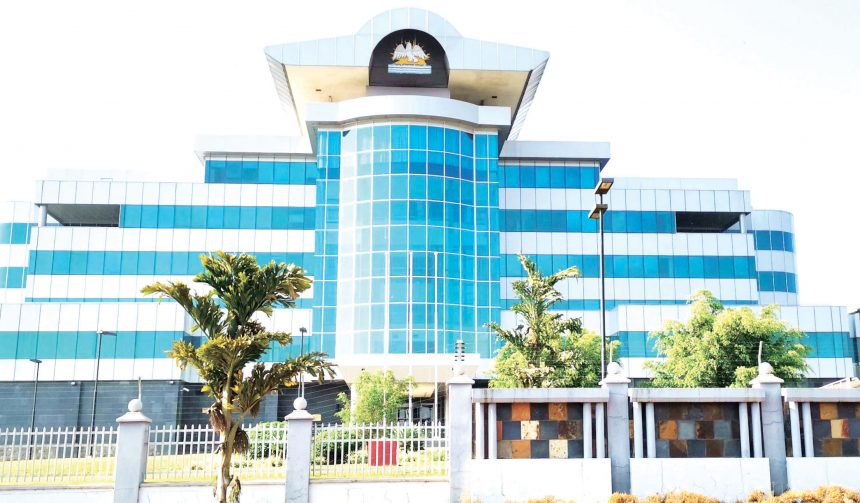
The Reserve Bank of Malawi (RBM) has said the new exchange control circular on Withdrawal of Foreign Currency by Diplomatic Offices and Diplomatic Staff is designed to ease access to cash dollars by the officials and not to stifle them.
In an Exchange Control Circular No.05/2024, the central bank introduced conditions for dealings of authorized dealer banks (ADBs) in the Operational Manual for Cross Border Foreign Exchange Transactions issued to ADBs on Withdrawal of Foreign Currency by Diplomatic Offices and Diplomatic Staff.
Among the conditions, RBM said diplomatic offices shall, on application to an ADB holding their Foreign Currency Denominated Account, be allowed withdrawal of foreign currency to a maximum of $15,000 or equivalent in any foreign currency per calendar month for operations.
The bank added that ambassadors and consuls holding FCDAs shall, on application to the holding ADB, be allowed withdrawal of foreign currency to a maximum of $3,000 or equivalent in any foreign currency per calendar month.
Social media critics had claimed that the circular was a result of worsening forex position in the country and that it was designed to limit the diplomatic offices and officers from accessing dollars.
- Advertisement -
But in an interview on Wednesday, RBM Deputy Governor for Economics and Regulation Macdonald Mafuta Mwale said the regulation is allowing the diplomatic offices and staff to access their money in foreign cash from banks, which was prohibited before—as they were allowed to access their money in Malawi Kwacha only.
He observed that the circular was a result of a meeting with diplomatic community representatives, led by Dean of the Diplomatic Corps.
According to Mafuta Mwale, the meeting was asked by the diplomatic community to present to the bank their concerns with regard to accessing their forex in Malawi for their operations.
“Specifically, the diplomatic community observed that despite their staff salaries being paid in foreign currency from offshore sources through their foreign currency denominated accounts, it was difficult, at times, to access the foreign currency from banks for purposes of travel and making international payments.
- Advertisement -
- Advertisement -
“The difficulty arose from the fact that diplomatic offices and staff receive their funding and salaries through telegraphic transfer, which is different from cash.
“As such, their access to foreign exchange in cash depended on availability of the same at the concerned authorised dealer bank,” he said.
Mafuta Mwale observed that, as a way forward, the diplomats requested RBM for permission to be holding a certain amount of their foreign currency in cash for emergency travel abroad and paying incidental expenses to foreign visitors to the embassies, where applicable.
“The bank considered and supported the request by permitting embassies to withdraw and hold a maximum of $15,000 cash over a specified time and $3,000 cash for embassy staff.
“However, the stated indicative limits do not restrict embassies and the diplomatic staff from making international payments through ADBs as their funds are freely repatriable,” he said.
He has since appealed to members of the public to always verify information pertaining to the bank’s operations for authenticity and correctness to avoid misleading users of information.