
Grace, not her real name, from Traditional Authority (TA) Sitola in Machinga District was born with HIV 16 years ago.
At one point, she turned into a burden for her parents as she could neither walk nor bath on her own due to her condition. Most of the times, Grace could be left alone at home while her siblings were attending to other issues.
“When I was young, I did not know that I had HIV in my body because life was normal due to the medication I was taking. But when I turned 13, my father stopped me from taking the [antiretroviral, ARV] drugs because he was tired of supporting me,” she narrated.
By this time, Grace was in standard six and eventually dropped out of school on health grounds. She lost hope and stayed home, apparently waiting for her fate.
However, after some time, Grace’s condition was noticed by one of the girls who is part of Kalonjere Safe Space Group in TA Sitola’s area.
- Advertisement -
The girl, Jesca Amali, who was accompanied by other group members, reasoned with Grace’s mother to give her a chance to live by allowing her to take the life-prolonging drugs.
“By the time we visited her mother, Grace was too ill and could not be taken to the hospital. We talked to the mother, who agreed with us on the need to take her to the hospital, where she started re-taking ARVs,” Amali said.
As soon as she started taking the ARVs again, Grace developed complications, which medical experts attributed to her decision to stop taking medication.
Nevertheless, Grace continued to take the drugs. Within four months of taking the ARVs, Grace returned to school and, today, she is in standard seven.
- Advertisement -
- Advertisement -
“I want to proceed with my education and, later on, work as a soldier. I like the uniform which solders wear and I want to be one of them,” she said.
By the time we visited her, Grace had started making some slow movements of the leg but her left hand was still paralysed.
Her friends pick her up for their routine meetings as well as when going to school.
Today, Grace considers herself as one of the victims of gender-based violence (GBV).
In fact, Machinga is one of the districts where cases of GBV targeting women and young girls are high due to both cultural and economic factors.
Information obtained at Machinga District Social Welfare Office indicates that 1,308 women and young girls faced GBV between March 2023 and June 2023. The abuses ranged from physical, emotional, sexual and economic.
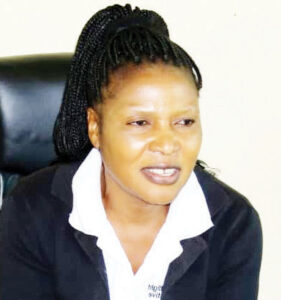
“Children and women are the most affected groups although we have started receiving some cases of men who claim to be abused economically and emotionally,” said Olive Mshamboza, who is the District Gender Development Officer for Machinga.
Mshamboza said, in Machinga, most men practice polygamy, which increases their responsibilities although most of them do not have stable sources of income.
“So, when the going gets tough, most of them abandon their families and move to another area where they also marry. In this case, a lot of children are being raised by their mothers, such that it becomes difficult to get their daily needs.
“But we are happy that we have partners like Amref, who are implementing programmes aimed at ending GBV,” she said.
On Grace’s issue, Mshamboza said her office will follow up on the matter to make sure that she gets the required rehabilitation for her condition to improve.
In Machinga, Amref Health Africa is implementing the Spotlight Initiative using funds from United Nations Population Fund. The project’s goal is to eliminate GBV and harmful cultural practices against adolescent girls and young women.
With the collaboration of Machinga District Council, Amref intends also to address structural roots and linkages to sexual and reproductive health rights violations that are rife in the district as well as promoting resilience by strengthening community and district level systems that prevent and mitigate sexual GBV.
“The spotlight Initiative project has six pillars and Amref is implementing the initiative under pillar three and four, which is prevention of GBV and social norms. Under pillar three, we have the Safe Space mentorship programme which involves meaningful youths participation, comprehensive sexuality education and peer education,” said Martha Moyo, Project Assistant for the Spotlight Initiative.
Moyo said, through the project, they are also engaging men on mentorship through the use of a barbershop toolkit, which focuses on making men understand their role in fighting GBV.
“We have trained about 372 girls, called mentees, from our Safe Spaces. Most of these girls have gone back to school. About 477 sex-related GBV cases have been reported through Safe Spaces and have also been reported and handled by authorities,” Moyo pointed out.
Gender and Community Development and Social Welfare Minister Jean Sendeza said her minister is doing its best to reduce cases of GBV.
“We are empowering women and men so that they can be economically empowered. Empowered people cannot fall victim to ills such as GBV,” Sendeza explained.
The idea is to create a fair world for all, something that is proving to be a tall order in districts such as Machinga.