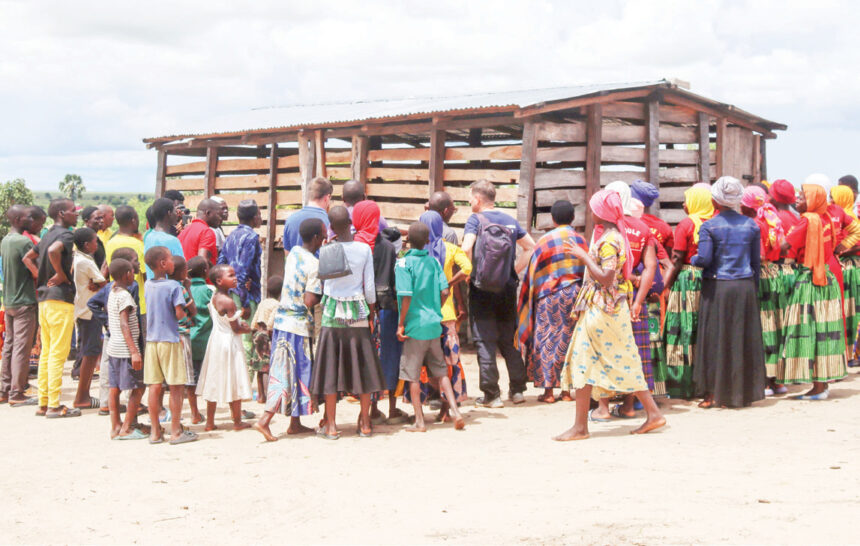
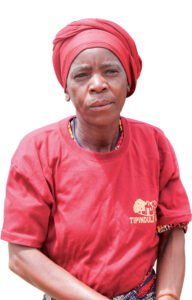
had many trees
Between Lake Chilwa and Lake Chiuta in Machinga East, near the border with Mozambique, green grass stretches across the landscape, dotted with stunted trees.
It is not barren, yet decades of deforestation have left their mark.
Elina Khotiwa, 45, remembers when the area was heavily wooded.
“Years ago, this place had many trees. You could walk long distances under shade. But people started cutting trees for charcoal and firewood,” she says.
As the trees disappeared, winds grew stronger, homes suffered flash floods and soil erosion worsened.
- Advertisement -
“Even the heat increased. We began to see how much we depended on those trees,” Khotiwa explains.
The mother of six, with three children at school, is among thousands taking part in a four-year initiative called Community Led Planning and Management for Biodiversity Protection and Resilient Communities in the Catchment Area of Lake Chilwa.
The project is implemented by Churches Action in Relief and Development (Card), funded by Jersey Overseas Aid and the Scottish Catholic International Aid Fund (Sciaf), in partnership with Trócaire Malawi, the Civil Society Network on Climate Change (Cisonecc) and Cifor-Icraf.
It covers 12 traditional authorities across Zomba, Machinga and Phalombe, targeting 9,000 households, approximately 45,000 people, 60 percent of them women.
- Advertisement -
- Advertisement -
“It focuses on restoring the ecosystem around the Lake Chilwa Basin while ensuring that communities also improve their livelihoods,” Card Programmes Manager Authur Lichenya says.
Community members are trained to manage and restore the ecosystem through tree planting, catchment conservation and soil and water management in their fields.
“The activities aim to ensure the catchment is properly managed, the ecosystem preserved and communities continue benefitting from Lake Chilwa,” Lichenya adds.
In Khotiwa’s village, the impact is clear. She belongs to an all-women village savings and loans (VSL) group, planting trees in degraded patches of grassland.
“In the future, we can collect firewood from fallen branches instead of cutting down large trees. The trees will protect our homes from strong winds and help control flooding,” she says.
Lichenya stresses that conservation cannot succeed without addressing poverty.
“Poverty levels are high in communities across this catchment. While restoring the ecosystem, we must also ensure that communities benefit economically,” he says.
To support this, VSL groups received seed funding of K5 million each to help boost savings and lending capacity and give members alternatives to harmful practices.
In Khotiwa’s area, two groups received K10 million in total alongside business management training.
Fanny Beula, chairperson for one of the VSL groups, says the training has transformed members’ approach to business.
“We learnt how to calculate costs, set prices, save and reinvest our profits. Now our group has grown and members can borrow money for businesses instead of turning to cutting trees or charcoal production,” Beula says.
Khotiwa has used the support to expand her fish business.
“I now buy larger quantities and sell at better markets. I can pay school fees and provide for my children without struggling as I used to,” she says.
Across the basin, communities are diversifying into goat rearing, honey harvesting and other enterprises linked to conservation.
“When people practise beekeeping in the forest, they begin to see its value. They are more motivated to conserve it because they directly benefit,” Lichenya says.
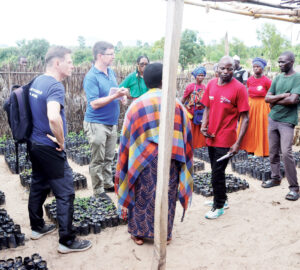
Three years into the project and entering its final year, progress is clear. The survival rate of planted trees is over 75 percent and enterprises are flourishing.
Cisonecc Project Officer Lisa Banda says her organisation ensures the impact of interventions reaches beyond local communities.
“When partners empower communities and support environmental conservation, we bring the results to district and national level. We foster peer learning and coordination,” she says.
Banda adds that awareness of environmental laws, such as the Forestry Act and Fisheries Act, is critical.
“Trees can be planted but without advocacy, others may still cut them down. That is why we empower participants to mobilise others to take part in conservation efforts,” she says.
Cisonecc also links communities with government departments to ensure environmental offences are properly handled.
During a recent visit from Glasgow, Scotland, Sciaf Project Officer Jonathan Dames said he was impressed by what he saw.
“When you see communities managing tree nurseries, running savings groups, engaging in beekeeping and strengthening committees, you realise this is real transformation,” Dames says.
He adds that local ownership ensures sustainability as communities identify priorities, plan interventions and manage resources themselves.
Dames further notes that when people see that protecting the forest improves honey production or that managing the catchment safeguards their farming and fishing, conservation becomes common sense.
He also places the initiative in a global climate justice context.
“Communities in countries such as Malawi are feeling the impacts of climate change, yet countries in the Global North are the highest emitters and have historically contributed most to greenhouse gases.
“There is a moral obligation for those countries to support communities like these, [community members] who have contributed very little but are experiencing the consequences,” Dames says.
Meanwhile, in Machinga East, Khotiwa and other members of the two VSL groups are tending tree seedlings whose transplanting was delayed by a prolonged dry spell.
With rain returning, the women are ready to dress the bare patches in green once again.
“Now we understand that when we protect the forest and the lake, we are protecting our own businesses and our children’s future,” Khotiwa says, standing behind a bench of the fish she is selling.