By Davie MCHINGA:
Beyond the cheering and standing ovations in Parliament on Friday last week, particularly from the government benches and a cacophony of positive post-State of National Address (Sona) reviews by analysts, the success of President Peter Mutharika’s ambitious promises on food security, education, health, among others; seems wanting on actionable funding and structural reforms needed to reach Malawi’s poorest of the poor.
President Mutharika touched on almost everything, from the biting inflation that has sent prices of essentials off the reach of many Malawians to Malawi’s sustained fuel and foreign currency shortages, things that have affected the supply chain.
Now that the cheering and ovations have quietened, this is the time to give a sobering reality check to Mutharika’s highly acclaimed national address.
At the outset, the address could be one of the shortest of all the Sonas in the history of the country, as analysts and ordinary Malawians who have a knack for current affairs posit. It wasn’t clothed in embellishments, just straight to the point and delivered with cadence.
- Advertisement -
That said, President Mutharika has a headache on how to fulfil some of the campaign promises whose success exclusively relies on taxing Malawians punitively. So far, the Mutharika administration has introduced a raft of taxes including on housing and a one-point percentage adjustment in the Value Added Tax (VAT) from 16.5 to 17.5.
Economy and food security
The economic crisis that has plagued Malawi has populated newsfeeds and newspapers both locally and internationally. According to President Mutharika, he wants to see a reduction of inflation of less than 21 percent from the current 28.7 percent.
At face value, the goal looks ambitious because inflation in Malawi is primarily driven by a combination of several factors and one of them being high food prices due to, among other reasons, climate related shocks.
- Advertisement -
- Advertisement -
Meanwhile, Southern Malawi has already experienced dry spells, meaning a significant number of families will face food shortages. Also, the Farm Input Subsidy Program now faces challenges in terms of the number of beneficiaries which each year have dwindled due to the government’s limited capacity.
Now, these challenges along with myriad others, pose a threat to achieving the intended rate of inflation unless the Mutharika administration takes further steps to ensure food availability, which is the main driver of inflation in Malawi.
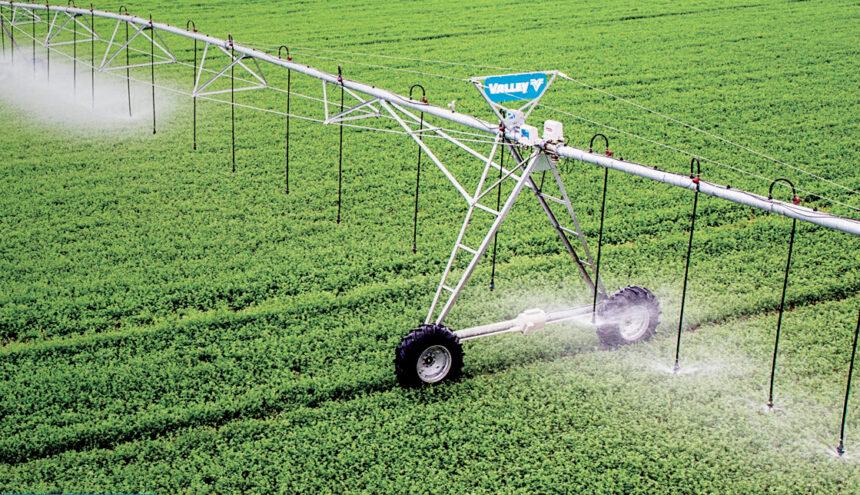
First, the government needs to pump in more investments in the irrigation sector by, among others, partnering with the private sector. Meanwhile, the future of the Greenbelt Authority (GBA) is in limbo following the reported looting of a whooping K39 billion.
Ostensibly, the entity needs sweeping before empowering it with another charge to lead in ensuring that the country ventures into serious irrigation for both food and cash crop production. It is for this reason that the government should consider engaging companies such as Illovo Sugar Company.
On its part as the government, it must continue with the concept of mega-farms in areas where there is potential. Given a chance to be managed sustainably, the initiative can help the country achieve food self-sufficiency in a short time.
More sustainably, the government must fast-track the multi-billion Shire Valley Transformation and Irrigation Program construction funded by the African Development Bank (AfDB). The economic benefits of this program are far-reaching in that it will not only ensure food security but also keep in check inflationary pressures.
So, for President Mutharika to realistically achieve 20 percent above inflation target, his government must take some of these steps. Relying on gold purchases and its monetisation to back the wobbly kwacha, among others, isn’t enough to keep the inflation in check.

Industrialisation
Malawi needs an industrial revolution as soon as yesterday, because today may be too late. But for that to happen, there must be a reliable energy supply which Malawi measly lacks. In the address, Mutharika spelt his agenda to attract what he termed “high-level investment.”
Among others, he cited Magwero at Kanengo, Chigumula and Matindi in Blantyre and Dunduzu in Mzuzu as Special Economic Zones for these grandiose investment centres. But there is one big problem: painful power outages.
Despite committing to solve Malawi’s energy woes by doubling the country’s generation capacity from the current 551 megawatts to 1000 megawatts by 2030, this ambitious target has always been a pipe dream for decades.
No concrete steps have been taken to make it a reality other than being a mere podium talking point.
Apart from the 31 megawatts restored at Tedzani Hydro, 10 megawatts at Raiply in Mzimba, and 10 megawatts Nanjoka- Egenco Solar plant in Salima, Malawi needs more short-term energy sources to meet the current demand.
Truth be told, no serious investor would come to Malawi to open a processing plant with the current grueling power outages. So, the Mutharika administration must see to it that it deals with the energy woes Malawi now faces before attracting investors.
Rule of law and spending
Yes, money, check. Human resource, check. But there is one key thing that must never be overlooked and that is governance. How the Mutharika administration wields and controls power is what will make it deliver on its promises in the Sona.
Frankly speaking, Mutharika has started on a promising note if current ratings are anything to go by. So far, he has a “lean” Cabinet, but there are some areas he needs to improve for Malawians to trust him more.
It is worth noting that the Mutharika administration is implementing the much-touted austerity measures aimed at saving taxpayers’ money. It sounds good, doesn’t it? But reality speaks another story, one that is extravagant.
For example, last not long ago there was a public relations scandal involving First Vice President Jane Ansah about her trip to the United Kingdom. Another issue involved Cabinet ministers’ connection to a botched security tender at the Malawi Revenue Authority.
Last week, Mutharika through Chief Secretary Justin Saidi warned Cabinet ministers against travels both locally and abroad saying it is draining public coffers. That was the right step in curbing wastage of public resources, but what now remains is enforcement.
In the address, Mutharika reaffirmed his stance on corruption, warning he will not spare those involved in graft. Easier speaking than done, isn’t it? Mutharika must be reminded that some of his cabinet ministers are on court bail over corruption related cases.
So, for President Mutharika to demonstrate his zero-tolerance to corruption, he must allow those Cabinet ministers suspected to have committed crimes to face the law while they hold their positions. This will be a litmus test for Mutharika.
It must be noted, however, that once Mutharika demonstrated that it is possible to arrest a serving Cabinet minister if they are suspected of wrongdoing. In 2017, former Agriculture Minister George Chaponda was arrested on allegations that he was involved in the infamous Zambia maize scandal.
The arrest earned President Mutharika admiration, because it set a precedent that even serving senior government officials are not immune from facing the law. Chaponda was later acquitted of any wrongdoing.
As appealing as it sounds, President Mutharika promises in his maiden Sona in this new administration could only be a game-changer if he, among others; sees to it that every Cabinet minister and senior official supports him.