By Daniel Zimba:
As the scorching sun rises over Blantyre, painting the city in a golden light, the morning rush gradually subsides.
By 9am on this Friday, the frantic movement of minibuses, taxis and kabaza motorbikes has eased, their passengers settled in offices and shops.
Meanwhile, at Yiannakis Bus Stop in Limbe, the air shimmers as temperatures climb.
Among the commuters is Witness Josiah, 39, a divorced father of two from Umphawi in Manje Township.
- Advertisement -
“I woke up around 4.30am, as usual,” Josiah says, describing how he prepares nsima, tidies his home and bathes before leaving.
His children, currently with their mother in Machinjiri, remain his motivation. By 5.30am, he is at his employer’s house nearby to register and collect his vehicle.
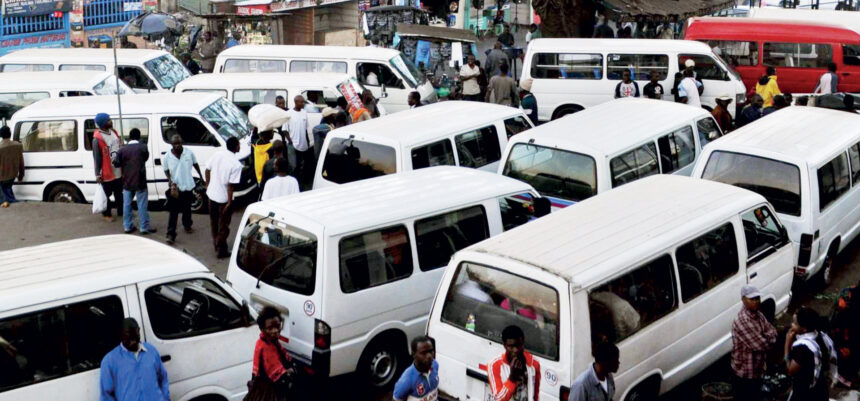
His work begins around 6am at Limbe Minibus Terminal. His white Toyota Hiace, worn and scratched, is designed to carry 13 passengers and a driver.
“Most of the time, we carry four passengers per row, making 18 passengers, excluding the driver and conductor. Each pays K1,500 from Limbe via the highway,” Josiah says.
- Advertisement -
- Advertisement -
Josiah admits that in his seven years in the business, he has learnt the unspoken rules of the road, often involving bribes to avoid harsher penalties.
“I exceeded the minibus capacity and the tyres were worn. A traffic police officer stopped me near Maselema along Chipembere Highway. I drove past him, stopped, then went back to negotiate,” he says.
The officer demanded K10,000, threatening to impound the minibus, but the two settled at K5000.
Alfred Dzonzi, 29, from Chileka Township, shares a similar experience. Unlike Josiah, he owns a four-seater Toyota Passo, which he uses as a taxi although it is registered for private use.
“Most of the time I take people heading in the same direction as me and on a good day I pick up to five passengers,” he says.
Dzonzi admits to occasional offences such as driving with a broken mirror or worn tyres. His solution is paying for a general receipt (GR) in advance.
“I pay for a GR so that I do not keep paying traffic officers along the way. I do that when I know the vehicle is not roadworthy,” he explains.
Samson Wyson, who operates between Ntcheu and Lilongwe along the M1 Road, tells a similar story.
“I am often charged with exceeding capacity. I pay for a GR costing K15,000, but we negotiate to K10,000 and receive a receipt. It allows me to operate for the rest of the day despite overloading,” Wyson says.
The struggle for survival is also evident among kabaza operators, motorcycle taxi riders who form part of Malawi’s transport system.
Rashid Dickson, 28, from Mbayani Township, has worked in the trade for over five years.
He admits limited knowledge of registration, taxation and safety requirements, saying he has avoided penalties for operating an unregistered and unfit motorcycle by bribing officers.
“Between 6am and 9am, I have already paid K10,000 to traffic officers. After paying, the officer warned me to proceed carefully to avoid others,”

President of the Passengers Welfare Association of Malawi, Don Napuwa, says corruption persists because of both officers and road users. He cites a lack of political will as a key factor.
“We see traffic officers stop minibuses without inspecting them. The driver parks away from the road, speaks to the officer, they shake hands and the vehicle leaves,” he says.
Executive Director of the Road Safety Alert Foundation, Joel Jere, condemns the practice.
“Any form of corruption on the road is unacceptable and anyone involved should face the law, whether officers or road users,” he says.
The Malawi Police Service referred the matter to an officer who did not answer our calls.
Efforts to seek comment from the Directorate of Road Traffic and Safety Services were also unsuccessful.
Malawi’s long-term development plan, Malawi 2063, is supported by a national road safety strategy aligned with the Global Plan for the Decade of Action for Road Safety 2021 to 2030.
The country aims to reduce road deaths by 50 percent by 2030.
The World Health Organisation reports that Africa and South East Asia record the highest rates of road traffic fatalities, driven by poor infrastructure, weak enforcement of safety laws and large numbers of vulnerable road users such as pedestrians and motorcyclists.