By Charles Mkoka:
At dawn in Kasungu National Park, the landscape is quiet. Then, almost imperceptibly, movement begins. An elephant emerges from the Miombo woodland, following a path etched by generations— one that long predates the border between Malawi and Zambia.
For centuries, African elephants have moved freely across this landscape. Today, those ancient routes are under pressure. Expanding human settlement due to growing human population, fragmented habitats and the persistent threat of poaching have narrowed the space available for wildlife species to survive.
Efforts are now underway to reverse that trend. Ifaw is leading a renewed push to reconnect the Kasungu- Lukusuzi ecosystems—one of Southern Africa’s most important Transfrontier Conservation Area (TFCA), yet under-recognised, conservation landscapes.
Southern African Development Community, a 16-member states regional economic bloc, describes TFCA as a large ecological region that straddles the boundaries of two or more countries and includes protected areas as well as multiple resource-use zones.
- Advertisement -
Rebuilding a wildlife corridor
Through Ifaw’s Room to Roam initiative, the focus is on restoring ecological connectivity between Kasungu National Park in Malawi and Lukusuzi National Park in Zambia and ultimately to the Luangwa valley ecosystem.
On the Malawi side, the western boundary of the Kasungu National Park is the international boundary which interfaces with communal lands in Zambia.
Historically, in the 1940s when the present-day Kasungu and Lukusuzi national parks were declared as game reserves by the British Colonia Government, parcels of land where wildlife frequently crossed from Lukusuzi to Kasungu and vice versa were marked and preserved as intact wildlife corridors that connected the Lukusuzi and Kasungu game reserves.
- Advertisement -
- Advertisement -
The observance of the wildlife corridors was strictly enforced, and settlements were not allowed in the designated corridors. However, in the post-independence era, for over six decades, the development of resettlement schemes and expansion of human settlements did not take care of the wildlife corridors, which resulted in fragmentation of wildlife habitats.
interconnected land parcels
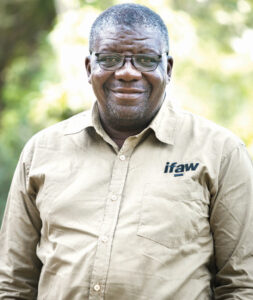
“One of the TFCAs objective is to secure interconnected land parcels that would allow the movements of elephants and other wildlife species to move safely between the two national parks and beyond through the communal lands on the Zambian side,” says Moses Nyirenda, Ifaw Country Director for Zambia, in an interview.
Now, conservationists are working to restore these pathways—reconnecting ecosystems that function best as a single, continuous landscape.
Living with elephants
For the over 105,000 people, as per 2017 statistics, living along the edge of Kasungu National Park and close to half a million people living on the Zambian side, this initiative brings with it both positive and negative interactions. The negative interactions result in human wildlife conflict. Crop fields can be flattened overnight. Grain stores raided. In some cases, lives are put at risk.
Addressing this conflict has become central to the success of the project.
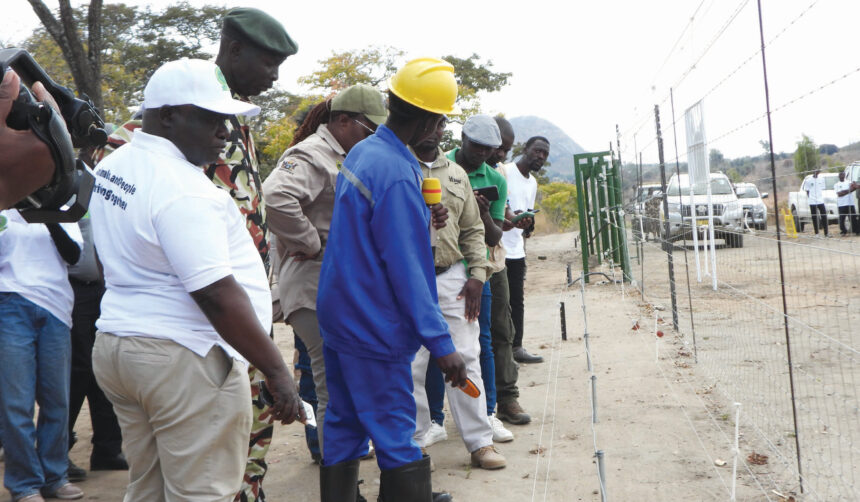
Some of the interventions include construction of a 133 kilometres of physical and virtual fencing along the park’s eastern boundary of Kasungu National Park on the Malawian side, supported by solar-powered energiser systems installed at regular intervals of the fence line.
In case of wildlife moving out of the protected area, authorities are using EarthRanger, an application triggered by GPS-collared elephants, alerts rangers in the control room when animals approach community areas. This allows rapid response teams to track stray wildlife species real time.
Human–elephant conflict incidents have dropped sharply, from 690 cases in 2022 to just 94 in 2025 around Kasungu National Park in the areas of nine traditional authorities.
Livelihood support
Across the landscape, families are being supported to adapt. Ifaw has helped 2,500 smallholder farmers adopt climate-smart agriculture, introduced elephant-proof granaries, and drilled boreholes to improve access to clean water.
For households most affected by human wildlife conflicts, additional support is critical. School bursaries are currently supporting 40 children, ensuring that families facing losses from wildlife incursions are not forced to withdraw children from education.
The approach reflects a broader shift in conservation thinking: that long-term success depends as much on human resilience as ecological recovery.
A shared landscape

Restoring this ecosystem requires more than local action. It demands coordination between Malawi and Zambia—two countries managing different landscapes within a single ecological reality.
“Wildlife moves instinctively in search of proper habitat that provides them food, water and more importantly shelter and safety,” says Bruce Sosola, Country Director for Ifaw in Malawi. “Elephants do not recognize political borders.”
Sosola sees this as both a challenge and an opportunity.
“This landscape requires a unified approach,” he says. “Even if national strategies differ, the ecosystem is shared.”
Efforts are now focused on strengthening joint monitoring, improving data sharing, and aligning conservation strategies across the border.
Beyond borders
The challenges facing the two national parks are not unique. Across Southern Africa, wildlife is under increasing pressure from habitat loss, climate change and illegal trade driven by transnational crime networks.
Sosola believes the response must be equally coordinated. His vision includes a “rangers without borders” approach—where conservation enforcement operates across national lines, closing the gaps exploited by traffickers
The cost of conservation
Yet one constraint underpins them all: funding.
Protecting large landscapes, supporting communities, and maintaining effective law enforcement require sustained investment. For many African countries, already managing competing development priorities, the burden is significant.
Sosola is direct in his assessment: global conservation support is a must. “We must collectively plan and implement activities that lead to improved outputs, measurable outcomes, and ultimately positive impact—reflected in increased wildlife populations, reduced human-wildlife conflict, and enhanced long term ecological landscape restoration,” he says.

Without sustained funding models comparable to those used in climate action, conservation efforts risk falling behind the scale of the threat of underfunding.
Brighton Kumchedwa, Director of National Parks and Wildlife in Malawi, is upbeat.
“Through partnership with government and local communities, Ifaw intervention is expected to significantly reduce human-wildlife conflict around the park and beyond,” Kumchedwa says.
A future in motion
Back in Kasungu, the elephant continues its journey—moving through woodland and across open ground, following routes shaped by instinct and memory.
Whether those routes remain open will depend on the work now underway.
In this landscape, the future is not fixed. It is being rebuilt step by step, corridor by corridor.