

By Ephraim Nyondo:
Malawians have agreed: By the year 2063, as outlined in its long-term development plan, this country should be an inclusively wealthy and self-reliant nation.
The framers of the document, led by the National Planning Commission (NPC), had a clear reason for emphasising ‘inclusively wealthy’.
NPC Director General Thomas Munthali states that the aim is for Malawians to develop together, regardless of gender, location, tribe or race.
However, the reality on the ground, particularly regarding the adoption and use of ICT services—a critical enabler of Malawi 2063— provides little cause for optimism, especially when considering the disparities between males and females.
- Advertisement -
For example, the recently released 2023 National Survey on Access and Use of Information and Communication Technologies by the Malawi Communications Regulatory Authority (Macra) highlights some critical findings.
The survey revealed that males have a higher proportion of access to digital financial services, with 47.6 percent compared to 33 percent in 2019, whereas females stand at 39.6 percent, up from 27.7 percent in 2019.
Similarly, there is a notable difference in how males and females access critical information needed to guide everyday decisions.
Furthermore, the report indicates that male-headed households have a higher proportion of ownership of functional radios, at 50.3 percent, compared to 28.1 percent in female-headed households.
- Advertisement -
- Advertisement -
Even in terms of overall radio ownership, males lead with 38.2 percent compared to females at 25.1 percent.
These findings have significant implications for the ‘inclusively wealthy’ agenda, particularly concerning the role of ICT in empowering women.
A 2021 study, ‘ICT Use and Livelihoods of Women Microenterprises in Malawi’ by Donald Malanga and Memory Banda, found that ICTs have contributed positively to the livelihoods of women microenterprises, such as improved access to information, diversification of business opportunities, improved communication, enhanced marketing and reduced transport costs.
“As a result, this led to sustainable use of resources, improved well-being, and empowerment for women,” the researchers stated.
The study offers valuable insights to researchers, policymakers and other stakeholders regarding the role of ICT in fostering women micro-entrepreneurship in rural Malawi.
Ndantha Manduwi, Founder of Ntha Foundation, an education trust that fosters the use of creativity and innovation for development through advocacy, stresses the need for Malawi to focus on less privileged women and work towards a non-gendered world where women can pursue any job without hindrance.
“If women are not included in the technology sector or equipped to equitably participate in an increasingly digitalised world, they will not be able to seek better opportunities or improve their livelihoods,” Manduwi asserts.
She further notes that women who are not financially or digitally included are unable to contribute to or benefit from the economy.
By equipping women, especially young women, with digital skills and enabling them to pursue opportunities to create tech innovations, women become more secure, empowered and resilient to the fluctuations of a growing economy.
To address these challenges, the government has implemented several initiatives, including the Digital Malawi Project, which aims to grow the digital ecosystem, improve digital connectivity and support innovations with a focus on women.
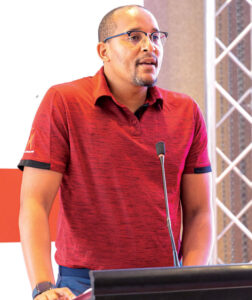
Macra Director General Daud Suleman says his institution is collaborating with both local and international organisations to enhance the use and adoption of ICT services in the country, with a specific focus on ensuring no one is left behind.
“Through the Universal Service Fund [USF], we are undertaking several programmes and projects to promote the availability of services in marginalised areas and underserved communities,” Suleman said.
He added that the USF supports the expansion of access to digital services in Malawi, ensuring digital inclusion for all.
“One such activity is the recently launched Connect-A-School project, which aims to provide ICT laboratories in learning institutions across the country.
“Initially, we are equipping 193 schools. These labs can accommodate up to 60 computers and Macra, through the USF, will provide the first 20 computers and free internet connectivity for three years,” Suleman said.
Will this help bridge the gender gap? Suleman is optimistic.
“There are several projects currently underway by various State and non-State stakeholders. We believe that by embracing collaborative, targeted interventions, we can pave the way for a more inclusive and digitally empowered society,” he says.