By Chancy Namadzunda:
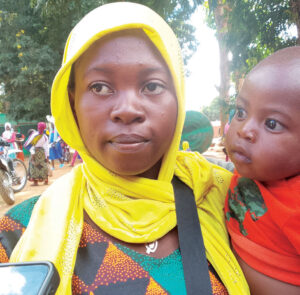
At 6:30am, 20-year-old Agnes Kefasi from Mkwate Village, Traditional Authority (TA) Nyambi, in Machinga District arrives at Nyambi Health Centre to have her child vaccinated.
Just like many mothers in the area, Kefasi is determined to have her child get a second dose of the malaria vaccine as early as possible. Immunisation is administered in the morning at the facility.
“I decided to vaccinate my son against malaria, a deadly disease that affects many infants every day,” said Kefasi while holding her nine-month-old baby
According to Minister of Health Khumbize Kandodo Chiponda, in 2023, Malawi recorded 6.4 million malaria cases, with a total of 1,670 deaths—an increase from 4.2 million in 2022.
- Advertisement -
Kandodo Chiponda further said cases of death decreased from 1,829 in 2022 to 1,670 in 2023, representing 25 percent of the country’s deaths.
Malawi was the first country worldwide to launch the RTS,S malaria vaccine under a pilot initiative.
In late November 2022, the Government of Malawi announced plans to expand the use of the malaria vaccine across the 11 districts that took part in the pilot project.
The decision followed the October 2021 recommendation by the World Health Organisation (WHO) for the use of the malaria vaccine to prevent malaria in children, as well as Malawi’s own positive experience.
- Advertisement -
- Advertisement -
At Nyambi Health Centre, more than 4,000 individuals received the malaria vaccine in 2019, as reported by senior health surveillance assistant (HSA) Square Kambona.
The centre serves a population of 50,000-plus people, with 9,000 children currently registered at the time of this report.
“Community members around the centre have warmly received the vaccine. Many parents are bringing their children to the centre for vaccination,” Kambona stated;
Similarly, Msiyaludzu Health Centre in Ntcheu District has witnessed a positive community response, akin to that in Machinga District.
Senior HSA Shadreck Mapulanga credited the significant turnout to teamwork among healthcare workers, volunteers and faith leaders.
Serving a population of 40,562 individuals, the centre caters to 6,895 children under the age of five and records approximately 3,000 malaria cases monthly.
“Through collaborative efforts with community leaders and various partners, we conducted mobilisation sessions at which we emphasised the vaccine’s significance, resulting in increased participation of parents. As such, parents are taking their children to the vaccination centre,” he explained.
Chikafa said between 30 and 40 children are getting vaccinated daily at the facility.
When Malawi marked World Malaria Day on April 25 this year, Kandodo Chiponda expressed optimism that the country could reach a zero-malaria-case milestone by 2030 if stakeholders adhere to WHO-endorsed guidelines.

Kandodo Chiponda appreciated action that stakeholders are taking to stem malaria cases.
She also pointed at areas that require further action.
Emphasising the importance of following appropriate strategies, the minister highlighted the necessity for continued collaboration between government, development partners and the broader community to advance the goals of the Malawi 2063 agenda and sustain progress in the fight against the killer disease.
WHO National Professional Officer for Malaria, Michael Kayange, echoed the sentiments, saying there is a need for continued collaboration, especially by abiding by WHO’s recommended interventions—notably adhering to vaccination guidelines, sleeping under disinfected mosquito nets and receiving early treatment for malaria.
“As we renew our commitment to fighting the disease today, we need to pay serious attention to strategies and the World Health Organisation’s approved interventions.
“We also need to strive to achieve and sustain optimal coverage of the interventions, by 80 percent and above, countrywide. We can forget about registering zero malaria cases by the said target if we are below optimal coverage and, indeed, if we can attain but fail to sustain it,” he said, adding that, so far, Malawi was below the optimal coverage at 60 percent.
Meanwhile, Malawi Health Equity Network Executive Director George Jobe has called on stakeholders to collaborate with the government in sensitising people to the dangers of malaria.
Jobe emphasised that despite being a major cause of death in the country, malaria is often underestimated by many Malawians.
“For example, while malaria medications are readily available in public health facilities in Malawi, some individuals misuse mosquito nets distributed by the government by using them for protecting vegetable gardens or for fishing purposes,” he said.
Jobe highlighted that although the necessary drugs are accessible in public health facilities, many individuals delay seeking treatment when they, or their children, exhibit malaria symptoms, leading to a high mortality rate.
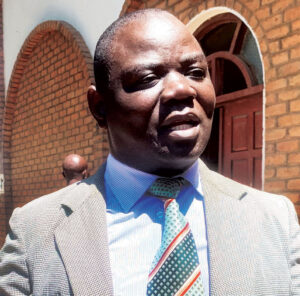
Nonetheless, Jobe underscored the importance of health partners working together with the government in raising awareness on the severity of malaria.
“Enhanced awareness will help the population to comprehend the lethality of malaria and the importance of seeking early treatment when experiencing high fever symptoms,” Jobe pointed out.
The malaria vaccine, the first of its kind against a parasitic disease, has reached over 1.7 million children in pilot programmes across Malawi, Ghana and Kenya since 2019, according to the United Nations Children’s Emergency Fund (Unicef).
Malawi is among 12 African countries set to receive 18 million doses of the vaccine between 2023 and 2025.
Malawi records approximately seven million malaria cases annually, contributing significantly to outpatient visits across all age groups.
In 2021, Malawi accounted for approximately 1.7 percent of global malaria cases and 1.2 percent of global malaria deaths, highlighting its substantial burden relative to other regions globally.
Last year, Malawi launched the 2023-2030 National Malaria Strategic Plan, which aims at eliminating malaria as a public health concern by the year 2030.
In pursuit of this goal, the government laid out comprehensive strategies to increase the proportion of the population protected by at least one malaria vector control intervention from 37 percent in 2022 to at least 90 percent by 2030 to ensure that all suspected cases of malaria are promptly tested and treated, and preventive treatments are readily accessible, especially to most vulnerable populations.
Unicef Chief of Social Policy, Mathews Tasker, indicated that their focus is on battling malaria and making groundbreaking advancements in the fight.
“Unicef’s role in procuring and facilitating the delivery of these vaccines has been instrumental in ensuring that they reach the children most at risk. There have been significant strides in malaria control in the country, particularly through the distribution and use of insecticide-treated nets and improvements in case management and malaria prevention programmes. Efforts continue to increase the uptake of preventative treatments, especially among vulnerable populations such as pregnant women and children,” he said.