
By Esnart Tembo:
It is a humid Friday morning in Manja Township, Blantyre.
A young woman, Bridget Kapasule, a fresh graduate, sits down to think of what to do to survive in the harsh Malawian economy—one with limited job opportunities.
After reasoning for over three hours, Bridget thinks of a business idea to survive with.
With the money she obtained from a temporary smallholder fertiliser selling job, Kapasule hopes to find a second-hand motorcycle to buy and start up her business.
- Advertisement -
She goes on the Facebook market page where she meets a man who claims to be selling affordable motorcycles in Mulanje District.
They connect and discuss the issue.
The seller offers to sell the motorcycle at K1 million. The seller claims he is selling the motorcycle because he is in desperate need of quick cash as he owes some loan shark money, such that he just wants to repay him and be done with him.
He then sends Kapasule pictures of the bike which, indeed, show that it is fairly used.
- Advertisement -
- Advertisement -
Through Facebook, Kapasule and the seller agree to meet and strike the deal.
“I was very excited that, finally, I could establish a business I would be relying on since job opportunities are very limited nowadays,” Kapasule stressed.
While on the way to get the motorcycle, the would-be seller called Kapasule, claiming that loan sharks had swarmed his house and were threatening to take all his property.
He said he needed money urgently or else the loan sharks would take the motorcycle and other properties away.
So he asks Kapasule to send the money via a mobile money platform.
He said they would then meet at Muloza Police Station, where the seller would get the bicycle.
“I still remember hearing, on the phone, people shouting at the man in the background. He sounded desperate,” Kapasule said.
After consulting her friend on the possibility of losing out on the opportunity to buy a fairy used motorcycle, she decided to wire the seller K900,000.
But upon reaching Muloza border in Mulanje District, the seller could not be reached on his mobile phone.
Kapasule proceeded to Muloza Police Station, where the seller had said he would leave the motorcycle.
She was shocked to hear from police officers that she was not the first one to be tricked by these people.
Just like that, her hard-earned money was gone.
She called the mobile company to reverse the transaction but she was told that the money had been transferred to five accounts and thereafter withdrawn.
“I couldn’t gather the courage to go home. I saw my life shattered before my own eyes,” Kapasule explained as tears rolled down her cheeks.
The case of Kapasule is just a tip of the iceberg.
Many people continue to be scammed online.
Rose Banda was also scammed through online booking of hostels, where she paid K50,000 and, thereafter, the phone number of the person disappeared.
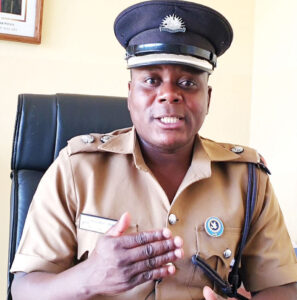
National Police Headquarters spokesperson Peter Kalaya says with the coming of advanced technology, many people choose to purchase goods online and do mobile banking.
He said this had increased cases of cybercrimes in the country.
“Technology has made physical contact irrelevant, especially when people are accessing money from banks or purchasing goods online,” Kalaya said.
According to the Malawi Communications Regulatory Authority (Macra), cases of online money fraud have increased this year.
Macra says about 27,000 cases of fraud have been recorded, with approximately K185 million being scammed from people.
Macra deputy legal director Kerius Mlenga confirmed that there had been rising cases of online money fraud and cited technology which is utilised when people are accessing digital services as one of the contributing factors.
“There are several interventions we are doing to address the issue,” Mlenga said .
He observes that people needed to be aware of money fraud and know how to avoid and prevent it.
According to Mlenga, authorities were also revising laws on cybercrime to ensure that they deal with the problem.
Mlenga also explained that they were working with mobile network companies in the country to control the SIM card registration process so that no one can be allowed to register a Sim card if they are not using their national identity card.
“We are also trying to push that there should be a direct link between mobile networks and the National Registration Bureau,” Mlenga said.